

Galaxy A15 5G Vs iPhone 13 Pro

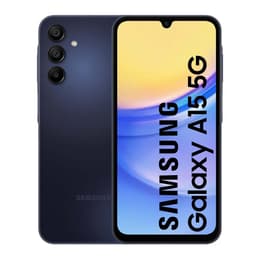
Galaxy A15 5G
Galaxy A15 5G
Starting at

Refurbished price:124.00

Versus €248.54 new

See options
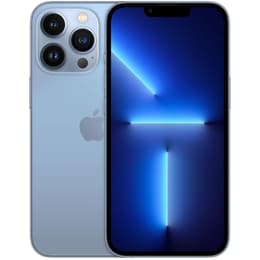
iPhone 13 Pro
iPhone 13 Pro
Starting at

Refurbished price:313.00

Versus €1,149.00 new

See options

Ratings

The Samsung Galaxy A15 5G, released in late 2023 and early 2024, and the Apple iPhone 13 Pro, launched in September 2021, represent distinct offerings in the smartphone market. While both devices provide modern smartphone functionalities, they cater to different user priorities through their respective operating systems and hardware philosophies. The Galaxy A15 5G operates on Android, emphasizing a larger display and extensive battery life, whereas the iPhone 13 Pro runs on iOS, focusing on advanced camera capabilities and robust performance.

Scores

Durability

The longevity of a smartphone is influenced by its release timeline, software support, and physical durability. These two devices offer different expectations in terms of their practical lifespan.

  • Software Support: The Galaxy A15 5G is slated to receive four major Android OS upgrades and five years of security updates, extending its software support until approximately Android 18 and security patches until 2028. The iPhone 13 Pro, having launched with iOS 15, is compatible with iOS 26 as of March 2026 and is expected to receive major iOS updates until at least iOS 28 (2028) or potentially iOS 29 (2029), aligning with Apple's typical 5-7 year support cycle.
  • Physical Durability: The iPhone 13 Pro features a more premium construction with a Ceramic Shield front cover and stainless steel frame, contributing to its overall resilience and IP68 water and dust resistance. The Galaxy A15 5G utilizes a plastic build, which can be more resistant to certain types of impact but may not offer the same level of scratch or water protection.
  • Expected Lifespan: Users prioritizing the longest possible software update window may find the iPhone 13 Pro offers a slightly extended period of major OS updates. Both devices are designed for several years of practical use, with the iPhone 13 Pro's robust build potentially offering greater resistance to daily wear and tear.

Year of Release

2023

2021

Compatible with latest Update

Yes

Yes

OS

Android

iOS

Foldable

No

No

Performance

Performance is a key differentiator, impacting how smoothly applications run and how efficiently the device handles demanding tasks. The two phones approach processing power and battery management from different perspectives.

  • Processing Capabilities: The iPhone 13 Pro delivers a highly responsive user experience, handling demanding applications, complex games, and intensive multitasking with notable fluidity. The Galaxy A15 5G is designed to manage everyday tasks such as web browsing, social media, and media playback effectively, though users might observe occasional delays when switching between multiple applications.
  • Battery Behavior: The Galaxy A15 5G is equipped with a larger 5000 mAh battery, which generally translates to extended usage times and often allows for more than a full day of power for many users. The iPhone 13 Pro, with its 3095 mAh battery, offers improved battery life compared to its predecessor, providing ample power for typical daily use, including up to 22 hours of video playback.
  • Storage and Responsiveness: The iPhone 13 Pro comes with 6GB of RAM, contributing to its smooth multitasking capabilities. Storage options for the iPhone 13 Pro range up to 1TB, but it does not support expandable storage. The Galaxy A15 5G offers RAM configurations of 4GB, 6GB, or 8GB, and provides the flexibility of expandable storage up to 1TB via a microSD card.

Memory (GB)

4 GB

6 GB

Screen quality

The visual experience is central to smartphone interaction, and both devices offer distinct display technologies and characteristics.

  • Display Technology and Clarity: The iPhone 13 Pro features a 6.1-inch Super Retina XDR OLED display, known for its deep blacks, high contrast, and vibrant color reproduction, with a resolution of 2532x1170 pixels, resulting in sharp visuals. The Galaxy A15 5G sports a larger 6.5-inch Super AMOLED display with a 1080x2340 pixel (FHD+) resolution, offering clear and bright visuals suitable for media consumption.
  • Brightness and Refresh Rate: The iPhone 13 Pro's display boasts a typical brightness of 1000 nits and a peak HDR brightness of 1200 nits, ensuring excellent visibility even in bright outdoor conditions. It also features ProMotion technology, providing an adaptive refresh rate that scales from 10Hz to 120Hz for smooth scrolling and responsive interactions. The Galaxy A15 5G offers a 90Hz refresh rate for smoother animations and scrolling, with a high brightness mode reaching 800 nits and a peak of 1000 nits, which is commendable for its segment.
  • Viewing Experience: The iPhone 13 Pro's smaller size and higher pixel density contribute to a very crisp viewing experience, while the Galaxy A15 5G's larger screen provides more expansive real estate for content, which can be beneficial for users who prioritize screen size.

Resolution

1080 x 2340

1170 x 2532

Screen type

Super AMOLED

Super Retina XDR OLED

Audiovisual

Camera capabilities are a significant factor for many users, and these two smartphones offer different strengths in their imaging systems.

  • Rear Camera Systems: The iPhone 13 Pro features a versatile triple 12MP camera system, including a wide-angle lens with sensor-shift optical image stabilization (OIS), an ultra-wide lens with a 120-degree field of view and autofocus, and a telephoto lens offering 3x optical zoom and OIS. It also includes a LiDAR scanner for improved depth sensing. The Galaxy A15 5G comes with a triple camera setup comprising a 50MP main sensor, a 5MP ultrawide lens, and a 2MP macro lens.
  • Photography and Video Performance: The iPhone 13 Pro excels in various lighting conditions, offering advanced computational photography features like Night mode, Smart HDR 4, and Cinematic mode for video with shallow depth of field. It supports video recording up to 4K at 60 frames per second and ProRes video recording. The Galaxy A15 5G's main camera produces clear images in well-lit environments, though colors can sometimes appear slightly oversaturated. It records video at up to 1080p at 30 frames per second.
  • Front Camera and Audio: Both devices feature capable front-facing cameras for selfies and video calls; the iPhone 13 Pro has a 12MP front camera, while the Galaxy A15 5G has a 13MP front camera. The iPhone 13 Pro is known for its clear microphone quality and balanced speaker output, contributing to a good media consumption experience.

Main camera

50 megapixels

12 megapixels

Front camera

13 megapixels

12 megapixels

Miscellaneous

Beyond core features, several practical elements contribute to the overall user experience and daily usability of a smartphone.

  • Connectivity and Ports: Both devices support 5G connectivity for fast mobile data speeds. The iPhone 13 Pro utilizes a Lightning port for charging and data transfer, and supports Wi-Fi 6 and Bluetooth 5.0. The Galaxy A15 5G features a USB-C 2.0 port, Wi-Fi 5, and Bluetooth 5.3, and notably includes a 3.5mm headphone jack, which is absent on the iPhone.
  • Biometrics and Sensors: The iPhone 13 Pro relies on Face ID for secure facial recognition and authentication. The Galaxy A15 5G incorporates a side-mounted fingerprint sensor for biometric security. The iPhone 13 Pro also includes an Ultra Wideband chip for enhanced spatial awareness.
  • Design and Handling: The iPhone 13 Pro has dimensions of 146.7 x 71.5 x 7.65 mm and weighs 204g, featuring a premium build with a stainless steel frame and textured matte glass back. The Galaxy A15 5G is slightly larger at 160.1 x 76.8 x 8.4 mm and weighs 200g, with a plastic construction. The choice between the two may come down to preference for a more compact, premium feel or a larger, lighter device.

Weight

200 g

203 g

Screen size (in)

6.5

6.1

Network

5G

5G

SIM card

Dual Physical SIM

Physical SIM + eSIM

Carrier compatibility

Unlocked

Unlocked

When evaluating the Samsung Galaxy A15 5G and the iPhone 13 Pro, user feedback and specifications highlight distinct strengths for different needs. The iPhone 13 Pro is frequently praised for its powerful performance, exceptional camera system, and the fluidity of its high-refresh-rate display. Users often note its premium build quality and the consistent, long-term software support from Apple. Conversely, some users might find its proprietary Lightning port and lack of expandable storage less flexible.

The Galaxy A15 5G receives positive remarks for its impressive battery life, vibrant Super AMOLED display, and the inclusion of expandable storage, which is a significant advantage for those with large media libraries. Its generous software update policy for an Android device is also a common point of appreciation. Criticisms sometimes point to its plastic construction and performance that, while capable for daily tasks, may not match the responsiveness of higher-end devices during intensive use.

Users prioritizing a top-tier camera experience, robust performance for demanding applications, and a premium, compact design will find the iPhone 13 Pro well-suited to their needs. Those who value extended battery life, a larger display for media consumption, the flexibility of expandable storage, and the Android ecosystem may lean towards the Galaxy A15 5G. Both devices offer compelling features, and considering a quality-assured refurbished option can be a sustainable choice for either model, providing access to these technologies while supporting environmental responsibility.


See all articles

Our recent comparisons