

Galaxy A14 Vs OnePlus 11

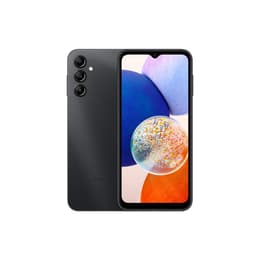
Galaxy A14
Galaxy A14
Starting at

Refurbished price:97.00

Versus €269.00 new

See options
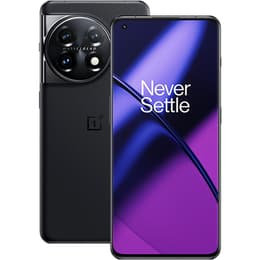
OnePlus 11
OnePlus 11
Starting at

Refurbished price:325.00

Versus €949.00 new

See options

Ratings

The Samsung Galaxy A14 (5G model, released January 2023) and the OnePlus 11 (released globally in February 2023) are both Android smartphones, yet they cater to distinct user needs and expectations. While the Galaxy A14 focuses on delivering essential smartphone functionalities with a strong emphasis on battery life and software support for its segment, the OnePlus 11 positions itself as a high-performance device with a premium display and rapid charging capabilities. Both launched with Android 13, offering a familiar software experience from the outset.

Scores

Durability

The practical lifespan of a smartphone is influenced by its physical durability and the duration of its software support. Both devices were released in early 2023, making them relatively current in the market.

  • Software Longevity: The Samsung Galaxy A14 is expected to receive two major Android operating system updates, bringing it up to Android 15, and four years of security updates, extending support until 2027. In contrast, the OnePlus 11 offers a more extended commitment with four major Android OS updates, potentially reaching Android 17, and five years of security updates. This longer software commitment for the OnePlus 11 suggests a more future-proof device in terms of new features and security.
  • Build Quality: The Galaxy A14 features a plastic frame and back, which contributes to its robust yet functional design. The OnePlus 11, however, incorporates more premium materials, including a glass front protected by Gorilla Glass Victus, a glass back with Gorilla Glass 5, and an aluminum frame, providing a more refined feel and enhanced resistance to daily wear. The OnePlus 11 also carries an IP64 rating for splash resistance.
  • Expected Practical Lifespan: Users prioritizing the latest software features and a device built with more resilient materials may find the OnePlus 11 to offer a longer practical lifespan. The Galaxy A14, while durable for its construction, will see its software support conclude sooner.

Year of Release

2023

2023

OS

Android

Android

Foldable

No

No

Performance

Performance and battery life are critical for daily smartphone use, and these two devices offer different experiences tailored to their respective segments.

  • Storage and Expandability: The Galaxy A14 comes with internal storage options of 64GB or 128GB, and notably, it includes a microSD card slot allowing for storage expansion up to 1TB. This is beneficial for users who need ample space for photos, videos, and apps. The OnePlus 11 offers larger internal storage configurations, ranging from 128GB to 512GB, but it does not support expandable storage via a microSD card.
  • Battery Life and Charging: Both devices are equipped with a 5000 mAh battery. The Galaxy A14 generally provides a full day of use with moderate activity, with some users reporting up to two days. It supports 15W wired charging. The OnePlus 11 also delivers excellent battery life, often lasting beyond a full day even with heavy usage. A significant differentiator is its rapid charging capability, offering 80W wired charging in the US (100W internationally), which can fully recharge the device in approximately 25-30 minutes. However, the OnePlus 11 does not support wireless charging.
  • System Responsiveness: The Galaxy A14 handles most everyday tasks adequately, but users may notice occasional sluggishness when opening apps or multitasking, and it is not designed for graphically intensive applications. The OnePlus 11, on the other hand, provides a very fluid and responsive experience, capable of smoothly running demanding applications, handling extensive multitasking, and delivering high-performance gaming without noticeable lag. This is supported by its higher RAM configurations, with options for 8GB or 16GB, compared to the Galaxy A14's 4GB or 6GB.

Memory (GB)

4 GB

16 GB

Screen quality

The display is a primary interface for smartphone interaction, and these devices offer different visual experiences.

  • Display Technology and Resolution: The Samsung Galaxy A14 features a 6.6-inch PLS LCD display with a Full HD+ resolution of 1080 x 2408 pixels, resulting in a pixel density of approximately 400 pixels per inch. The OnePlus 11 boasts a 6.7-inch LTPO3 Fluid AMOLED display with a sharper Quad HD+ resolution of 1440 x 3216 pixels and a higher pixel density of 525 pixels per inch. The AMOLED technology on the OnePlus 11 provides deeper blacks and more vibrant colors compared to the LCD panel of the Galaxy A14.
  • Brightness and Refresh Rate: For outdoor visibility, the Galaxy A14's screen can be challenging to view in bright sunlight. The OnePlus 11 offers a higher peak brightness of up to 1300 nits, ensuring better legibility in various lighting conditions. In terms of smoothness, the 5G variant of the Galaxy A14 offers a 90Hz refresh rate, while the 4G model is 60Hz. The OnePlus 11 features an adaptive refresh rate that dynamically adjusts between 1Hz and 120Hz, providing a smoother scrolling and viewing experience while optimizing power consumption.
  • Viewing Experience: Both phones offer large screens, with the Galaxy A14 at 6.6 inches and the OnePlus 11 at 6.7 inches. The OnePlus 11's curved display and thinner bezels contribute to an immersive viewing experience, with users often noting its punchier colors and deeper blacks.

Resolution

1080 x 2408

1440 x 3216

Audiovisual

Camera capabilities are a significant factor for many users, and both devices approach photography and videography differently.

  • Camera System Configuration: The Samsung Galaxy A14 (5G model) includes a triple rear camera setup with a 50-megapixel main sensor, a 2-megapixel macro lens, and a 2-megapixel depth sensor. The 4G model may feature a 5-megapixel ultrawide camera instead of the depth sensor. The front camera is 13 megapixels. The OnePlus 11 features a more advanced triple camera system co-developed with Hasselblad, comprising a 50-megapixel main sensor with optical image stabilization (OIS), a 48-megapixel ultrawide lens, and a 32-megapixel telephoto lens offering 2x optical zoom. Its front camera is 16 megapixels.
  • Photography Performance: In good lighting conditions, the Galaxy A14's main camera captures respectable photos with good color and clarity. Its low-light performance is decent for its category, showing improvements in noise reduction compared to its predecessor. However, its macro and ultrawide cameras (where present) are generally considered less capable, especially in challenging light. The OnePlus 11's main camera excels in various lighting conditions, including low light, producing images with good detail, contrast, and accurate colors, partly due to Hasselblad's color science. Its ultrawide camera also performs well, even in low light.
  • Video Recording and Audio: The Galaxy A14 supports video recording up to 1080p at 30 frames per second for both its front and rear cameras, with digital stabilization. The OnePlus 11 offers more versatile video capabilities, including recording at up to 8K resolution at 24 frames per second, and 4K at 30 or 60 frames per second, with effective stabilization. However, its front camera video is limited to 1080p at 30 frames per second. For audio, the Galaxy A14 has a single speaker, which can be easily obstructed, though it retains a 3.5mm headphone jack. The OnePlus 11 features dual speakers with Dolby Atmos support, providing a louder and richer audio experience for media consumption.

Miscellaneous

Beyond core features, several practical elements contribute to the overall user experience of these smartphones.

  • Connectivity Standards: The Galaxy A14 supports 5G connectivity (on the 5G model), Wi-Fi 5 (802.11 a/b/g/n/ac), and Bluetooth 5.2. The OnePlus 11 offers more advanced connectivity with 5G, Wi-Fi 6E, and Bluetooth 5.3, providing faster and more stable wireless connections. The Galaxy A14 also includes NFC for contactless payments.
  • Physical Ports and Sensors: The Galaxy A14 includes a USB-C port for charging and data transfer, and notably, it retains a 3.5mm headphone jack. It features a side-mounted fingerprint sensor for biometric authentication. The OnePlus 11 uses a USB-C port but omits the 3.5mm headphone jack. It incorporates an under-display fingerprint sensor for unlocking.
  • Design and Handling: The Galaxy A14 measures 167.7 x 78 x 9.1 mm and weighs between 201-202 grams, with some users finding it to feel somewhat thick. The OnePlus 11, at 163.1 x 74.1 x 8.53 mm and 205 grams, is slightly heavier but has a more streamlined profile, often described as easier to hold due to its narrower design. Its build materials, including glass and aluminum, contribute to a more premium in-hand feel.

Weight

201 g

205 g

Screen size (in)

6.6

6.7

Network

4G

5G

SIM card

Dual Physical SIM

Physical SIM

Carrier compatibility

Unlocked

Unlocked

The Samsung Galaxy A14 and OnePlus 11 cater to different user priorities, reflecting their distinct positions in the smartphone market. Users often praise the Galaxy A14 for its robust battery life, large display, and commendable software update policy for its segment. However, common criticisms include its sometimes sluggish performance, particularly with demanding applications, and the limited quality of its secondary cameras.

Conversely, the OnePlus 11 receives high marks for its exceptional performance, vibrant and smooth display, and remarkably fast charging capabilities. Its camera system is generally well-regarded, especially the main sensor's low-light performance. Points of concern for some users include the absence of wireless charging and the front camera's video resolution limitations.

Users prioritizing a device for everyday communication, media consumption, and light productivity, who value extended battery life and a budget-friendly approach, may find the Samsung Galaxy A14 well-suited to their needs. Its expandable storage is also a notable advantage for those with extensive media libraries. For individuals who require high-end performance for gaming, demanding applications, and a superior visual experience, coupled with rapid charging and a longer software support cycle, the OnePlus 11 presents a compelling option. Both devices are available as quality-assured refurbished options, providing an eco-friendly alternative for consumers.


See all articles

Our recent comparisons