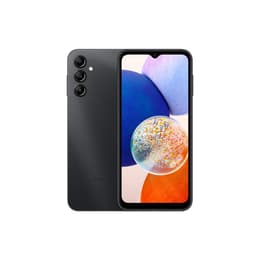
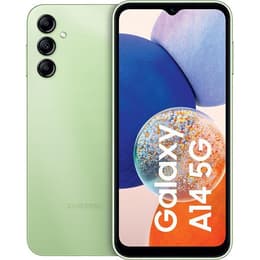


Compare models
Galaxy A14 Vs Galaxy A14 5G
- 1-year minimum warranty
- Free delivery on all orders
- Free 30-day returns
Differences at a glance
The Samsung Galaxy A14 (2023) and the Samsung Galaxy A14 5G (2023) are two smartphones from the same generation, offering a similar user experience with distinct differences primarily in network capability and internal components. Both devices run on the Android operating system, providing access to a wide ecosystem of applications and services. While they share a common design language and core functionalities, the Galaxy A14 5G introduces faster connectivity and a smoother display, setting it apart from its 4G counterpart.
Available Models
Colour
Storage (GB)
Scores
Durability
Both the Galaxy A14 and Galaxy A14 5G were released in 2023, meaning they benefit from a similar software support timeline from Samsung. This ensures a comparable expected practical lifespan in terms of receiving essential updates and maintaining compatibility with newer applications.
- Software Updates: Both models are expected to receive two major Android operating system upgrades and four years of security updates, extending their secure usability until approximately 2027.
- Build Materials: Both devices feature a plastic back and frame, with a glass front. While not designed for extreme ruggedness, their construction is typical for their category and offers reasonable durability for everyday use.
- Repairability: The repairability of both models is generally considered accessible for common component replacements, contributing to their potential for a longer practical life through maintenance.
Year of Release
2023
2023
Compatible with latest Update
No
Yes
OS
Android
Android
Foldable
No
No
Performance
The performance of these two devices varies due to their differing internal chipsets and storage technologies, impacting how smoothly they handle daily tasks and more demanding applications.
- Processing Power: The Galaxy A14 5G, equipped with a more efficient processor, generally offers a more responsive experience, handling demanding apps and multitasking with greater ease. The Galaxy A14, with its processor, capably manages everyday tasks like browsing and social media, though it may exhibit slower performance with intensive applications.
- Storage Speed: The Galaxy A14 5G utilizes UFS 2.2 storage, which contributes to faster app loading times and quicker file transfers compared to the eMMC storage found in the Galaxy A14.
- Battery Behavior: Both phones are equipped with a 5000 mAh battery, designed to provide power for a full day of typical use. Actual battery life can vary based on usage patterns, network conditions, and display settings, with some users reporting the Galaxy A14 5G lasting over 11 hours in video playback tests.
Screen quality
Both Galaxy A14 models feature a large display, but the refresh rate is a key differentiator that influences the visual fluidity of the user experience.
- Display Technology and Resolution: Both devices come with a 6.6-inch PLS LCD display, offering Full HD+ resolution (1080 x 2408 pixels) for clear and vibrant visuals. This resolution provides sufficient sharpness for viewing content and reading text.
- Refresh Rate: The Galaxy A14 features a standard 60Hz refresh rate, suitable for general use. In contrast, the Galaxy A14 5G boasts a 90Hz refresh rate, which results in smoother scrolling and more fluid animations, enhancing the overall visual experience, particularly in supported applications and games.
- Brightness: The display brightness on both models is generally adequate for indoor use, though visibility in direct bright sunlight may be challenging for some users.
Resolution
1080 x 2408
1080 x 2408
Screen type
PLS LCD
PLS LCD
Audiovisual
The camera systems on the Galaxy A14 and Galaxy A14 5G share a high-resolution main sensor but differ in their secondary lenses, offering slightly varied photographic capabilities.
- Main Camera Performance: Both phones are equipped with a 50-megapixel main camera, capable of capturing detailed images in well-lit conditions. They also support 1080p video recording at 30 frames per second.
- Secondary Lenses: The Galaxy A14 includes a 5-megapixel ultrawide lens, useful for capturing broader scenes, alongside a 2-megapixel macro lens for close-up shots. The Galaxy A14 5G, however, replaces the ultrawide lens with a 2-megapixel depth sensor, which assists in portrait mode for background blur effects, and retains the 2-megapixel macro lens.
- Front Camera: Both models feature a 13-megapixel front-facing camera, suitable for selfies and video calls.
Main camera
50 megapixels
50 megapixels
Front camera
13 megapixels
13 megapixels
Miscellaneous
Beyond core performance, several practical features and design elements contribute to the overall user experience of these smartphones.
- Connectivity: The primary distinction lies in network support; the Galaxy A14 offers 4G LTE connectivity, while the Galaxy A14 5G provides access to faster 5G networks, which can significantly improve download and upload speeds in areas with 5G coverage. Both support Wi-Fi 5 (802.11 a/b/g/n/ac).
- Ports and Sensors: Both devices include a USB-C port for charging and data transfer, a 3.5mm headphone jack for wired audio, and a side-mounted fingerprint sensor for secure unlocking. The Galaxy A14 5G features Bluetooth 5.2, a slight upgrade from the Galaxy A14's Bluetooth 5.1.
- Physical Design: With similar dimensions and weight, both phones offer a substantial feel in hand. The back panels feature distinct patterns, with the 4G model having stripes and the 5G model a ripple pattern, providing a subtle visual difference.
Weight
201 g
201 g
Screen size (in)
6.6
6.6
Network
4G
5G
SIM card
Dual Physical SIM
Dual Physical SIM
Carrier compatibility
Unlocked
Unlocked
What the community thinks
Choosing between the Samsung Galaxy A14 and the Galaxy A14 5G largely depends on individual priorities, particularly regarding network speed and display fluidity. Users frequently praise the Galaxy A14 5G for its smoother display and the benefits of 5G connectivity, which can enhance streaming, gaming, and overall browsing experiences. Some users appreciate the improved performance for daily tasks and multitasking that the 5G model's processor offers.
Conversely, the Galaxy A14 is often noted for providing a solid smartphone experience for those who do not require the latest network speeds or a higher refresh rate display. Its camera setup, with an ultrawide lens, might be preferred by users who prioritize capturing broader landscape shots over depth effects. Both devices are recognized for their robust battery life, capable of lasting a full day for most users.
Users prioritizing faster internet speeds, a noticeably smoother visual experience, and slightly quicker app performance will find the Galaxy A14 5G well-suited to their needs. For those who primarily use their phone for standard tasks, browsing, and social media, and where 5G coverage is not a significant factor, the Galaxy A14 offers a capable and reliable option. Both models represent a practical choice, especially when considering a quality-assured refurbished option, which provides an eco-friendly alternative for consumers.