

Compare models
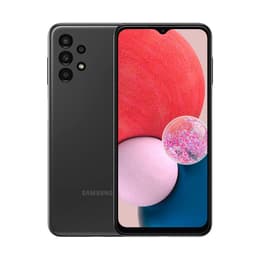
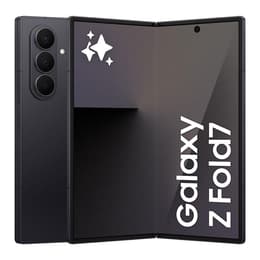
Galaxy A13 Vs Galaxy Z Fold7
- 1-year minimum warranty
- Free delivery on all orders
- Free 30-day returns
Differences at a glance
The Samsung Galaxy A13 (2022) and the Samsung Galaxy Z Fold7 (2025) represent two completely distinct approaches to mobile device engineering, spanning different eras and product categories. While the Galaxy A13 functions as a traditional, straightforward entry-level smartphone designed for daily utility, the Galaxy Z Fold7 serves as a high-end foldable device featuring a transforming screen design and cutting-edge hardware. These two models cater to vastly different user expectations, device form factors, and technological requirements.
Available Models
Colour
Storage
Scores
Durability
When evaluating the lifecycle and durability of these devices, several generational and structural differences emerge regarding long-term usage.
- Release Timeline and Software Support: The Galaxy A13 launched several years earlier and operates near the end of its intended software update cycle, whereas the Galaxy Z Fold7 benefits from an extended multi-year update commitment reflecting its recent debut.
- Physical Build and Mechanics: The Galaxy A13 relies on a conventional rigid plastic chassis, while the Galaxy Z Fold7 utilizes advanced folding hinge technology and specialized glass layers that require careful handling during daily multi-screen use.
- Repairability and Lifespan: Traditional candybar phones like the Galaxy A13 generally feature simpler structural designs for straightforward maintenance, whereas folding mechanisms present unique long-term wear considerations for extended use.
Year of Release
2022
2025
Compatible with latest Update
No
Yes
OS
Android
Android
Foldable
No
Yes
Performance
Day-to-day operation speed, multitasking capability, and energy management vary significantly between these two contrasting hardware classes.
- Speed and Multitasking: The Galaxy A13 handles basic communication and light apps reliably, whereas the Galaxy Z Fold7 manages intensive multi-window workflows, demanding applications, and high-end gaming smoothly without noticeable hesitation.
- Memory and Storage: Storage configurations on the Galaxy A13 cater to modest media collections, while the Galaxy Z Fold7 offers spacious capacity tiers paired with high RAM allocations to keep numerous applications active simultaneously.
- Battery Behavior: The Galaxy A13 maintains consistent day-long operation for light tasks with its single screen, whereas the power demands of the larger internal display on the Galaxy Z Fold7 require efficient power management for intensive workflows.
Screen quality
Display technology represents one of the most substantial divergences between these two devices in terms of visual presentation.
- Display Panels: The Galaxy A13 features a standard flat liquid crystal display suitable for everyday reading, while the Galaxy Z Fold7 incorporates folding organic light-emitting diode panels that deliver deep contrast levels and vibrant colors.
- Viewing Area and Form Factor: Users of the Galaxy A13 interact with a single fixed screen size, whereas the Galaxy Z Fold7 transforms from a standard outer display into a tablet-sized inner workspace for expanded media viewing.
- Outdoor Visibility: Maximum brightness capabilities differ noticeably, with flagship folding technology providing enhanced legibility under direct sunlight compared to entry-level panel specifications.
Resolution
1080 x 2408
1968x2184
Audiovisual
Photography, video recording, and audio output capabilities reflect the distinct market tiers and engineering focuses of each model.
- Camera Systems: The Galaxy A13 provides basic multi-lens configurations for casual snapshots, while the Galaxy Z Fold7 utilizes advanced multi-sensor arrays equipped with high-resolution main sensors and optical stabilization for detailed low-light captures.
- Video and Audio Output: Media recording on the Galaxy Z Fold7 supports higher resolutions and smoother frame rates, accompanied by balanced stereo speakers that offer an immersive audio experience during video playback.
- Call and Recording Quality: Integrated microphones on both models deliver clear voice pick-up for daily calls, though advanced noise reduction features are more pronounced on the flagship foldable.
Miscellaneous
Practical everyday features, connectivity standards, and physical dimensions shape how each device fits into travel or work routines.
- Connectivity and Ports: The Galaxy A13 includes legacy options such as a traditional headphone jack alongside standard wireless links, whereas the Galaxy Z Fold7 relies entirely on modern USB-C standards and rapid wireless connectivity.
- Security and Authentication: Both devices incorporate biometric security features, utilizing side-mounted fingerprint sensors or facial recognition to protect personal data.
- Physical Handling: The Galaxy A13 has a lightweight, uniform profile, while the Galaxy Z Fold7 features a heavier, dual-state body that shifts dimensions depending on whether it is folded or opened for use.
Weight
195 g
215 g
Screen size (in)
6.6
8.0
Network
4G
5G
SIM card
Dual Physical SIM
Dual Physical SIM + eSIM
Carrier compatibility
Unlocked
Unlocked
What the community thinks
User feedback from online communities highlights distinct patterns of praise and criticism for both devices. Owners of the Galaxy A13 frequently commend its dependable battery life and straightforward reliability for basic communication tasks. However, some users note limitations in processing speed when running demanding applications. On the other hand, users of the Galaxy Z Fold7 often praise the versatility of the expansive transforming display and swift system responsiveness, while occasional discussions focus on the heavier weight and visible screen crease inherent to foldable designs.
When deciding between these options, user priorities serve as the main guide. Users prioritizing a simple, lightweight device for essential daily tasks may find the Galaxy A13 well-suited to their needs. Conversely, users who value multitasking across a tablet-sized workspace and cutting-edge hardware will lean toward the Galaxy Z Fold7. For those seeking a quality-assured refurbished option, exploring eco-friendly alternatives on Back Market allows consumers to make sustainable choices tailored to their specific technology preferences without unnecessary waste.









