
Samsung

Compare models
Differences at a glance
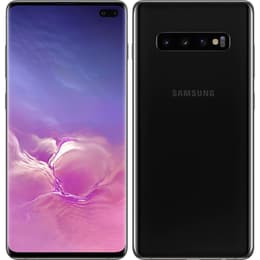
The Samsung Galaxy S10, released in March 2019, and the Samsung Galaxy S9, launched in March 2018, represent consecutive generations of Samsung's flagship smartphone line. While both devices offer a premium Android experience, the Galaxy S10 introduced several advancements, most notably in its camera system, display design, and biometric security. Both models run on the Android operating system, offering a familiar user experience with Samsung's custom One UI.
Colour
Storage (GB)
When considering the long-term usability of these devices, their release timelines and software support are key factors.
Year of Release
Compatible with latest Update
OS
Foldable
The performance of these smartphones is influenced by their internal components, affecting how smoothly they handle daily tasks and demanding applications.
The visual experience on both devices is a highlight, though the Galaxy S10 introduced refinements to its display technology and design.
Resolution
Screen type
The camera systems represent one of the most significant areas of differentiation between these two generations.
Main camera
Front camera
Beyond the core components, several other features contribute to the overall user experience and practical utility of these smartphones.
Weight
Screen size (in)
Network
SIM card
Carrier compatibility
The Samsung Galaxy S10 and Galaxy S9 both offered compelling features at their respective launches, and each continues to serve different user needs. User feedback for the Galaxy S10 often praises its versatile triple-camera system, the immersive, larger display with minimal bezels, and the convenience of the in-display fingerprint sensor. Some common criticisms for the S10 included initial reports of battery drain issues related to software and proximity sensors, and some users found the in-display fingerprint sensor to be less consistent than traditional physical sensors.
The Galaxy S9, on the other hand, was well-regarded for its robust build quality, reliable performance for everyday tasks, and the inclusion of an iris scanner. Users appreciated its physical fingerprint sensor and the overall handling of its slightly smaller form factor. A frequent point of discussion for the S9 was its single rear camera, which, while capable, lacked the versatility of newer multi-lens systems. Its battery life was also considered adequate but not exceptional for heavy use.
Users prioritizing a more advanced and versatile camera system, a larger and more modern display design, and slightly longer software support may find the Galaxy S10 to be a more suitable choice. Its enhanced processing power also benefits those who frequently engage in demanding applications or mobile gaming. Conversely, individuals who prefer a more compact device, a traditional physical fingerprint sensor, and a slightly easier repair process might lean towards the Galaxy S9. Both devices, as quality-assured refurbished options, offer an eco-friendly alternative for consumers seeking reliable smartphone technology.