

Galaxy S10 Vs iPhone 11

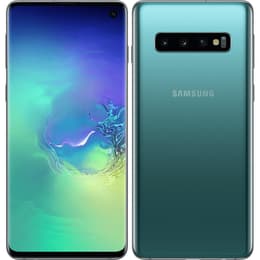
Galaxy S10
Galaxy S10
Starting at

Refurbished price:147.00

Versus €909.00 new

See options
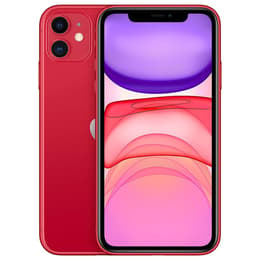
iPhone 11
iPhone 11
Starting at

Refurbished price:145.76

Versus €589.00 new

See options

Ratings

The Samsung Galaxy S10, released in March 2019, and the Apple iPhone 11, launched in September 2019, represent flagship smartphones from their respective manufacturers. While both devices offer robust performance and capable camera systems, they diverge significantly in their operating systems, display technologies, and overall user experience. The Galaxy S10 runs on Android, featuring a vibrant AMOLED display and a versatile triple-camera setup, whereas the iPhone 11 operates on iOS, known for its strong software support and a dual-camera system with notable video capabilities.

Scores

Durability

When considering the longevity of these devices, their release timelines and software support are key factors.

  • Software Updates: The Galaxy S10 received its last major Android operating system update with Android 12, which was released in December 2021. It continues to receive security patches, but no further major OS upgrades are expected. In contrast, the iPhone 11, launched later in 2019, currently supports iOS 26.4 as of March 2026 and is anticipated to receive future iOS versions, potentially extending its major software support for several more years.
  • Repairability: The Galaxy S10 received an iFixit repairability score of 3 out of 10, indicating it is challenging to repair due to extensive use of adhesive, a soldered USB-C port, and the fingerprint sensor being integrated into the display. The iPhone 11, on the other hand, scored 6 out of 10 from iFixit, with critical display and battery repairs being more accessible due to its design.
  • Practical Lifespan: Users can expect the iPhone 11 to offer a longer period of major software feature updates, which can be a significant consideration for those who prioritize access to the latest operating system functionalities. Both devices, when acquired as quality-assured refurbished options, can provide reliable performance for years to come.

Year of Release

2019

2019

Compatible with latest Update

No

Yes

OS

Android

iOS

Foldable

No

No

Performance

The performance of both smartphones is robust for everyday tasks, though they approach processing power and memory management differently.

  • Processing Capabilities: The iPhone 11 handles demanding applications and multitasking smoothly, maintaining strong performance over time due to its efficient system architecture. The Galaxy S10 also offers capable performance for daily use, though some users have reported occasional app crashes or minor slowdowns over its lifespan.
  • Multitasking and Storage: The Galaxy S10 typically features more RAM, which can benefit heavy multitasking with many applications open simultaneously. It also offers expandable storage via a microSD card, providing flexibility for users who need significant space for photos, videos, and apps. The iPhone 11, while having less RAM, benefits from iOS's optimized memory management, ensuring a fluid user experience. Its storage is not expandable, so users must choose an appropriate capacity at the time of purchase.
  • Battery Behavior: In real-world usage, the iPhone 11 generally provides more consistent all-day battery stamina, often outperforming the Galaxy S10 in longevity tests, despite having a smaller battery capacity. This is largely attributed to the iPhone's power-efficient processor and software optimizations. The Galaxy S10's battery life is considered decent for a full day of moderate use, though some users have noted higher idle battery drain.

Memory

8 GB

4 GB

Screen quality

The visual experience on both devices is distinct, primarily due to their underlying display technologies.

  • Display Technology: The Galaxy S10 features a 6.1-inch Dynamic AMOLED display, known for its vibrant colors, deep blacks, and high contrast. The iPhone 11 utilizes a 6.1-inch Liquid Retina IPS LCD display, which offers good color accuracy and brightness but does not achieve the same level of contrast or true black representation as an AMOLED panel.
  • Resolution and Clarity: The Galaxy S10 boasts a higher resolution of 1440 x 3040 pixels, resulting in a sharper image with more detail. The iPhone 11 has a resolution of 828 x 1792 pixels. While still clear for most content, the difference in pixel density can be noticeable when viewing very fine text or high-resolution media.
  • Brightness and Refresh Rate: Both phones offer adequate brightness for outdoor visibility, with the Galaxy S10 capable of higher peak brightness. Both displays operate at a standard 60Hz refresh rate, providing a smooth experience for typical scrolling and content consumption. Some users of the iPhone 11 have reported occasional issues like a green tint on the display, which was sometimes addressed with software updates, though some instances pointed to hardware.

Resolution

1440 x 3040

828 x 1792

Screen type

Dynamic AMOLED

Liquid Retina IPS LCD

Audiovisual

Both the Galaxy S10 and iPhone 11 offer capable camera systems, each with distinct strengths for photography and videography.

  • Rear Camera System: The Galaxy S10 features a versatile triple-camera setup, including a main wide lens, an ultrawide lens, and a telephoto lens, providing optical zoom capabilities. The iPhone 11 comes with a dual-camera system, comprising a wide and an ultrawide lens, but lacks a dedicated telephoto lens.
  • Photography Performance: User comparisons often highlight the Galaxy S10 for producing more natural colors in some scenarios and offering better dynamic range in certain shots. The iPhone 11 is frequently praised for its sharper images, particularly in well-lit conditions, and its effective Night Mode, which significantly improves low-light photography on its main camera. The Galaxy S10's night mode, while present, may not always match the iPhone 11's low-light performance on the main sensor, though it can be applied to all its cameras.
  • Video Recording and Audio: The iPhone 11 generally excels in video recording quality, especially in low light, and offers strong video stabilization. Its front-facing camera also supports 4K video recording. The Galaxy S10 also records high-quality video, and its microphone quality for calls and recording is generally good. Both devices feature stereo speakers, providing a decent audio experience for media consumption.

Main camera

12 megapixels

12 megapixels

Front camera

10 megapixels

12 megapixels

Miscellaneous

Beyond core performance, several practical features differentiate the Galaxy S10 and iPhone 11.

  • Connectivity and Ports: Both devices support modern connectivity standards like Wi-Fi 6 and Bluetooth 5.0. A notable difference lies in their physical ports: the Galaxy S10 includes a USB-C port for charging and data transfer, along with a traditional 3.5mm headphone jack. The iPhone 11 uses Apple's proprietary Lightning port and omits the headphone jack, requiring adapters for wired audio accessories.
  • Biometric Security: The Galaxy S10 features an ultrasonic in-display fingerprint sensor for secure unlocking, alongside face recognition. Some users have reported this sensor can be finicky, especially with certain screen protectors. The iPhone 11 relies solely on Face ID, a facial recognition system known for its security and reliability.
  • Design and Handling: The Galaxy S10 is lighter at 157g compared to the iPhone 11's 194g, potentially offering a more comfortable in-hand feel for some users. Both phones feature glass front and back panels with aluminum frames and are IP68 rated for dust and water resistance. The Galaxy S10 also includes Wireless PowerShare, allowing it to wirelessly charge other compatible accessories.

Weight

157 g

194 g

Width

7,04 cm

7,57 cm

Height

14,99 cm

15,09 cm

Depth

0,78 cm

0,83 cm

Screen size (in)

6.1

6.1

Network

4G

4G

SIM card

Dual Physical SIM

Physical SIM + eSIM

Carrier compatibility

Unlocked

Unlocked

The Samsung Galaxy S10 and iPhone 11, both released in 2019, continue to offer compelling features for users seeking a reliable smartphone. User sentiment often praises the Galaxy S10 for its vibrant AMOLED display, versatile triple-camera system with a telephoto lens, and the inclusion of a headphone jack and expandable storage. Common criticisms sometimes point to its shorter software update lifespan and occasional inconsistencies with the in-display fingerprint sensor.

The iPhone 11 is frequently lauded for its consistent performance, extended software support, and strong camera capabilities, particularly in video recording and low-light photography with its main sensor. Some users have noted the lower-resolution LCD display compared to OLED alternatives and the absence of a telephoto lens or headphone jack as potential drawbacks.

Users prioritizing a highly customizable Android experience, a high-resolution AMOLED screen, and the flexibility of expandable storage and a headphone jack may find the Galaxy S10 well-suited to their needs. Conversely, those who value long-term software support, a streamlined iOS ecosystem, and exceptional video recording performance will likely lean towards the iPhone 11. Both devices, available as quality-assured refurbished options, present an eco-friendly alternative for consumers.

See all articles

Our recent comparisons