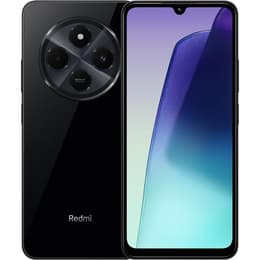
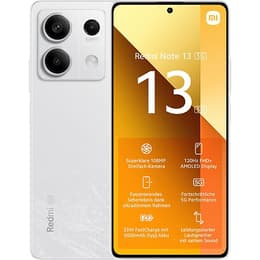


Xiaomi Redmi 14C Vs Xiaomi Redmi Note 13

Xiaomi Redmi 14C
Xiaomi Redmi 14C
Starting at

Refurbished price:128.20

Versus €189.00 new

See options
Xiaomi Redmi Note 13
Starting at

Refurbished price:137.00

Versus €340.00 new

See options

Ratings

The Xiaomi Redmi 14C, released in August 2024, and the Xiaomi Redmi Note 13 5G, launched globally in January 2024, are both smartphones from Xiaomi's Redmi series. While the Redmi 14C is a more recent entry, the Redmi Note 13 5G offers a different set of features, particularly in display technology and camera capabilities. Both devices operate on the Android platform, with the Redmi 14C shipping with Android 14 and HyperOS, and the Redmi Note 13 5G initially running Android 13 with MIUI 14, with updates to HyperOS based on Android 15 available.

Scores

Durability

When considering the longevity of these devices, several factors come into play, including their release timelines, software support, and physical durability.

  • Release Timeline: The Redmi Note 13 5G was released globally in January 2024, making it slightly older than the Redmi 14C, which launched in August 2024. This difference means the Redmi 14C may receive software updates for a slightly longer period. [2, 3, 4, 8, 13, 16, 17]
  • Software Longevity: The Redmi 14C ships with Android 14 and is guaranteed security updates until September 2028, with expectations of at least two major OS updates. [6, 19] The Redmi Note 13 5G, initially on Android 13, is slated for two years of OS updates and three years of security updates, with updates to Android 15 and HyperOS 2 already available. [5, 12] Users prioritizing the latest software for the longest duration might find the Redmi 14C to have a marginal edge due to its newer base OS.
  • Repairability and Build: Both devices feature modern smartphone construction. While specific repairability scores are not widely available, both are designed with non-removable batteries. The Redmi Note 13 5G features Gorilla Glass 5 protection, contributing to its screen durability. [8] The Redmi 14C offers a choice of glass or eco-leather backs, providing different tactile experiences and potential resistance to minor abrasions. [4, 15]

Year of Release

2024

2024

Compatible with latest Update

Yes

Yes

OS

Android

Android

Foldable

No

No

Performance

The performance of a smartphone is largely determined by its internal components, influencing how smoothly applications run and how efficiently it handles multitasking.

  • Processing Power: The Redmi 14C is equipped with a MediaTek Helio G81-Ultra processor, designed for efficient everyday tasks. [2, 4, 9, 15, 16, 20] The Redmi Note 13 5G features a MediaTek Dimensity 6080 processor, which generally offers a more robust performance profile, particularly for more demanding applications and gaming. [1, 5, 8]
  • Multitasking and Responsiveness: The Redmi Note 13 5G typically comes with higher RAM configurations, starting from 6GB and going up to 12GB, compared to the Redmi 14C's options of 4GB, 6GB, or 8GB. [2, 3, 4, 5, 12] This difference in RAM can lead to a smoother experience when switching between multiple applications or running memory-intensive programs on the Redmi Note 13 5G.
  • Storage Speed and Options: The Redmi Note 13 5G utilizes UFS 2.2 storage, which offers faster read and write speeds compared to the eMMC 5.1 storage found in the Redmi 14C. [9, 12, 15] This can translate to quicker app loading times and faster file transfers on the Redmi Note 13 5G. Both devices offer expandable storage via microSD. [10, 15]

Memory (GB)

4 GB

8 GB

Screen quality

The display is a primary interface for smartphone interaction, and differences in technology and specifications can significantly impact the viewing experience.

  • Display Technology and Clarity: The Redmi Note 13 5G features a 6.67-inch AMOLED display with a Full HD+ resolution (1080x2400 pixels). [3, 7, 8, 12] This technology typically provides deeper blacks, higher contrast, and more vibrant colors compared to the 6.88-inch IPS LCD panel with HD+ resolution (720x1640 pixels) on the Redmi 14C. [2, 6, 9, 15, 18]
  • Brightness and Outdoor Visibility: The Redmi Note 13 5G boasts a peak brightness of 1000 nits, making it highly visible even in bright outdoor conditions. [7] The Redmi 14C offers a typical brightness of 450 nits and a peak of 600 nits, which is adequate for most indoor and some outdoor scenarios but may struggle in direct sunlight. [15]
  • Refresh Rate and Smoothness: Both devices feature a 120Hz refresh rate, contributing to smoother scrolling and a more fluid visual experience during gaming or general navigation. [2, 3, 7, 10, 15, 18] The Redmi 14C's larger screen size might appeal to users who prioritize screen real estate for media consumption, despite its lower resolution. [16, 17]

Resolution

720 x 1640

1080 x 2400

Screen type

IPS LCD

AMOLED

Audiovisual

For many users, the camera system is a crucial aspect of a smartphone, influencing the quality of photos and videos captured in various settings.

  • Rear Camera System: The Redmi Note 13 5G features a versatile triple-camera setup, including a 108MP main sensor, an 8MP ultrawide lens, and a 2MP macro lens. [3, 7, 8, 12] This configuration allows for a broader range of photographic options, from expansive landscapes to detailed close-ups. The Redmi 14C comes with a dual-camera system, primarily a 50MP main sensor complemented by an auxiliary lens, often a 2MP depth sensor. [2, 4, 9, 15, 17, 18]
  • Photography Performance: The higher megapixel count and inclusion of an ultrawide lens on the Redmi Note 13 5G generally translate to more detailed images and greater flexibility in framing shots. Both devices are capable of capturing clear photos in well-lit conditions. The Redmi 14C's main camera is noted for producing clear and vibrant photos. [17]
  • Front Camera and Video: Both smartphones are equipped with a 13MP front-facing camera for selfies and video calls. [2, 3, 4, 15, 17] The Redmi 14C includes features like filmCamera filters and a software-level soft-light ring for improved selfies in dim lighting. [17] Video recording capabilities are generally suitable for casual use on both devices.

Main camera

50 megapixels

108 megapixels

Front camera

13 megapixels

16 megapixels

Miscellaneous

Beyond core specifications, several practical features and design elements contribute to the overall user experience of a smartphone.

  • Connectivity and Ports: A significant difference lies in network support: the Redmi Note 13 5G offers 5G connectivity, providing faster mobile data speeds where available, while the Redmi 14C supports 4G networks. [2, 3, 15] Both include Wi-Fi, Bluetooth (v5.4 on 14C, unspecified on Note 13 5G but typically recent), NFC (region-dependent), and a USB Type-C port for charging and data transfer. [2, 9, 15, 20] The Redmi 14C also retains a 3.5mm headphone jack. [9]
  • Physical Design and Handling: The Redmi 14C is a larger device, with a 6.88-inch display and a weight ranging from 204g to 211g. [2, 15, 19] The Redmi Note 13 5G is more compact and lighter, with a 6.67-inch display and a weight of 173.5g, making it potentially easier for one-handed use. [8, 10] The Redmi 14C features a flat frame and a newly designed circular camera module. [16, 17]
  • Security and Sensors: Both phones offer fingerprint sensors for biometric authentication. The Redmi 14C has a side-mounted fingerprint sensor, while the Redmi Note 13 5G's fingerprint sensor is also side-mounted. [2, 4, 15] Both also support face unlock. [2, 15]

Weight

207 g

175 g

Screen size (in)

6.88

6.67

Network

4G

5G

SIM card

Dual Physical SIM

Dual Physical SIM

Carrier compatibility

Unlocked

Unlocked

Connector

USB-C

USB-C

User feedback for the Redmi Note 13 5G often praises its vibrant AMOLED display and capable camera system, particularly the 108MP main sensor, which users find delivers detailed photos. Its 5G connectivity and faster charging are also frequently highlighted as strong points. Some common criticisms revolve around the performance of the ultrawide and macro cameras compared to the main sensor, and some users might find the initial Android 13 version slightly dated, though updates are available. [7, 8, 12]

For the Redmi 14C, users appreciate its large screen size for media consumption and its long-lasting battery life, often reporting two days of usage on a single charge. The inclusion of Android 14 out of the box and the updated HyperOS are also seen as positives. However, some users note that the HD+ resolution on such a large screen can result in less sharpness compared to higher-resolution displays, and the processor, while efficient for daily tasks, might not be ideal for intensive gaming or heavy multitasking. [18, 19]

Users prioritizing a superior display experience with higher resolution and better contrast, along with 5G connectivity and faster charging, may find the Redmi Note 13 5G well-suited to their needs. Its more versatile camera system also caters to those who enjoy varied photography. Conversely, users who prioritize a larger screen for general browsing and media, extended battery life, and a more recent Android version out of the box, and who do not require 5G or the highest graphical performance, may lean toward the Redmi 14C. Both devices offer a quality-assured refurbished option, providing an eco-friendly alternative for consumers seeking reliable technology.

See all articles

Our recent comparisons