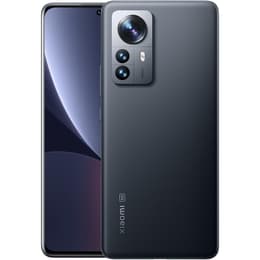



Xiaomi 12T Pro Vs Xiaomi Redmi Note 11

Xiaomi 12T Pro
Xiaomi 12T Pro
Starting at

Refurbished price:201.00

Versus €1,199.00 new

See options
Xiaomi Redmi Note 11
Starting at

Refurbished price:108.00

Versus €249.99 new

See options

Ratings

The Xiaomi 12T Pro, released in October 2022, and the Xiaomi Redmi Note 11, launched in January 2022, are both Android smartphones from Xiaomi, yet they cater to different user expectations. The 12T Pro is positioned as a device with advanced imaging capabilities and high performance, while the Redmi Note 11 focuses on delivering a balanced experience for everyday use. Both devices run on the Android operating system, with the 12T Pro launching with a newer version and a more feature-rich MIUI overlay.

Scores

Durability

When considering the practical lifespan of these devices, several factors come into play, including their release timelines, software support, and physical build.

  • Release Timeline: The Xiaomi 12T Pro, being released in late 2022, benefits from a more recent launch, suggesting a longer period of software updates and security patches compared to the Redmi Note 11, which debuted earlier in the same year. This difference in release can translate to an additional year or so of official support for the 12T Pro.
  • Software Longevity: Xiaomi typically provides several years of Android version updates and security updates for its devices. The 12T Pro, as a more premium offering, is likely to receive extended software support, potentially up to five years of security updates, ensuring it remains functional and secure for a longer duration. The Redmi Note 11, while still receiving updates, may see its support conclude sooner due to its earlier release and market segment. [31]
  • Durability Features: The Xiaomi 12T Pro features Corning Gorilla Glass 5 on its front, offering a degree of protection against drops and scratches. It also carries an IP53 rating for dust and splash resistance, providing some peace of mind against minor environmental hazards. [3, 12, 23] The Redmi Note 11 also includes Gorilla Glass 3 protection on its display and an IP53 rating, indicating a similar level of basic protection against dust and splashes. [10, 13, 26, 29, 38]

Year of Release

2022

2022

Compatible with latest Update

Yes

No

OS

Android

Android

Foldable

No

No

Performance

The performance capabilities of the Xiaomi 12T Pro and the Redmi Note 11 differ significantly, impacting how they handle various tasks from daily navigation to demanding applications.

  • Processing Power: The Xiaomi 12T Pro is equipped with a high-end processor that allows it to handle demanding applications, intensive multitasking, and graphic-heavy games with notable smoothness and responsiveness. Users can expect quick app loading times and fluid transitions. [9, 12] In contrast, the Redmi Note 11 features a mid-range processor designed for everyday tasks. While it performs adequately for general use and lighter applications, some users may experience occasional stutters or slower performance when running multiple apps simultaneously or engaging in more graphically intense activities, especially when the display is set to its higher refresh rate. [4, 19, 27, 28]
  • Storage and Multitasking: The 12T Pro offers larger RAM configurations and faster internal storage, contributing to its overall snappy performance and efficient multitasking. It does not support expandable storage. [12, 18, 25] The Redmi Note 11 comes with smaller RAM options but includes a dedicated microSD card slot, allowing users to expand storage for photos, videos, and other files. [5, 29, 32, 33, 38]
  • Battery Behavior: Both devices house a 5000mAh battery, providing ample power for a full day of typical use. The 12T Pro supports exceptionally fast 120W wired charging, capable of fully recharging the device in approximately 20 minutes. [1, 9, 12, 25, 34] The Redmi Note 11 supports 33W fast charging, which can fully charge the device in about an hour. [2, 5, 10, 13, 27, 32, 36, 38] Neither device offers wireless charging. [9, 12]

Memory (GB)

8 GB

4 GB

Screen quality

The visual experience on both smartphones is delivered through AMOLED technology, but with distinct differences in clarity, smoothness, and overall display characteristics.

  • Display Technology and Resolution: Both the Xiaomi 12T Pro and the Redmi Note 11 feature AMOLED displays, known for their deep blacks and vibrant colors. The 12T Pro boasts a 6.67-inch CrystalRes AMOLED display with a resolution of 1220 x 2712 pixels, offering a sharper and more detailed viewing experience. [1, 3, 9, 12, 22, 25] The Redmi Note 11 has a 6.43-inch AMOLED display with a 1080 x 2400 pixel resolution, which provides clear visuals for general content consumption. [2, 5, 6, 8, 10, 13, 29, 32, 33]
  • Refresh Rate and Brightness: The 12T Pro offers a 120Hz adaptive refresh rate, which dynamically adjusts based on the content, resulting in smoother scrolling and more fluid animations while also conserving battery. It reaches a peak brightness of 900-1000 nits, ensuring good visibility even in bright outdoor conditions. [3, 9, 12, 15, 22, 25] The Redmi Note 11 features a 90Hz refresh rate, providing a smoother experience than standard 60Hz panels, though it is not adaptive. Its peak brightness can reach 1000 nits, making it suitable for outdoor use. [2, 5, 6, 8, 10, 13, 29, 32, 33]
  • Viewing Experience: The 12T Pro supports HDR10+ and Dolby Vision, enhancing the contrast and color accuracy for compatible content, making it well-suited for media enthusiasts. [9, 12, 15, 22] The Redmi Note 11's display, while vibrant and clear, does not support these advanced HDR formats. [2, 13]

Resolution

1220 x 2712

1080 x 2400

Screen type

AMOLED

AMOLED

Audiovisual

The camera systems on the Xiaomi 12T Pro and the Redmi Note 11 are designed with different priorities, leading to varied performance across photography and videography.

  • Main Camera Capabilities: The Xiaomi 12T Pro features a high-resolution 200MP main camera with optical image stabilization (OIS), which excels in capturing detailed photos in various lighting conditions, including low light. It can also perform a 2x optical zoom by cropping its large sensor. [3, 9, 11, 17, 20, 21, 23] The Redmi Note 11 comes with a 50MP main camera that performs well in good lighting, producing decent images for social media. However, its performance can decline in low-light scenarios, often showing increased noise. [2, 4, 5, 10, 16, 26, 29, 30, 38]
  • Secondary Lenses and Video: The 12T Pro includes an 8MP ultra-wide camera and a 2MP macro camera. The ultra-wide can be underwhelming, particularly in low light, and the macro lens offers limited utility. [3, 11, 17, 20, 21, 23] For video, it supports up to 8K resolution at 24 frames per second, with 4K at 60 frames per second often recommended for better stabilization. [20, 21, 40] The Redmi Note 11 also has an 8MP ultra-wide and a 2MP macro lens, along with a 2MP depth sensor. Its ultra-wide camera is often criticized for its quality. [2, 4, 5, 10, 16, 26, 29] Video recording is limited to 1080p at 30 frames per second, without 4K capability. [4, 10, 26, 30, 36, 37]
  • Front Camera and Audio: The 12T Pro has a 20MP front camera that generally produces good selfies, though some users note an unremovable smoothing filter. [11, 20, 23, 31] The Redmi Note 11 features a 13MP front camera, suitable for video calls and basic selfies, though images can appear soft. [2, 4, 5, 10, 16, 29, 38] Both devices offer stereo speakers, with the 12T Pro benefiting from Harman Kardon tuning and Dolby Atmos support for an enhanced audio experience. [15, 23, 25, 40] The Redmi Note 11 also includes a 3.5mm headphone jack. [2, 6, 13, 26, 38]

Main camera

200 megapixels

50 megapixels

Front camera

20 megapixels

13 megapixels

Miscellaneous

Beyond core performance and display, several practical features and design elements differentiate these two Xiaomi smartphones.

  • Connectivity Standards: The Xiaomi 12T Pro supports 5G connectivity, Wi-Fi 6, and Bluetooth 5.2, offering faster network speeds and more efficient wireless connections. [12, 18, 25] The Redmi Note 11 is limited to 4G LTE connectivity, Wi-Fi 802.11 a/b/g/n/ac, and Bluetooth 5.0, which are sufficient for most daily tasks but do not offer the same future-proofing or speed as 5G. [2, 5, 26, 33, 38]
  • Ports and Sensors: Both devices feature a USB Type-C port for charging and data transfer. The Redmi Note 11 retains a 3.5mm headphone jack, a feature absent on the 12T Pro. [5, 13, 23, 26, 38] For biometric security, the 12T Pro uses an in-display fingerprint sensor, while the Redmi Note 11 has a side-mounted fingerprint sensor. [5, 13, 18, 22, 26, 33] Both include an IR blaster, allowing them to function as universal remote controls. [12, 26]
  • Design and Handling: The 12T Pro has dimensions of 163.1 x 75.9 x 8.6 mm and weighs 205 grams, featuring a glass back and plastic frame. [18, 23] The Redmi Note 11 is slightly more compact and lighter at 159.9 x 73.9 x 8.1 mm and 179 grams, with a plastic back and frame. [14, 33] The choice of materials and dimensions can influence the in-hand feel and overall portability for users.

Weight

204 g

179 g

Screen size (in)

6.67

6.43

Network

5G

4G

SIM card

Dual Physical SIM

Dual Physical SIM

Carrier compatibility

Unlocked

Unlocked

The Xiaomi 12T Pro and the Xiaomi Redmi Note 11 offer distinct experiences tailored to different user needs. The 12T Pro is frequently praised by users for its exceptionally fast charging, smooth performance across demanding applications, and its vibrant, high-refresh-rate display. [15, 40, 41, 43] Its main camera is also a strong point, capable of capturing detailed images. [3, 11, 21] However, some users note that its secondary cameras are less impressive, and the absence of wireless charging is a common criticism. [11, 17, 31]

On the other hand, the Redmi Note 11 is often lauded for its excellent AMOLED screen, which offers good brightness and a smooth 90Hz refresh rate for its segment. [2, 6, 10, 13, 26, 27] Its long battery life and the inclusion of a 3.5mm headphone jack are also frequently highlighted as positive aspects. [2, 10, 13, 26, 27, 38] Criticisms often revolve around its less powerful processor, which can lead to occasional stutters, and its camera system, particularly in low light and for video recording, which is limited to 1080p. [2, 4, 10, 19, 26, 30, 37]

Users prioritizing high-end performance, advanced photography capabilities with a strong main sensor, and ultra-fast charging will find the Xiaomi 12T Pro well-suited to their requirements. It is ideal for those who engage in mobile gaming, intensive multitasking, and capturing high-resolution content. Conversely, users who value an excellent display for media consumption, extended battery life, and essential features like a headphone jack, and who primarily use their phone for everyday tasks and casual photography, may lean towards the Redmi Note 11. Both devices, when considered as quality-assured refurbished options, present an eco-friendly alternative for consumers.


See all articles

Our recent comparisons