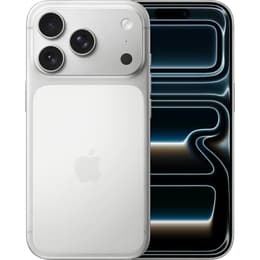
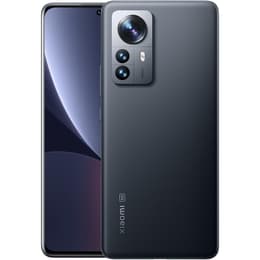


iPhone 17 Pro Vs Xiaomi 12T Pro

iPhone 17 Pro
iPhone 17 Pro
Starting at

Refurbished price:1,064.00

Versus €1,339.00 new

See options
Xiaomi 12T Pro
Xiaomi 12T Pro
Starting at

Refurbished price:201.00

Versus €1,199.00 new

See options

Ratings

The iPhone 17 Pro, released in late 2025, represents Apple's latest advancements in its premium smartphone line, offering a refined user experience within its ecosystem. In contrast, the Xiaomi 12T Pro, launched in October 2022, aimed to deliver high-end specifications and performance within the Android landscape. These devices cater to different user preferences, primarily differing in their operating systems, camera philosophies, and overall hardware integration.

Scores

Durability

When considering the long-term usability of a smartphone, factors like software support, physical durability, and ease of repair are important. The iPhone 17 Pro, being a more recent release, benefits from a longer expected period of software updates compared to the Xiaomi 12T Pro.

  • Software Longevity: The iPhone 17 Pro is anticipated to receive major iOS updates for approximately 6-7 years from its release, ensuring access to the latest features and security enhancements for an extended period. The Xiaomi 12T Pro, launched in 2022, was promised three major Android OS updates (up to Android 15) and four years of security updates, meaning its software support window is nearing its end as of early 2026. [27, 36, 45]
  • Physical Durability: The iPhone 17 Pro features a Ceramic Shield front and a titanium frame, contributing to its robust build and enhanced resistance against drops and scratches. [15, 39] The Xiaomi 12T Pro utilizes Gorilla Glass 5 for its front display and a glass back with a plastic frame, offering a solid but less premium feel compared to the iPhone's materials. [6, 21]
  • Repairability: Recent iPhone Pro models have shown improvements in repairability, with the iPhone 16 Pro achieving a 7 out of 10 score from iFixit due to easier access to internal components and improved battery replacement processes. [24, 34, 40, 42] The Xiaomi 12T Pro also scores well in repairability, with an index of 7.6 out of 10, indicating good availability of parts and ease of disassembly. [33]

Year of Release

2025

2022

Compatible with latest Update

Yes

Yes

OS

iOS

Android

Foldable

No

No

Performance

The performance of a smartphone dictates its responsiveness and capability to handle demanding applications and multitasking. Both devices offer robust performance, though they achieve it through different hardware and software optimizations.

  • Processing Power: The iPhone 17 Pro is equipped with a highly advanced, current-generation processor designed for efficient handling of complex tasks, intensive gaming, and advanced computational photography. This results in smooth app loading, fluid navigation, and sustained performance even under heavy workloads. [8, 15] The Xiaomi 12T Pro features a powerful processor from its release year, which provides strong performance for everyday applications, gaming, and multitasking, though it may not match the long-term performance headroom of the newer iPhone. [3, 9, 11]
  • Multitasking and Responsiveness: The iPhone 17 Pro is expected to feature ample RAM, contributing to seamless app switching and efficient background process management, which is particularly beneficial for users who frequently juggle multiple applications. [17, 22] The Xiaomi 12T Pro offers up to 12GB of RAM, allowing for capable multitasking and smooth operation across various applications. [1, 3, 7]
  • Storage Options: The iPhone 17 Pro typically offers a wider range of internal storage configurations, catering to users with extensive media libraries or large application needs. The Xiaomi 12T Pro comes with generous storage options, providing sufficient space for most users' applications and data. [1, 3, 7]

Memory (GB)

12 GB

8 GB

Screen quality

The display is a primary interface for user interaction, and both devices offer high-quality viewing experiences with distinct characteristics.

  • Display Technology and Clarity: The iPhone 17 Pro features a Super Retina XDR OLED display, known for its deep blacks, vibrant colors, and high contrast ratio. It offers a resolution of 2622 by 1206 pixels at 460 pixels per inch (ppi) on the Pro model, providing exceptional sharpness and detail. [8, 14] The Xiaomi 12T Pro sports a 6.67-inch CrystalRes AMOLED display with a resolution of 1220 x 2712 pixels, resulting in a pixel density of 446 ppi, delivering clear and vibrant visuals. [3, 5, 10, 12]
  • Brightness and Refresh Rate: The iPhone 17 Pro's display boasts high peak brightness levels, reaching up to 3000 nits for outdoor viewing, ensuring excellent visibility even in direct sunlight. It also incorporates ProMotion technology, offering an adaptive refresh rate that can scale from 1Hz to 120Hz for smooth scrolling and power efficiency. [8, 14] The Xiaomi 12T Pro's AMOLED screen offers good brightness levels, with typical brightness around 500 nits and a peak auto brightness of 900 nits, making it suitable for various lighting conditions. It features a 120Hz refresh rate with adaptive sync down to 30Hz, providing fluid animations and a responsive touch experience. [6, 10, 11, 12, 18, 32]
  • Screen Size and Features: The iPhone 17 Pro comes in a 6.3-inch size (Pro model), featuring a Dynamic Island for interactive alerts and activities, and an Always-On display. [8, 14] The Xiaomi 12T Pro has a larger 6.67-inch display, which is ideal for media consumption and provides an immersive viewing area. [6, 11, 18]

Resolution

2622x1206

1220 x 2712

Screen type

Super Retina XDR

AMOLED

Audiovisual

Camera capabilities are a significant consideration for many users, and both smartphones offer advanced systems with different strengths.

  • Main Camera System: The iPhone 17 Pro features a triple 48-megapixel camera system, including a main, ultra-wide, and telephoto lens. Its main sensor has a wide aperture and second-generation sensor-shift optical image stabilization, excelling in capturing detailed images across various lighting conditions with advanced computational photography. [8, 15, 20] The Xiaomi 12T Pro's standout feature is its 200-megapixel main camera with optical image stabilization, which uses pixel-binning technology to produce highly detailed 12.5-megapixel images by default, particularly impressive in well-lit environments. [1, 4, 10, 26, 31]
  • Versatility and Video Recording: The iPhone 17 Pro's telephoto lens offers significant optical zoom capabilities, up to 8x, and supports professional video features like ProRes RAW and Log 2 video recording. [15, 28] The Xiaomi 12T Pro includes an 8-megapixel ultra-wide camera and a 2-megapixel macro lens, which are functional but less versatile than the main sensor. It supports video recording up to 8K resolution at 24 frames per second and 4K at 60 frames per second. [1, 4, 23, 31, 32]
  • Front Camera and Low-Light Performance: The iPhone 17 Pro is expected to feature an upgraded 24-megapixel front camera, enhancing selfie quality and video calls. Its advanced image processing contributes to strong low-light performance across all lenses. [20, 28] The Xiaomi 12T Pro has a 20-megapixel front camera that captures good skin tones and sharpness. While its main camera performs well in low light, the auxiliary lenses are less effective in challenging conditions. [4, 23, 32]

Main camera

48 megapixels

200 megapixels

Front camera

18 megapixels

20 megapixels

Miscellaneous

Beyond core features, several practical elements contribute to the overall user experience and daily convenience of these devices.

  • Connectivity and Ports: The iPhone 17 Pro supports the latest wireless standards, including Wi-Fi 7 and advanced 5G capabilities, ensuring fast and reliable network connections. It features a USB-C port for charging and data transfer. [17, 25] The Xiaomi 12T Pro offers 5G connectivity, Wi-Fi 6, and Bluetooth 5.2, providing modern wireless communication. It also uses a USB-C port for charging and data. [3, 7, 21]
  • Biometric Security and Haptics: The iPhone 17 Pro relies on Face ID for secure facial recognition, offering a convenient and robust unlocking method. It provides precise haptic feedback for a tactile user experience. The Xiaomi 12T Pro incorporates an in-display fingerprint sensor for biometric authentication, which is a widely used and reliable method. [7, 21]
  • Build Materials and Handling: The iPhone 17 Pro features a premium construction with a titanium frame and Ceramic Shield front, contributing to a solid feel and enhanced durability. [15, 39] The Xiaomi 12T Pro has a glass front and back with a plastic frame, offering a comfortable grip and a weight of 205 grams. [3, 6, 21]

Weight

206 g

204 g

Screen size (in)

6.3

6.67

Network

5G

5G

SIM card

Physical SIM + eSIM

Dual Physical SIM

Carrier compatibility

Unlocked

Unlocked

The iPhone 17 Pro and Xiaomi 12T Pro cater to different user priorities, reflecting their respective ecosystems and design philosophies. Users frequently praise the iPhone Pro series for its seamless software experience, robust ecosystem integration, and consistent camera performance, particularly in video recording and computational photography. Common criticisms often revolve around its closed ecosystem and less frequent design changes. The Xiaomi 12T Pro is often lauded for its impressive main camera resolution, fast charging capabilities, and vibrant display. Some users have noted that its auxiliary cameras are less capable than the main sensor, and its software update longevity is shorter compared to premium alternatives.

Users prioritizing a long-term software support, a highly integrated ecosystem, and advanced video capabilities may find the iPhone 17 Pro well-suited to their needs. Its consistent performance and premium build materials also appeal to those seeking a refined user experience. Conversely, users who prioritize a high-resolution main camera for detailed still photography, exceptionally fast charging, and a large, vibrant display might lean toward the Xiaomi 12T Pro. It offers a compelling set of features for media consumption and photography enthusiasts within the Android platform.

Both devices offer distinct advantages, and choosing between them depends on individual preferences for operating system, camera focus, and long-term software commitment. For those considering a more sustainable choice, both models are available as quality-assured refurbished options, providing an eco-friendly alternative to purchasing new.


See all articles

Our recent comparisons





