

iPhone 16 Pro Max Vs Xiaomi 12T

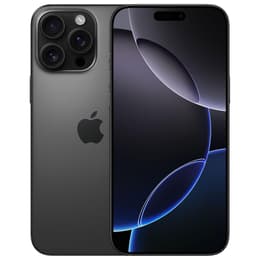
iPhone 16 Pro Max
iPhone 16 Pro Max
Starting at

Refurbished price:821.00

Versus €1,489.00 new

See options
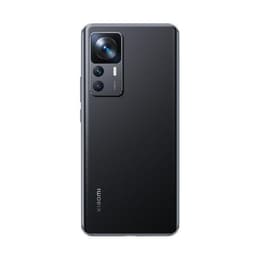
Xiaomi 12T
Xiaomi 12T
Starting at

Refurbished price:135.00

Versus €649.00 new

See options

Ratings

The iPhone 16 Pro Max, released in late 2024, represents Apple's premium smartphone offering, featuring advanced capabilities and a focus on high-end performance. In contrast, the Xiaomi 12T, launched in October 2022, positioned itself as a strong contender in the upper-midrange Android segment. While both devices aim to deliver a comprehensive smartphone experience, they differ significantly in their operating systems, core hardware, and overall ecosystem, catering to distinct user preferences.

Scores

Durability

When considering the longevity of a smartphone, several factors come into play, including software support, build quality, and the availability of repairs. The age difference between these two models is a primary consideration for their practical lifespan.

  • Software Updates: The iPhone 16 Pro Max, running on iOS, benefits from Apple's extended software support, typically receiving major iOS updates for five to seven years from its release. This ensures access to the latest features, security patches, and app compatibility for a considerably longer period. The Xiaomi 12T, launched with Android 12, has received updates up to Android 15 as of June 2025 and is expected to receive three major Android OS updates and four years of security updates, concluding around October 2026.
  • Build Durability: The iPhone 16 Pro Max features a titanium alloy frame and Ceramic Shield front, contributing to its robust construction and enhanced resistance to drops and scratches. The Xiaomi 12T utilizes a glass front with Corning Gorilla Glass 5 protection, a plastic frame, and a glass back. Both devices offer a degree of water and dust resistance, with the iPhone 16 Pro Max typically carrying an IP68 rating for more comprehensive protection.
  • Practical Lifespan: Users prioritizing the longest possible software support and premium build materials for extended use may find the iPhone 16 Pro Max more aligned with their needs. The Xiaomi 12T, while offering solid build for its segment, will reach its end-of-software-support sooner, which could impact its long-term usability for some users.

Year of Release

2024

2022

Compatible with latest Update

Yes

Yes

Foldable

No

No

Performance

Performance is a key differentiator, influencing how smoothly applications run, how quickly tasks are completed, and the overall responsiveness of the device. The two phones feature different approaches to processing power.

  • Processing Power: The iPhone 16 Pro Max is equipped with Apple's A18 Pro chip, built on a second-generation 3-nanometer process. This advanced processor features a 6-core CPU and a 6-core GPU, alongside an upgraded 16-core Neural Engine, designed for demanding applications, complex graphics, and advanced artificial intelligence tasks. The Xiaomi 12T is powered by the MediaTek Dimensity 8100-Ultra processor, which provides capable performance for everyday use and most modern applications.
  • Real-World Usage: For intensive tasks such as high-fidelity gaming, professional-grade video editing on the device, or running multiple demanding applications simultaneously, the iPhone 16 Pro Max offers a higher performance ceiling and more consistent sustained performance. Users of the Xiaomi 12T will experience smooth navigation and efficient handling of common apps, web browsing, and casual gaming.
  • Memory and Storage: The iPhone 16 Pro Max comes with 8GB of RAM and starts with 256GB of internal storage, with options extending to 1TB or potentially 2TB. The Xiaomi 12T offers 8GB of RAM and storage options of 128GB or 256GB. Both utilize fast storage technologies, but the iPhone's higher base storage and larger maximum capacity cater to users with extensive media libraries or numerous applications.

Memory (GB)

8 GB

8 GB

Screen quality

The display is the primary interface for smartphone interaction, and both devices offer high-quality viewing experiences, though with distinct characteristics.

  • Display Technology and Size: The iPhone 16 Pro Max features a larger 6.9-inch Super Retina XDR OLED display, providing deep blacks, vibrant colors, and excellent contrast. The Xiaomi 12T has a 6.67-inch AMOLED display, also known for its rich colors and contrast.
  • Resolution and Refresh Rate: The iPhone 16 Pro Max boasts a resolution of 2868 x 1320 pixels with a pixel density of 460 PPI, and includes ProMotion technology, allowing for an adaptive refresh rate from 1Hz to 120Hz for smooth scrolling and power efficiency. The Xiaomi 12T offers a resolution of 1220 x 2712 pixels (FHD+) with a pixel density of 446 PPI and a fixed 120Hz refresh rate.
  • Brightness and Clarity: The iPhone 16 Pro Max can reach up to 2000 nits peak brightness outdoors, ensuring excellent visibility even in direct sunlight, and features an Always-On Display. The Xiaomi 12T has a typical brightness of 500 nits, with a High Brightness Mode (HBM) reaching 900 nits, which is sufficient for most indoor and outdoor conditions.

Resolution

1320 x 2868

1220 x 2712

Screen type

LTPO Super Retina XDR OLED

AMOLED

Audiovisual

Camera capabilities are a significant factor for many users, and both smartphones offer versatile systems for capturing photos and videos, albeit with different strengths.

  • Rear Camera System: The iPhone 16 Pro Max features a triple-camera setup with a 48MP wide main lens, a 48MP ultrawide lens, and a 12MP telephoto lens offering 5x optical zoom, enhanced by a LiDAR scanner for improved depth sensing and low-light focusing. The Xiaomi 12T includes a 108MP main camera with optical image stabilization (OIS), an 8MP ultrawide lens, and a 2MP macro lens.
  • Photography Performance: The iPhone 16 Pro Max excels in computational photography, delivering consistent image quality across various lighting conditions, with strong detail, dynamic range, and color accuracy. Its 5x optical zoom provides greater flexibility for distant subjects. The Xiaomi 12T's 108MP main sensor captures detailed images, particularly in good lighting, and its OIS helps reduce blur.
  • Video Recording and Features: The iPhone 16 Pro Max supports 4K video recording with advanced features like ProRes and Cinematic Mode, offering professional-grade video capabilities and extensive post-production flexibility. The Xiaomi 12T records video at up to 4K@30fps. For audio, both devices offer capable microphone quality for calls and recordings, and the Xiaomi 12T includes dual speakers with Dolby Atmos for an enhanced media consumption experience.

Main camera

48 megapixels

108 megapixels

Front camera

12 megapixels

20 megapixels

Miscellaneous

Beyond the core components, several other features contribute to the overall user experience and practical utility of these smartphones.

  • Connectivity and Ports: The iPhone 16 Pro Max supports the latest Wi-Fi 7 standard, along with advanced 5G and Bluetooth connectivity, and features a USB-C port for charging and data transfer. The Xiaomi 12T supports Wi-Fi 6, 5G, Bluetooth 5.3, and includes NFC, GPS, and an infrared blaster, offering a comprehensive suite of connectivity options.
  • Biometric Security: Both devices offer secure biometric authentication. The iPhone 16 Pro Max relies on Face ID for facial recognition. The Xiaomi 12T features an in-display fingerprint sensor and face unlock.
  • Design and Handling: The iPhone 16 Pro Max, with its 6.9-inch display and titanium frame, weighs approximately 221 grams and measures 160.9 x 77.6 x 8.25 mm. It also introduces a new Capture button for camera controls. The Xiaomi 12T, at 202 grams and dimensions of 163.1 x 75.9 x 8.6 mm, offers a slightly lighter and narrower profile.

Weight

227 g

220 g

Screen size (in)

6.9

6.67

Network

5G

5G

SIM card

Physical SIM + eSIM

Dual Physical SIM

Carrier compatibility

Unlocked

Unlocked

Connector

USB-C (USB 3)

USB-C

The iPhone 16 Pro Max and Xiaomi 12T cater to different segments of the smartphone market, each with its own set of advantages. Users often praise the iPhone 16 Pro Max for its exceptional performance, long-term software support, and advanced camera system, particularly for video creation and computational photography. Its premium build and vibrant display are also frequently highlighted. Some common criticisms, however, might revolve around its larger size and weight, which some users find less comfortable for one-handed use.

The Xiaomi 12T, on the other hand, is often lauded for its fast charging capabilities, capable display, and solid overall performance for its category. Users appreciate its value proposition and the inclusion of features like an infrared blaster. Potential concerns sometimes include its shorter software update lifespan compared to flagship devices and the plastic frame, which some perceive as less premium than metal alternatives.

Users prioritizing cutting-edge performance, a highly refined user experience, and the longest possible software longevity, especially those invested in the Apple ecosystem or requiring advanced camera features, may find the iPhone 16 Pro Max well-suited to their needs. Conversely, users who value rapid charging, a capable Android experience, and a device that handles everyday tasks efficiently without the absolute latest in processing power might lean towards the Xiaomi 12T. Both devices can be excellent choices depending on individual priorities, and exploring quality-assured refurbished options for either model can provide an eco-friendly alternative for consumers.


See all articles

Our recent comparisons