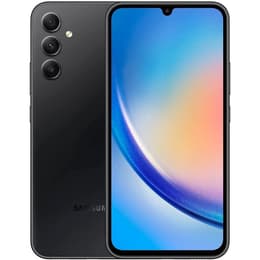



Galaxy A34 Vs Xiaomi Redmi Note 11

Galaxy A34
Galaxy A34
Starting at

Refurbished price:135.00

Versus €399.00 new

See options
Xiaomi Redmi Note 11
Starting at

Refurbished price:108.00

Versus €249.99 new

See options

Ratings

The Samsung Galaxy A34, released in March 2023, and the Xiaomi Redmi Note 11, launched in January 2022, are both Android smartphones designed to offer a balanced user experience. While both devices aim to provide reliable daily performance, the Galaxy A34 distinguishes itself with a newer processor, 5G connectivity, and enhanced display features. The Redmi Note 11, being an earlier release, focuses on core functionalities with a strong emphasis on battery life and display quality for its segment.

Scores

Durability

When considering the longevity of these devices, several factors come into play, including their release dates, software support, and physical durability.

  • Release Timeline: The Samsung Galaxy A34 was released in March 2023, making it a more recent device compared to the Xiaomi Redmi Note 11, which launched in January 2022. This difference in release year typically translates to a longer period of software support for the newer model.
  • Software Longevity: Samsung generally provides extended software support for its A-series phones, with the Galaxy A34 expected to receive several years of Android OS upgrades and security updates. The Redmi Note 11, having been released earlier, will likely see its software support conclude sooner.
  • Physical Durability: The Galaxy A34 features an IP67 rating for dust and water resistance, indicating it can withstand submersion in up to 1 meter of freshwater for 30 minutes. It also incorporates Corning Gorilla Glass 5 on the front for screen protection. The Redmi Note 11 has an IP53 rating, offering protection against dust and splashes, and uses Corning Gorilla Glass 3 for its display. Both devices utilize plastic for their frames and backs.

Year of Release

2023

2022

Compatible with latest Update

Yes

No

OS

Android

Android

Foldable

No

No

Performance

The performance of a smartphone is largely determined by its internal components, impacting everything from app responsiveness to gaming capabilities and battery efficiency.

  • Processor Capabilities: The Galaxy A34 is equipped with a more capable processor, which allows for smoother handling of demanding applications and multitasking. Users often report that the A34 provides good performance for its segment and handles daily tasks without significant lag. The Redmi Note 11 features a processor that is suitable for everyday tasks and general use, but may show limitations with more intensive applications or gaming.
  • Multitasking and Responsiveness: With its more recent processor, the Galaxy A34 generally offers a more responsive user experience, making it well-suited for users who frequently switch between apps or engage in light to moderate gaming. The Redmi Note 11 provides a smooth experience for typical smartphone usage, though heavy multitasking might occasionally lead to minor delays.
  • Battery Behavior: Both devices come with a 5000 mAh battery, which typically translates to a full day of use for most users. The actual battery life can vary based on individual usage patterns, network conditions, and the efficiency of each device's processor and software optimization.

Memory (GB)

6 GB

4 GB

Screen quality

The display is a primary interface for smartphone interaction, and both the Galaxy A34 and Redmi Note 11 offer vibrant viewing experiences with distinct characteristics.

  • Display Technology and Clarity: Both smartphones feature AMOLED displays, known for their deep blacks and vibrant colors. The Galaxy A34 has a 6.6-inch Super AMOLED display with a resolution of 1080 x 2340 pixels. The Redmi Note 11 offers a 6.43-inch AMOLED display with a resolution of 1080 x 2400 pixels.
  • Brightness and Outdoor Visibility: Both devices offer a peak brightness of 1000 nits, ensuring good visibility even in bright outdoor conditions. The Galaxy A34's Super AMOLED panel is noted for its brightness, making content clear under various lighting.
  • Refresh Rate and Smoothness: The Galaxy A34 boasts a 120Hz refresh rate, providing a very smooth scrolling and animation experience. The Redmi Note 11 features a 90Hz refresh rate, which still offers a noticeable improvement in smoothness over standard 60Hz displays, enhancing the overall user interaction.

Resolution

1080 x 2340

1080 x 2400

Screen type

Super AMOLED

AMOLED

Audiovisual

The camera systems on both the Galaxy A34 and Redmi Note 11 are designed to capture everyday moments, each with its own strengths in photography and videography.

  • Rear Camera System: The Galaxy A34 features a triple rear camera setup, including a 48MP main sensor with Optical Image Stabilization (OIS), an 8MP ultrawide lens, and a 5MP macro lens. The OIS on the main sensor helps in capturing stable photos and videos, particularly in challenging lighting conditions. The Redmi Note 11 comes with a quad-camera system, featuring a 50MP main sensor, an 8MP ultrawide lens, a 2MP macro lens, and a 2MP depth sensor.
  • Photography Performance: The Galaxy A34's camera is generally praised for good photo and video quality, especially with its OIS contributing to clearer shots. The Redmi Note 11's 50MP main sensor is capable of capturing detailed images in good lighting, with its ultrawide and macro lenses adding versatility.
  • Video Recording Capabilities: The Galaxy A34 supports video recording up to 4K at 30 frames per second (fps) with both its rear and front cameras. The Redmi Note 11 records video at 1080p at 30fps. Both devices have 13MP front-facing cameras for selfies and video calls.

Main camera

48 megapixels

50 megapixels

Front camera

13 megapixels

13 megapixels

Miscellaneous

Beyond core features, several practical elements contribute to the overall user experience, including connectivity, physical design, and additional functionalities.

  • Connectivity and Ports: The Samsung Galaxy A34 supports 5G connectivity, offering faster mobile data speeds where available. It includes Wi-Fi 5 and Bluetooth 5.3, along with a USB-C 2.0 port. The Xiaomi Redmi Note 11 is a 4G device, featuring Wi-Fi 5, Bluetooth 5.0, and a USB-C 2.0 port. A notable difference is the Redmi Note 11's inclusion of a 3.5mm headphone jack, which is absent on the Galaxy A34.
  • Biometric Security: The Galaxy A34 incorporates an under-display optical fingerprint sensor for secure unlocking. The Redmi Note 11 features a side-mounted fingerprint sensor, integrated into the power button.
  • Dimensions and Build: The Galaxy A34 measures 161.3 x 78.1 x 8.2 mm and weighs 199g. The Redmi Note 11 is slightly more compact and lighter, with dimensions of 159.87 x 73.87 x 8.09 mm and a weight of 179g. Both devices feature a plastic frame and back.

Weight

199 g

179 g

Screen size (in)

6.6

6.43

Network

5G

4G

SIM card

Dual Physical SIM

Dual Physical SIM

Carrier compatibility

Unlocked

Unlocked

The Samsung Galaxy A34 and Xiaomi Redmi Note 11 cater to users with varying priorities, offering distinct advantages based on their design and capabilities. User feedback for the Galaxy A34 often highlights its strong performance, smooth 120Hz display, and reliable camera with OIS. Some users appreciate its IP67 rating for dust and water resistance, contributing to its overall durability. Criticisms sometimes point to the absence of a headphone jack and the use of a plastic build, though the latter is also noted for its contribution to durability.

The Redmi Note 11 is frequently praised for its vibrant AMOLED display, good battery life, and the convenience of a 3.5mm headphone jack. Its performance is generally considered sufficient for daily tasks, and its compact size is a plus for some. Common concerns include its 4G-only connectivity and a less powerful processor compared to newer devices, which might impact performance in demanding applications.

Users prioritizing a device with a more powerful processor, 5G connectivity, a smoother display refresh rate, and enhanced camera stability for photos and videos may find the Samsung Galaxy A34 well-suited to their needs. Those who value a slightly more compact device, the inclusion of a traditional headphone jack, and are content with solid everyday performance and 4G connectivity might lean toward the Xiaomi Redmi Note 11. Both models are available as quality-assured refurbished options, providing an eco-friendly alternative for consumers.


See all articles

Our recent comparisons







