
Compare models
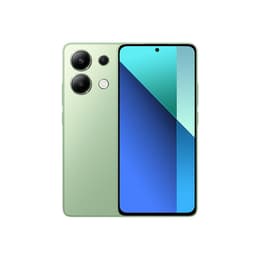
iPhone 13 Pro Max Vs Xiaomi Redmi Note 13 4G
- 1-year minimum warranty
- Free delivery on all orders
- Free 30-day returns
Differences at a glance
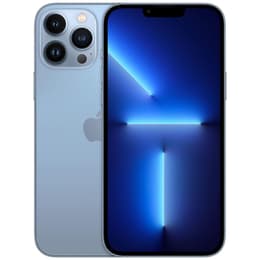
The Apple iPhone 13 Pro Max (2021) and the Xiaomi Redmi Note 13 4G (2024) are distinct smartphones catering to entirely different market tiers and user requirements. While the iPhone 13 Pro Max represents a former top-tier flagship focusing on heavy-duty performance and advanced camera engineering, the Xiaomi Redmi Note 13 4G serves as a modern mid-range device emphasizing daily usability and essential features. Operating on distinct software ecosystems—iOS versus Android—these models offer divergent approaches to overall capability, build engineering, and everyday functionality.
Available Models
Colour
Storage
Scores
Durability
Evaluating the durability and expected lifespan of these two models reveals structural differences in build quality, software update timelines, and hardware resilience over time.
- Software Support and Updates: The iPhone 13 Pro Max benefits from Apple's extended update schedule, receiving major operating system updates for several years following its launch. The Xiaomi Redmi Note 13 4G receives multiple major Android version upgrades, though its total support window aligns with typical mid-range lifecycles.
- Build Materials and Protection: The iPhone 13 Pro Max features textured matte glass combined with stainless steel framing and specialized front glass protection, alongside high-level water resistance. The Xiaomi Redmi Note 13 4G utilizes standard strengthened glass on the front paired with a plastic frame and back panel, offering basic splash resistance.
- Expected Practical Lifespan: High-tier internal hardware components in the iPhone 13 Pro Max allow it to maintain long-term functional viability under demanding tasks, whereas the Xiaomi Redmi Note 13 4G is well-suited to standard daily communication and media consumption over its lifecycle.
Year of Release
2021
2024
Compatible with latest Update
Yes
Yes
OS
iOS
Android
Foldable
No
No
Performance
System responsiveness and daily execution capabilities vary significantly due to the processing hardware and memory configuration differences built into each device.
- Processor and System Responsiveness: The iPhone 13 Pro Max handles demanding applications, high-graphics gaming, and rapid multitasking smoothly. The Xiaomi Redmi Note 13 4G manages standard messaging, web browsing, and moderate apps reliably, though heavy multitasking or intensive gaming may induce occasional slowdowns.
- Storage Configurations: The iPhone 13 Pro Max provides expansive internal storage tiers reaching up to large capacities, while the Xiaomi Redmi Note 13 4G offers mid-tier storage options alongside expandable memory support via a shared card slot.
- Battery Behavior: Both devices deliver dependable daily power delivery, with efficient energy management allowing typical users to navigate a full day of mixed usage before requiring a recharge.
Screen quality
Visual output and display engineering differ in peak brightness capabilities, refresh fluidity, and overall panel technology between the two models.
- Display Technology: Both models utilize vibrant OLED panels that deliver deep contrast levels and rich color reproduction, ensuring clear text and media presentation.
- Refresh Rate and Fluidity: The iPhone 13 Pro Max features adaptive high-refresh technology that scales dynamically to match on-screen motion, while the Xiaomi Redmi Note 13 4G utilizes a fixed high-refresh rate configuration for smooth scrolling through menus and feeds.
- Outdoor Visibility: High peak brightness thresholds on both displays allow content to remain legible under direct sunlight, though maximum outdoor luminance varies under specialized lighting conditions.
Resolution
1284 x 2778
1080 x 2400
Screen type
Super Retina XDR OLED
AMOLED
Audiovisual
Imaging hardware and media recording tools reflect the different design philosophies of a former flagship device versus a contemporary mid-range option.
- Camera System Versatility: The iPhone 13 Pro Max includes a triple-lens arrangement featuring wide, ultra-wide, and dedicated telephoto sensors accompanied by advanced depth-sensing hardware for detailed portrait generation. The Xiaomi Redmi Note 13 4G relies on a high-megapixel main sensor alongside an ultra-wide lens and a basic macro sensor.
- Low-Light and Video Performance: Complex computational photography pipelines on the iPhone 13 Pro Max maintain clarity in challenging lighting environments and support professional-grade video formats. The Xiaomi Redmi Note 13 4G captures clear daylight snapshots and standard high-definition video suitable for casual sharing.
- Audio and Media Output: Stereo speaker setups on both devices deliver balanced sound output for hands-free calling and video playback, with the Xiaomi model retaining a traditional wired headphone jack for legacy audio accessories.
Main camera
12 megapixels
108 megapixels
Front camera
12 megapixels
16 megapixels
Miscellaneous
Practical everyday features, physical dimensions, and connectivity options shape the physical handling experience of each device.
- Physical Dimensions and Handling: The iPhone 13 Pro Max has a heavier, wider footprint constructed from dense metals, whereas the Xiaomi Redmi Note 13 4G adopts a lighter, slimmer profile that is easier to handle with one hand.
- Authentication and Security: Apple utilizes secure facial recognition technology, while Xiaomi implements an optical fingerprint scanner embedded directly beneath the display panel.
- Connectivity Standards: Both smartphones support modern wireless networks and Bluetooth standards, with regional variants of the Xiaomi model including near-field communication capabilities and an infrared blaster for controlling household appliances.
Weight
238 g
189 g
Screen size (in)
6.7
6.67
Network
5G
4G
SIM card
Physical SIM + eSIM
Dual Physical SIM
Carrier compatibility
Unlocked
Unlocked
Connector
Lightning
USB-C
What the community thinks
Choosing between the iPhone 13 Pro Max and the Xiaomi Redmi Note 13 4G depends heavily on individual usage priorities and platform preferences. Users prioritizing intensive mobile gaming, robust video production capabilities, and premium metal construction will find the iPhone 13 Pro Max well-suited to their requirements. Conversely, users prioritizing a lightweight physical build, expandable storage flexibility, everyday messaging reliability, and a traditional headphone connection will lean toward the Xiaomi Redmi Note 13 4G.
For consumers seeking an eco-friendly, quality-assured alternative, opting for a quality-assured refurbished option through Back Market enables access to powerful technology while supporting sustainable purchasing habits. Evaluating these core differences ensures that whichever model you select aligns seamlessly with your daily routine and long-term expectations.