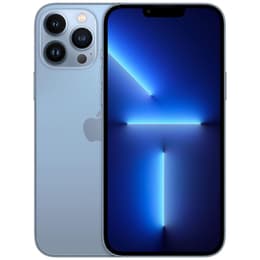



iPhone 13 Pro Max Vs Xiaomi Redmi Note 12 Pro

iPhone 13 Pro Max
iPhone 13 Pro Max
Starting at

Refurbished price:369.00

Versus €1,249.00 new

See options
Xiaomi Redmi Note 12 Pro
Starting at

Refurbished price:117.48

Versus €399.00 new

See options

Ratings

The iPhone 13 Pro Max, released in September 2021, and the Xiaomi Redmi Note 12 Pro, launched in November 2022, are both smartphones designed to offer a comprehensive mobile experience. While the iPhone operates on Apple's iOS ecosystem, the Redmi Note 12 Pro runs on Android with Xiaomi's MIUI overlay. These devices cater to different user preferences, with the iPhone often recognized for its robust performance and integrated ecosystem, and the Redmi Note 12 Pro for its display technology and battery capacity.

Scores

Durability

When considering the long-term usability of these devices, their release timelines and software support are key factors. The iPhone 13 Pro Max, being an Apple device, typically receives several years of iOS updates, extending its software longevity. The Xiaomi Redmi Note 12 Pro, running on Android, also receives software updates, though the duration can vary.

  • Software Updates: The iPhone 13 Pro Max, released in 2021, is expected to receive iOS updates for several more years, ensuring access to new features and security patches. The Redmi Note 12 Pro, launched in 2022, typically receives a few major Android version updates and security patches, though generally for a shorter period than Apple's flagship devices.
  • Repairability: Both devices are designed with modern smartphone construction, which can make user-level repairs challenging. Professional repair services are available for both models to address component replacements.
  • Practical Lifespan: Users often report that the iPhone 13 Pro Max maintains strong performance and battery health for an extended period, making it a viable device for several years. The Redmi Note 12 Pro is also built for durability in daily use, with its lifespan largely depending on individual usage patterns and software support.

Year of Release

2021

2022

Compatible with latest Update

Yes

No

OS

iOS

Android

Foldable

No

No

Performance

The performance of a smartphone is crucial for daily tasks, from app usage to demanding games. Both the iPhone 13 Pro Max and the Xiaomi Redmi Note 12 Pro offer capable performance, though they approach it with different hardware architectures.

  • Processing Power: The iPhone 13 Pro Max features a powerful processor that handles demanding applications, complex multitasking, and graphics-intensive games with smooth responsiveness. This allows for quick app loading and seamless transitions between tasks.
  • Multitasking and Responsiveness: The Redmi Note 12 Pro is equipped with a processor that provides a fluid experience for everyday use, including social media browsing, video streaming, and light gaming. It manages multiple applications simultaneously without significant slowdowns.
  • Battery Behavior: The iPhone 13 Pro Max is known for its exceptional battery endurance, often lasting more than a full day of heavy use, with some users reporting 10-12 hours of screen-on time. The Redmi Note 12 Pro, with its larger battery capacity, also offers robust battery life, frequently providing a full day or even 1.5 days of moderate usage.
  • Storage Options: The iPhone 13 Pro Max offers a wide range of internal storage configurations, including options up to 1TB, catering to users with extensive storage needs. The Redmi Note 12 Pro provides various storage options up to 256GB, which is ample for most users' apps, photos, and videos.

Memory (GB)

6 GB

8 GB

Screen quality

The display is a primary interface for smartphone interaction, and both devices offer vibrant and responsive screens, albeit with some distinctions in technology and features.

  • Display Technology and Clarity: The iPhone 13 Pro Max features a 6.7-inch Super Retina XDR OLED display, providing deep blacks, high contrast, and vibrant colors with a resolution of 2778x1284 pixels. The Redmi Note 12 Pro comes with a 6.67-inch Flow AMOLED display, offering a resolution of 2400x1080 pixels, also known for its rich colors and good contrast.
  • Refresh Rate and Smoothness: The iPhone 13 Pro Max incorporates ProMotion technology, allowing for an adaptive refresh rate that can scale from 10Hz to 120Hz, providing exceptionally smooth scrolling and responsive interactions while conserving battery life. The Redmi Note 12 Pro also features a 120Hz adaptive refresh rate, contributing to a fluid visual experience, especially during gaming and scrolling.
  • Brightness Levels: The iPhone 13 Pro Max achieves a typical maximum brightness of 1000 nits and a peak HDR brightness of 1200 nits, ensuring excellent visibility even in bright outdoor conditions. The Redmi Note 12 Pro offers a peak brightness of 900 nits, which is generally sufficient for outdoor use, with some sources indicating up to 1200 nits peak brightness.

Resolution

1284 x 2778

1080 x 2400

Screen type

Super Retina XDR OLED

AMOLED

Audiovisual

For many users, the camera system is a critical component of a modern smartphone. Both the iPhone 13 Pro Max and the Xiaomi Redmi Note 12 Pro offer capable camera setups, each with its strengths.

  • Rear Camera System: The iPhone 13 Pro Max features a versatile triple 12MP camera system, including Wide, Ultra Wide, and Telephoto lenses, offering 3x optical zoom in and 2x optical zoom out. It excels in various lighting conditions, with strong low-light performance and advanced computational photography features like Night mode and Photographic Styles. The Redmi Note 12 Pro is equipped with a triple camera setup featuring a 50MP main sensor with Optical Image Stabilization (OIS), an 8MP ultra-wide lens, and a 2MP macro lens. Its main camera captures detailed images, especially in good lighting.
  • Video Recording Capabilities: The iPhone 13 Pro Max offers advanced video features, including Cinematic mode for shallow depth-of-field effects, HDR video recording with Dolby Vision up to 4K at 60fps, and ProRes video recording for professional-grade footage on higher storage models. The Redmi Note 12 Pro supports 4K video recording at 30fps, with OIS on the main sensor to help stabilize footage.
  • Front Camera and Audio: The iPhone 13 Pro Max includes a 12MP TrueDepth front camera with features like Portrait mode and Cinematic mode. Its audio experience is enhanced by stereo speakers. The Redmi Note 12 Pro has a 16MP front camera and offers dual speakers with Dolby Atmos support for an immersive audio experience.

Main camera

12 megapixels

50 megapixels

Front camera

12 megapixels

16 megapixels

Miscellaneous

Beyond core performance and display, several other features contribute to the overall user experience and practical utility of these smartphones.

  • Connectivity and Ports: Both devices support 5G connectivity for fast mobile data speeds. The iPhone 13 Pro Max uses a Lightning port for charging and data transfer, while the Redmi Note 12 Pro features a USB-C port and retains a 3.5mm headphone jack, offering more traditional audio connectivity.
  • Biometric Security: The iPhone 13 Pro Max relies on Face ID for secure facial recognition. The Redmi Note 12 Pro typically includes a side-mounted fingerprint sensor and AI Face unlock for biometric authentication.
  • Design and Handling: The iPhone 13 Pro Max has a premium build with a Ceramic Shield front cover and a stainless steel frame, contributing to its substantial weight of 240g. The Redmi Note 12 Pro has a lighter build at 187g, often featuring a glass front (Corning Gorilla Glass 5) and a plastic frame, making it easier to handle for some users.

Weight

238 g

187 g

Width

7,81 cm

76 cm

Height

16,08 cm

162,9 cm

Depth

0,76 cm

7,9 cm

Screen size (in)

6.7

6.67

Network

5G

5G

SIM card

Physical SIM + eSIM

Dual Physical SIM

Carrier compatibility

Unlocked

Unlocked

Connector

Lightning

USB-C

The iPhone 13 Pro Max and the Xiaomi Redmi Note 12 Pro offer distinct experiences tailored to different user priorities. User feedback for the iPhone 13 Pro Max frequently praises its exceptional battery life, robust performance, and high-quality camera system, particularly for video recording. Many users consider it a solid long-term device due to its sustained performance and software support. Common criticisms sometimes point to its size and weight, which can be cumbersome for some.

For the Xiaomi Redmi Note 12 Pro, users often highlight its vibrant AMOLED display, good battery life, and capable main camera. Some users appreciate its overall balance of features for its segment. However, some feedback mentions potential issues with software optimization or the performance of its processor under heavy load, and the presence of bloatware.

Users prioritizing a device with a highly integrated ecosystem, top-tier processing power, advanced video capabilities, and industry-leading battery endurance may find the iPhone 13 Pro Max well-suited to their needs. Those who value a vibrant display with a high refresh rate, a large battery, and the flexibility of the Android operating system, along with a traditional headphone jack, might lean towards the Xiaomi Redmi Note 12 Pro. Both devices are available as quality-assured refurbished options, providing an eco-friendly alternative for consumers.


See all articles

Our recent comparisons