

Galaxy A13 Vs iPhone 16 Pro Max

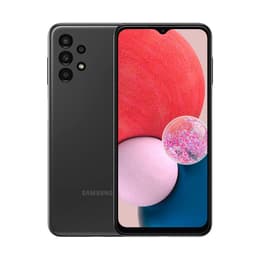
Galaxy A13
Galaxy A13
Starting at

Refurbished price:65.00

Versus €129.00 new

See options
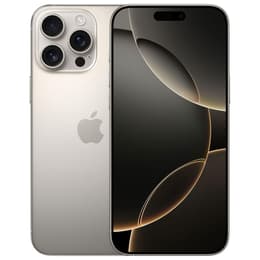
iPhone 16 Pro Max
iPhone 16 Pro Max
Starting at

Refurbished price:821.00

Versus €1,489.00 new

See options

Ratings

The Samsung Galaxy A13, released in March 2022, and the iPhone 16 Pro Max, launched in September 2024, represent distinct approaches to smartphone design and functionality. While the Galaxy A13 operates on the Android platform, the iPhone 16 Pro Max runs on iOS, offering users fundamentally different software experiences. These devices primarily differentiate themselves through their performance capabilities, camera systems, and display technologies, catering to varied user needs and expectations.

Scores

Durability

The longevity of a smartphone is influenced by its release timeline, software support, and physical durability. These two devices offer different expectations in terms of their practical lifespan.

  • Release Timeline and OS Support: The Galaxy A13, launched in March 2022, originally ran Android 12 and received two major Android OS updates, reaching Android 14 with One UI 6.1. Security updates for the Galaxy A13 are provided quarterly and are expected to continue into early 2025 or beyond, with major OS updates having concluded around late 2024 or early 2025. In contrast, the iPhone 16 Pro Max, released in September 2024 with iOS 18, was discontinued in September 2025 following the announcement of its successor. Despite its short sales window, Apple typically provides 5-7 years of major iOS updates for its devices, meaning the iPhone 16 Pro Max will continue to receive software support for several years.
  • Repairability and Durability: The Galaxy A13 features a glass front protected by Corning Gorilla Glass 5, a plastic back, and a plastic frame. It has been noted for a high repairability score of 8 out of 10 for its LTE model, suggesting a design that facilitates easier repairs. The iPhone 16 Pro Max incorporates a more premium construction with a grade five titanium frame, a Ceramic Shield front, and a matte glass back, contributing to its overall durability. It also carries an IP68 rating for water and dust resistance.
  • Expected Practical Lifespan: Users prioritizing extended software updates and a device built with premium, durable materials for long-term use may find the iPhone 16 Pro Max more aligned with their needs. For those seeking a device that is generally easier to repair and has already received its expected major software updates, the Galaxy A13 offers a different value proposition.

Year of Release

2022

2024

Compatible with latest Update

No

Yes

Foldable

No

No

Performance

The performance of a smartphone dictates its responsiveness and capability across various applications, from daily tasks to demanding operations. These two devices offer significantly different performance profiles.

  • Processor Capabilities and Responsiveness: The Galaxy A13 is powered by an octa-core processor, such as the Exynos 850 in its 4G variant. This hardware configuration is suitable for everyday tasks like web browsing, social media, and light applications. However, it may exhibit slower response times and struggle with more demanding games or extensive multitasking. The iPhone 16 Pro Max features the A18 Pro chip, built on a 3nm process, which includes a new 6-core CPU, a 6-core GPU, and an advanced 16-core Neural Engine. This allows for exceptional performance across all tasks, including graphically intensive games, video editing, and augmented reality applications, ensuring smooth and immediate responsiveness.
  • Multitasking and Storage: The Galaxy A13 is available with 3GB, 4GB, or 6GB of RAM and storage options ranging from 32GB to 128GB, expandable via microSD. While adequate for basic multitasking, users with many open applications or large files might experience limitations. The iPhone 16 Pro Max is expected to come with 8GB of RAM and offers larger storage configurations, starting from 256GB and going up to 2TB. This ample RAM and storage capacity facilitate seamless multitasking and provide extensive space for applications, media, and large files.
  • Battery Behavior: The Galaxy A13 is equipped with a 5000 mAh battery, which typically provides more than a full day of use for many users. It supports 15W wired charging. The iPhone 16 Pro Max has a 4676 mAh battery and is noted for its excellent battery life, with some tests indicating up to 33 hours of video playback. It also supports faster wired charging at 40W via USB-C and 25W MagSafe wireless charging.

Memory (GB)

3 GB

8 GB

Screen quality

The display is a primary interface for smartphone interaction, and the quality of the screen significantly impacts the viewing experience. These devices offer different display technologies and characteristics.

  • Display Technology and Clarity: The Galaxy A13 features a 6.6-inch PLS TFT LCD with a resolution of 1080 x 2408 pixels, resulting in a pixel density of 400 ppi. This display provides clear visuals for everyday content consumption. The iPhone 16 Pro Max boasts a 6.9-inch Super Retina XDR OLED display with a resolution of 2868 x 1320 pixels and a pixel density of 460 ppi. OLED technology delivers deep blacks, vibrant colors, and superior contrast compared to LCD panels.
  • Brightness and Refresh Rate: The Galaxy A13's display operates at a standard 60Hz refresh rate, which is suitable for general use. Its brightness levels are adequate for indoor viewing. The iPhone 16 Pro Max incorporates ProMotion technology, offering an adaptive refresh rate of up to 120Hz, which provides smoother scrolling and more fluid animations. It also features higher brightness levels, with 1000 nits typical and a peak outdoor brightness of 2000 nits, enhancing visibility in bright environments.
  • Viewing Experience: The Galaxy A13 offers a large screen for comfortable viewing of websites, photos, and videos. The iPhone 16 Pro Max provides a more immersive viewing experience due to its larger OLED display, higher resolution, and dynamic refresh rate, making it well-suited for high-quality media consumption and gaming.

Resolution

1080 x 2408

1320 x 2868

Screen type

PLS LCD

LTPO Super Retina XDR OLED

Audiovisual

Camera capabilities are a significant factor for many smartphone users, influencing the quality of photos and videos captured in various conditions. These two phones present different camera systems.

  • Rear Camera System: The Galaxy A13 features a quad-camera setup on the rear, including a 50MP main sensor with an f/1.8 aperture, a 5MP ultrawide lens, and two 2MP sensors for macro and depth. This system performs adequately in well-lit conditions for basic photography. The iPhone 16 Pro Max is equipped with a professional-grade camera system, featuring a 48MP Fusion main camera with an f/1.78 aperture and sensor-shift optical image stabilization (OIS), a 48MP ultrawide camera with a 120-degree field of view, and a 12MP telephoto lens offering 5x optical zoom with a tetraprism design and 3D sensor-shift OIS. This configuration allows for detailed photos, improved low-light performance, and versatile shooting options.
  • Front Camera and Video Recording: The Galaxy A13 has an 8MP front camera with an f/2.2 aperture and supports video recording at 1080p at 30 frames per second. The iPhone 16 Pro Max includes a 12MP front-facing camera and offers advanced video recording capabilities, including 4K resolution at 120 frames per second. Its camera system also supports features like ProRes video and Cinematic Mode, providing more creative control for videography.
  • Photography Features: The Galaxy A13 provides a straightforward photography experience. The iPhone 16 Pro Max includes advanced computational photography features, enhanced low-light performance, and a new Camera Control button for more intuitive photo and video capture.

Main camera

50 megapixels

48 megapixels

Front camera

8 megapixels

12 megapixels

Miscellaneous

Beyond core specifications, various practical elements contribute to the overall user experience, including connectivity, physical design, and additional features.

  • Connectivity and Ports: The Galaxy A13 supports 4G LTE (with some variants offering 5G), Wi-Fi 5 (802.11ac), and Bluetooth 5.0. It includes a USB-C 2.0 port and retains a 3.5mm headphone jack. The iPhone 16 Pro Max features advanced connectivity with 5G (sub-6 GHz and mmWave), Wi-Fi 7 (802.11be), and Bluetooth 5.3. It utilizes a USB-C port, which is expected to offer faster data transfer speeds, but does not include a headphone jack.
  • Sensors and Security: The Galaxy A13 incorporates a side-mounted fingerprint sensor for biometric authentication. The iPhone 16 Pro Max relies on Face ID for secure facial recognition and also includes a LiDAR scanner for enhanced augmented reality experiences and improved low-light focusing.
  • Build Materials and Handling: The Galaxy A13 features a glass front (Gorilla Glass 5) and a plastic back and frame, weighing around 195 grams. Its dimensions are 165.1 x 76.4 x 8.8 mm. The iPhone 16 Pro Max is constructed with premium materials, including a grade five titanium frame, a Ceramic Shield front, and a textured matte glass back. It is slightly larger than its predecessors, accommodating a 6.9-inch display, and is designed for a balanced feel despite its size.

Weight

195 g

227 g

Screen size (in)

6.6

6.9

Network

4G

5G

SIM card

Physical SIM

Physical SIM + eSIM

Carrier compatibility

Unlocked

Unlocked

Connector

USB-C + Jack 3.5mm

USB-C (USB 3)

User feedback for the Samsung Galaxy A13 often praises its long battery life and large display, making it a practical choice for essential smartphone functions. Common criticisms include its performance, which can feel sluggish with demanding applications, and camera quality that is considered basic, particularly in challenging lighting conditions. Users generally view it as a reliable, budget-friendly device for everyday communication and media consumption.

For the iPhone 16 Pro Max, user sentiment highlights its exceptional performance, advanced camera capabilities, and extended battery life as key strengths. Its premium build and immersive display also receive positive remarks. Potential concerns might revolve around its larger size and the iOS ecosystem, which some users find less customizable than Android. Overall, it is regarded as a top-tier device for users who prioritize cutting-edge technology and a seamless, powerful experience.

Users prioritizing a device for essential communication, web browsing, and media consumption with a focus on battery longevity and a more accessible ecosystem may find the Galaxy A13 well-suited to their needs. Conversely, users who require high-end performance for demanding applications, advanced photography and videography features, and a premium build quality will likely lean toward the iPhone 16 Pro Max. Both devices can be considered as quality-assured refurbished options, offering an eco-friendly alternative for consumers.


See all articles

Our recent comparisons