

iPhone 13 Pro Max Vs OnePlus 11

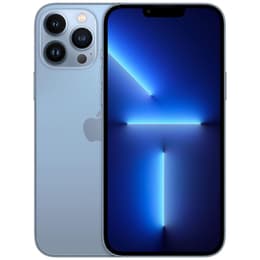
iPhone 13 Pro Max
iPhone 13 Pro Max
Starting at

Refurbished price:372.00

Versus €1,249.00 new

See options
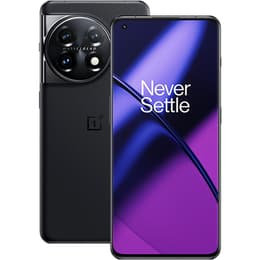
OnePlus 11
OnePlus 11
Starting at

Refurbished price:325.00

Versus €949.00 new

See options

Ratings

The iPhone 13 Pro Max, released in September 2021, and the OnePlus 11, launched globally in February 2023, are both high-end smartphones from their respective manufacturers. While the iPhone operates on Apple's iOS ecosystem, the OnePlus 11 runs on Android, offering distinct user experiences. Key differentiators include their release timelines, operating system philosophies, and approaches to hardware design and features.

Scores

Durability

The longevity of a smartphone is influenced by its initial build quality, software support, and the availability of replacement parts. These two devices offer different timelines for expected usability.

  • Software Support: The iPhone 13 Pro Max, being an Apple device, typically receives iOS updates for an extended period, often 5-6 years from its release, with some sources indicating support up to iOS 26.3. The OnePlus 11, launched with Android 13, is promised four major Android updates and five years of security updates, aligning it with a strong commitment to software longevity within the Android ecosystem.
  • Physical Durability: The iPhone 13 Pro Max features a Ceramic Shield front cover and an IP68 rating for water and dust resistance, allowing submersion up to 6 meters for 30 minutes. The OnePlus 11 utilizes Corning Gorilla Glass Victus for screen protection and carries an IP64 rating, indicating resistance to dust and splashes but not full water immersion.
  • Expected Lifespan: Users can anticipate a longer software support window for the iPhone 13 Pro Max, potentially extending its functional life for those prioritizing the latest operating system features. The OnePlus 11, while offering substantial Android update commitments, has a slightly shorter projected software lifespan compared to its Apple counterpart.

Year of Release

2021

2023

OS

iOS

Android

Foldable

No

No

Performance

Both devices are designed to deliver smooth and responsive performance for a wide range of tasks, though they achieve this through different hardware and software optimizations.

  • System Responsiveness: The iPhone 13 Pro Max provides a fluid user experience, handling demanding applications and multitasking with ease. Its hardware and software are optimized for quick app launches and seamless transitions. The OnePlus 11, with its advanced processor and ample RAM options, also offers a highly responsive experience, excelling in heavy gaming and intensive multitasking scenarios.
  • Multitasking and Storage: The iPhone 13 Pro Max comes with 6GB of RAM, which is efficiently managed by iOS to keep multiple applications active. Storage options range from 128GB up to 1TB. The OnePlus 11 offers more varied RAM configurations, including 8GB, 12GB, and 16GB, which can be beneficial for users who frequently switch between many applications or run memory-intensive tasks. Its storage options include 128GB (UFS 3.1) and 256GB or 512GB (UFS 4.0), with the latter offering faster data transfer speeds.
  • Battery Behavior: The iPhone 13 Pro Max is recognized for its exceptional battery endurance, often providing up to two days of use for many users. The OnePlus 11, equipped with a larger battery capacity, generally offers solid all-day performance, though some user experiences vary, with some reporting excellent longevity and others noting it as a solid one-day performer.

Memory (GB)

6 GB

16 GB

Screen quality

The display is a primary interaction point, and both devices offer high-quality viewing experiences with distinct characteristics.

  • Display Technology and Clarity: Both smartphones feature OLED displays, known for deep blacks and vibrant colors. The iPhone 13 Pro Max has a 6.7-inch Super Retina XDR OLED display with a resolution of 2778x1284 pixels, resulting in a pixel density of 458 ppi. The OnePlus 11 also has a 6.7-inch QHD+ AMOLED display with a higher resolution of 3216x1440 pixels and a pixel density of 525 ppi, offering slightly sharper visuals.
  • Brightness and Refresh Rate: The iPhone 13 Pro Max's display can reach up to 1000 nits typical brightness and 1200 nits peak brightness for HDR content. It features ProMotion technology, providing an adaptive refresh rate from 10Hz to 120Hz for smooth scrolling and power efficiency. The OnePlus 11's display offers a peak brightness of 1300 nits and utilizes LTPO 3.0 technology for a dynamic refresh rate ranging from 1Hz to 120Hz, also contributing to power savings.
  • Viewing Experience: Both screens provide excellent color accuracy and contrast. The iPhone 13 Pro Max's display is noted for its consistent performance across various content types. The OnePlus 11's display is praised for its vibrant colors and smoothness, with some users finding its curved edges and thin bezels enhance the immersive viewing experience.

Resolution

1284 x 2778

1440 x 3216

Audiovisual

Both devices offer advanced camera systems capable of capturing high-quality photos and videos, catering to different photographic preferences and styles.

  • Rear Camera Systems: The iPhone 13 Pro Max features a versatile triple 12MP camera system, including Wide, Ultra Wide, and Telephoto lenses with 3x optical zoom. It excels in low-light photography and video, with features like Sensor-shift OIS on the Wide lens, Night mode, Deep Fusion, and Cinematic Mode for video. The OnePlus 11 boasts a triple camera setup co-developed with Hasselblad, comprising a 50MP main sensor, a 48MP ultrawide, and a 32MP telephoto lens with 2x optical zoom. This collaboration aims for natural color calibration and offers various shooting modes.
  • Low-Light and Video Performance: The iPhone 13 Pro Max is highly regarded for its low-light capabilities across both photos and videos, producing clear and detailed results even in challenging conditions. It also supports ProRes video recording for professional-grade footage. The OnePlus 11's camera system performs well in various lighting scenarios, with its main sensor capable of capturing detailed images. It supports 8K video recording, offering high resolution for video content.
  • Front Camera and Audio: The iPhone 13 Pro Max includes a 12MP front camera capable of Cinematic Mode video. Its microphones are generally considered to provide clear audio for calls and recordings. The OnePlus 11 features a 16MP front camera. Both devices offer stereo speakers, providing a good audio experience for media consumption.

Miscellaneous

Beyond core features, several practical elements contribute to the overall user experience and daily usability of these smartphones.

  • Connectivity and Ports: The iPhone 13 Pro Max supports 5G connectivity and uses the Lightning port for charging and data transfer. The OnePlus 11 also supports 5G and is Wi-Fi 7-ready, offering more future-proof wireless connectivity. It features a USB-C port, which is a widely adopted standard.
  • Biometric Security: The iPhone 13 Pro Max relies on Face ID for secure facial recognition, offering a convenient and robust unlocking method. The OnePlus 11 incorporates an in-display fingerprint sensor for biometric authentication, which many users find quick and intuitive.
  • Physical Design and Handling: The iPhone 13 Pro Max measures 160.8 x 78.1 x 7.65 mm and weighs 240g, making it a substantial device in hand. The OnePlus 11 is slightly taller and thicker but lighter at 163.1 x 74.1 x 8.5 mm and 205g, which might make it feel more manageable for some users. Both devices feature premium build materials, with the iPhone using a stainless steel frame and the OnePlus opting for a metal frame with a glass back.

Weight

238 g

205 g

Screen size (in)

6.7

6.7

Network

5G

5G

SIM card

Physical SIM + eSIM

Physical SIM

Carrier compatibility

Unlocked

Unlocked

The iPhone 13 Pro Max and the OnePlus 11 cater to users with differing priorities, reflecting their distinct ecosystems and design philosophies. Users often praise the iPhone 13 Pro Max for its exceptional battery life, consistent and high-quality camera performance, and the long-term software support provided by Apple. Some common criticisms include the presence of the display notch and the use of the Lightning port rather than the more universal USB-C standard.

Conversely, the OnePlus 11 receives acclaim for its rapid charging capabilities, smooth display, and robust performance for demanding tasks. Its commitment to several years of Android updates is also a significant positive for many users. However, some users note the absence of wireless charging and a lower official water resistance rating compared to some competitors as potential drawbacks.

Users prioritizing extended software longevity, a highly optimized camera system for both photos and videos, and industry-leading battery endurance may find the iPhone 13 Pro Max aligns well with their needs. Those who value extremely fast charging, a highly customizable Android experience, and a powerful device for gaming and multitasking might lean towards the OnePlus 11. Both devices are available as quality-assured refurbished options, providing an eco-friendly alternative for consumers.


See all articles

Our recent comparisons






