

iPhone 12 mini Vs Xiaomi 12T Pro

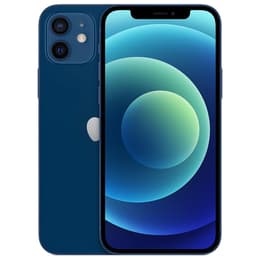
iPhone 12 mini
iPhone 12 mini
Starting at

Refurbished price:168.00

Versus €689.00 new

See options
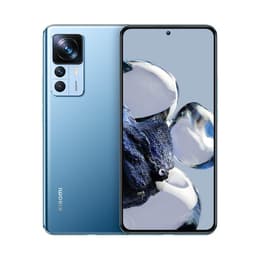
Xiaomi 12T Pro
Xiaomi 12T Pro
Starting at

Refurbished price:201.00

Versus €1,199.00 new

See options

Ratings

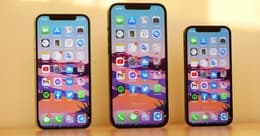
The iPhone 12 Mini, released in late 2020, and the Xiaomi 12T Pro, launched in late 2022, represent distinct approaches to smartphone design and functionality. While the iPhone 12 Mini offers a compact form factor running on Apple's iOS, the Xiaomi 12T Pro provides a larger display and a feature-rich Android experience. Key differentiators include their physical size, display technology, and camera capabilities, catering to different user preferences.

Scores

Durability

When considering the long-term usability of these devices, their release timelines and software support play a significant role.

  • Release and Support: The iPhone 12 Mini was released in November 2020, while the Xiaomi 12T Pro followed in October 2022. Apple typically provides iOS updates for 5-6 years from a device's release, meaning the iPhone 12 Mini has received several major updates and will continue to do so for a period. The Xiaomi 12T Pro launched with Android 12 and is promised three major Android OS updates, extending its software life to at least Android 15, along with four years of security updates. Xiaomi has also extended security update periods for some flagship models to five years.
  • Repairability: The iPhone 12 Mini received an iFixit repairability score of 6 out of 10, noting that display and battery replacements are relatively straightforward due to modular components, though specialized screws and waterproofing add complexity. The Xiaomi 12T Pro has a repairability score of 7 out of 10, indicating good ease of disassembly for certain parts and decent availability of spare components.
  • Practical Lifespan: Both devices are built to last, with the iPhone 12 Mini featuring a Ceramic Shield front cover for enhanced drop performance and the Xiaomi 12T Pro utilizing Gorilla Glass 5 on its front. The Xiaomi 12T Pro also carries an IP53 rating for dust and splash resistance, while the iPhone 12 Mini boasts a more robust IP68 rating for water and dust resistance.

Year of Release

2020

2022

Compatible with latest Update

Yes

Yes

OS

iOS

Android

Foldable

No

No

Performance

The performance of a smartphone is crucial for daily tasks, from app navigation to demanding applications and gaming.

  • Processing Power: The iPhone 12 Mini is equipped with a powerful processor that, at its release, enabled smooth operation, console-quality gaming experiences, and advanced computational photography. The Xiaomi 12T Pro features a more recent and powerful processor, designed to handle demanding apps and multitasking with efficiency, providing a fluid user experience even with graphically intensive games.
  • Multitasking and Storage: The iPhone 12 Mini comes with 4GB of RAM and storage options up to 256GB. The Xiaomi 12T Pro offers more RAM, with options for 8GB or 12GB, which can benefit extensive multitasking, and provides storage up to 256GB. Both devices utilize fast internal storage for quick app loading and data access.
  • Battery Behavior: The iPhone 12 Mini has a smaller battery capacity, which for heavy users, often means needing to recharge before the end of a full day. It can provide around 11 hours of web browsing but significantly less for continuous video playback or demanding 3D gaming. The Xiaomi 12T Pro, with its larger battery, is generally reported to last a full day even with heavy usage, offering around 7-8 hours of screen-on time.

Memory (GB)

4 GB

8 GB

Screen quality

The display is a primary interface for any smartphone, and both devices offer distinct viewing experiences.

  • Display Technology and Size: The iPhone 12 Mini features a 5.4-inch Super Retina XDR OLED display, known for its deep blacks and vibrant colors. The Xiaomi 12T Pro boasts a larger 6.67-inch CrystalRes AMOLED display, providing an expansive viewing area. Both OLED technologies deliver excellent contrast and color reproduction.
  • Resolution and Clarity: The iPhone 12 Mini offers a 2340x1080 pixel resolution, resulting in a high pixel density of 476 pixels per inch (ppi) on its smaller screen. The Xiaomi 12T Pro has a 1220x2712 pixel resolution, with a pixel density of 446 ppi, ensuring sharp visuals on its larger panel.
  • Brightness and Smoothness: Both displays support HDR content, with the iPhone 12 Mini reaching up to 1200 nits peak brightness for HDR and 625 nits typical. The Xiaomi 12T Pro offers 900 nits peak brightness and 500 nits typical. A key difference is the refresh rate: the iPhone 12 Mini has a standard 60Hz refresh rate, while the Xiaomi 12T Pro features a smoother 120Hz adaptive refresh rate, which can dynamically adjust based on content to enhance fluidity and conserve power.

Resolution

1080 x 2340

1220 x 2712

Screen type

Super Retina XDR OLED

AMOLED

Audiovisual

Photography and videography capabilities are often a deciding factor for many users, and these two phones approach imaging differently.

  • Rear Camera Systems: The iPhone 12 Mini features a dual 12-megapixel camera system, comprising a wide lens with optical image stabilization and an ultra-wide lens. It includes features like Night mode, Deep Fusion, and Smart HDR 3 for enhanced image processing. The Xiaomi 12T Pro offers a triple camera setup, highlighted by a 200-megapixel main sensor with optical image stabilization, an 8-megapixel ultra-wide lens, and a 2-megapixel macro lens. The 200MP sensor uses pixel binning to produce detailed 12.5-megapixel images by default.
  • Photography Performance: The iPhone 12 Mini's cameras deliver consistent image quality with good color accuracy and detail in various lighting conditions, benefiting from Apple's computational photography. The Xiaomi 12T Pro's main camera is praised for its detail, dynamic range, and low-light performance, often competing with more expensive devices. Its ultra-wide and macro cameras, however, are generally considered less capable than the main sensor.
  • Video Recording and Audio: The iPhone 12 Mini supports HDR video recording with Dolby Vision up to 4K at 30 frames per second, and standard 4K video at various frame rates. The Xiaomi 12T Pro can record video up to 8K at 24 frames per second from its main camera, with 4K options also available, and includes optical and electronic image stabilization. Both devices offer stereo speakers, with the Xiaomi 12T Pro featuring audio tuned by Harman Kardon and Dolby Atmos support for an enhanced media consumption experience.

Main camera

12 megapixels

200 megapixels

Front camera

12 megapixels

20 megapixels

Miscellaneous

Beyond core features, several practical elements contribute to the overall user experience of these smartphones.

  • Connectivity and Ports: Both devices support 5G connectivity, offering faster mobile data speeds. The iPhone 12 Mini uses Apple's proprietary Lightning connector for charging and data transfer. The Xiaomi 12T Pro features a more widely adopted USB-C 2.0 port. Both include Wi-Fi 6 and NFC for wireless communication and mobile payments.
  • Biometric Security: The iPhone 12 Mini relies on Face ID for secure facial recognition. The Xiaomi 12T Pro offers both face unlock and an in-display fingerprint sensor for biometric authentication.
  • Design and Handling: The iPhone 12 Mini is notably compact and lightweight, measuring 131.5 x 64.2 x 7.4 mm and weighing 135 grams, making it easy for one-handed use. The Xiaomi 12T Pro is a larger device, with dimensions of 163.1 x 75.9 x 8.6 mm and a weight of 205 grams, offering a more expansive screen but requiring a different handling approach. The iPhone 12 Mini also supports MagSafe wireless charging.

Weight

135 g

204 g

Screen size (in)

5.4

6.67

Network

5G

5G

SIM card

Physical SIM + eSIM

Dual Physical SIM

Carrier compatibility

Unlocked

Unlocked

The iPhone 12 Mini and Xiaomi 12T Pro cater to different user priorities, each excelling in specific areas. Users often praise the iPhone 12 Mini for its exceptionally compact size, making it comfortable for one-handed use and easy to carry. Its performance, driven by its capable processor, is generally well-regarded for its smooth operation and ability to handle various tasks. However, a frequent criticism of the iPhone 12 Mini is its battery life, which many heavy users find insufficient for a full day without recharging.

Conversely, the Xiaomi 12T Pro receives commendation for its robust performance, attributed to its powerful processor, which ensures smooth multitasking and gaming experiences. Its large battery capacity and rapid charging capabilities are also significant advantages, often allowing for a full day of use and quick top-ups. The main camera's high resolution and strong low-light performance are frequently highlighted as positive aspects. Some users, however, note that the ultra-wide and macro cameras do not match the quality of the main sensor.

Users prioritizing a highly portable device with a premium build and a long software support window may find the iPhone 12 Mini well-suited to their needs. Those who value a large, high-refresh-rate display, extended battery life, fast charging, and a powerful main camera for a more immersive media and gaming experience might lean towards the Xiaomi 12T Pro. Both devices offer compelling features, and choosing between them often comes down to individual preferences regarding size, operating system ecosystem, and specific feature emphasis. For those considering a more sustainable choice, both models are available as quality-assured refurbished options, extending their lifecycle and reducing electronic waste.


See all articles

Our recent comparisons