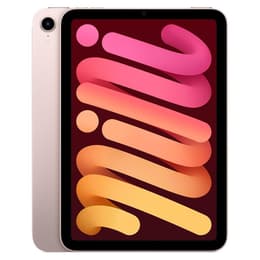
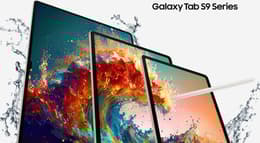

Galaxy Tab S8+ (12.4", 2022) Vs iPad mini 6 (2021, A15 series)

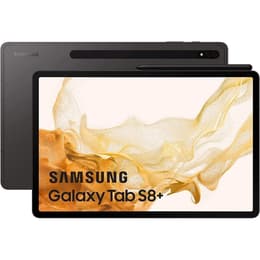
Galaxy Tab S8+ (12.4", 2022)
Starting at

Refurbished price:479.00

Versus €999.00 new

See options
iPad mini 6 (2021, A15 series)
Starting at

Refurbished price:313.00

Versus €669.00 new

See options

Ratings

The Samsung Galaxy Tab S8 Plus, released in early 2022, and the Apple iPad Mini (6th generation), launched in late 2021, represent distinct approaches to the tablet experience. While both offer powerful performance and modern features, they differ significantly in size, operating system, and their intended use cases. The Galaxy Tab S8 Plus runs on Android with Samsung's One UI, providing a larger display and a more desktop-like multitasking environment, whereas the iPad Mini operates on iPadOS, focusing on a compact form factor with a highly optimized app ecosystem.

Scores

Durability

When considering the longevity of a tablet, factors like software support, build quality, and repairability play a crucial role. Both devices offer robust construction and are designed for extended use, but their software ecosystems approach updates differently.

  • Software Support: The Galaxy Tab S8 Plus launched with Android 12 and is expected to receive four major Android OS updates and five years of security updates, extending its software life until approximately 2027 for OS and 2028 for security. The iPad Mini (2021), starting with iPadOS 15, typically benefits from Apple's longer software support, often receiving updates for five to seven years from its release.
  • Build Materials: Both tablets feature premium aluminum constructions, contributing to their durability. The Galaxy Tab S8 Plus utilizes Armor Aluminum, designed for enhanced resilience. The iPad Mini also features an aluminum enclosure, providing a solid and durable feel.
  • Practical Lifespan: Users can expect several years of reliable performance from both devices. The Galaxy Tab S8 Plus's larger screen and included S Pen make it suitable for productivity tasks over a longer period, while the iPad Mini's compact size ensures it remains a highly portable and capable device for content consumption and note-taking for many years.

Year of Release

2022

2021

Compatible with latest Update

Yes

Yes

OS

Android

iPadOS

Performance

Performance is a key differentiator, influencing how smoothly applications run and how effectively users can multitask. Both tablets are equipped with capable internal components designed to handle a variety of tasks.

  • Processing Power: The Galaxy Tab S8 Plus is powered by a current-generation octa-core processor, enabling it to handle demanding applications and multitasking with fluidity. The iPad Mini features a powerful chip that ensures smooth operation across its optimized app ecosystem, providing excellent responsiveness for gaming and productivity.
  • Multitasking and Responsiveness: The Galaxy Tab S8 Plus, with its larger display and Samsung's DeX mode, offers a more desktop-like multitasking experience, allowing users to run multiple apps in resizable windows. The iPad Mini, while smaller, also handles multitasking effectively within iPadOS, though its screen size naturally limits the practical number of simultaneously open applications.
  • Storage and Memory: The Galaxy Tab S8 Plus is available with 8GB or 12GB of RAM and 128GB or 256GB of internal storage, with the added benefit of expandable storage up to 1TB via a microSD card. The iPad Mini comes with 4GB of RAM and storage options of 64GB or 256GB, but does not offer expandable storage.

Memory (GB)

8 GB

4 GB

Screen quality

The display is a primary interface for any tablet, and both devices offer high-quality viewing experiences tailored to their respective sizes and technologies.

  • Display Technology and Size: The Galaxy Tab S8 Plus features a 12.4-inch Super AMOLED display, known for its deep blacks, vibrant colors, and excellent contrast. The iPad Mini sports an 8.3-inch Liquid Retina IPS LCD, which provides accurate colors and good brightness. The choice between these largely depends on preference for screen size and display type.
  • Resolution and Clarity: With a resolution of 2800 x 1752 pixels, the Galaxy Tab S8 Plus offers sharp visuals on its larger screen. The iPad Mini's 2266 x 1488 pixel resolution on its smaller display results in a higher pixel density, contributing to very clear and crisp text and images.
  • Refresh Rate and Brightness: The Galaxy Tab S8 Plus boasts a 120Hz refresh rate, providing smoother scrolling and more fluid animations. The iPad Mini has a standard 60Hz refresh rate. Both tablets offer a brightness of around 500 nits, making them suitable for indoor and outdoor use, though the AMOLED panel on the Tab S8 Plus may offer better visibility in varied lighting conditions due to its superior contrast.

Resolution

1752 x 2800

2266 x 1488

Screen type

Super AMOLED

Liquid Retina display

Pixel density

270ppp

326ppp

Audiovisual

While tablets are not typically primary photography devices, their camera systems are increasingly important for video calls, document scanning, and casual photography. Both tablets include capable cameras for these purposes.

  • Rear Camera System: The Galaxy Tab S8 Plus features a dual rear camera setup with a 13-megapixel wide lens and a 6-megapixel ultrawide lens. The iPad Mini has a single 12-megapixel wide rear camera. Both are suitable for scanning documents or capturing quick photos.
  • Front Camera and Video Calls: For video conferencing, both excel with 12-megapixel ultrawide front-facing cameras. The Galaxy Tab S8 Plus includes intelligent autoframing, while the iPad Mini features Center Stage, both designed to keep the user in the frame during video calls.
  • Video Recording and Audio: Both devices are capable of recording video in 4K resolution. The Galaxy Tab S8 Plus is equipped with quad stereo speakers with Dolby Atmos, providing a rich audio experience. The iPad Mini also offers stereo speakers, suitable for media consumption.

Miscellaneous

Beyond core specifications, several practical features contribute to the overall user experience and daily usability of these tablets.

  • Connectivity and Ports: The Galaxy Tab S8 Plus supports Wi-Fi 6E and Bluetooth 5.2, with optional 5G connectivity. It features a USB-C 3.2 port. The iPad Mini supports Wi-Fi 6 and Bluetooth 5.0, also with optional 5G (sub-6GHz) connectivity, and includes a USB-C 3.1 Gen 1 port.
  • Stylus and Biometrics: The Galaxy Tab S8 Plus comes with the S Pen included, which charges magnetically on the tablet's back and offers precise input for drawing and note-taking. It features an under-display fingerprint sensor for secure unlocking. The iPad Mini supports the Apple Pencil 2nd generation (sold separately) and uses Touch ID integrated into the power button for biometric authentication.
  • Portability and Design: The Galaxy Tab S8 Plus is a larger device, measuring 285 x 185 x 5.7 mm and weighing around 567g, making it a substantial tablet for productivity and media. The iPad Mini is significantly more compact and lighter at 195.4 x 134.8 x 6.3 mm and 293g, emphasizing portability and one-handed use.

Weight

567 g

293 g

Screen size (in)

12.4

8.3

Network

Wi-Fi

Wi-Fi

Carrier compatibility

Without SIM Port

Without SIM Port

The Samsung Galaxy Tab S8 Plus and the iPad Mini (2021) cater to different user needs, primarily distinguished by their size and operating system philosophies. Users often praise the Galaxy Tab S8 Plus for its expansive, vibrant AMOLED display, the versatility offered by the included S Pen, and the productivity enhancements of Samsung DeX. Some common concerns noted by users include the Android tablet software experience not always being fully optimized for larger screens and the absence of a charger in the box.

Conversely, the iPad Mini is frequently lauded for its exceptional portability, powerful performance in a compact form factor, and the robust app ecosystem of iPadOS. Users appreciate its sharp display and the convenience of Touch ID. Potential criticisms sometimes revolve around its smaller screen size being less ideal for extensive multitasking and the lack of a higher refresh rate display.

Users prioritizing a large, immersive display for media consumption, drawing, or a more desktop-like workflow with an included stylus may find the Galaxy Tab S8 Plus well-suited to their needs. Those who value extreme portability, a highly refined app experience, and a device that is easy to carry everywhere might lean towards the iPad Mini. Both tablets offer a quality-assured refurbished option, providing an eco-friendly alternative for consumers seeking reliable performance.


See all articles

Our recent comparisons