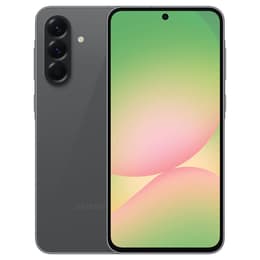



Galaxy A56 Vs Xiaomi Redmi Note 12 Pro

Galaxy A56
Galaxy A56
Starting at

Refurbished price:294.00

Versus €502.00 new

See options
Xiaomi Redmi Note 12 Pro
Starting at

Refurbished price:106.00

Versus €399.00 new

See options

Ratings

The Samsung Galaxy A56 (released March 2025) and the Xiaomi Redmi Note 12 Pro 5G (released January 2023) are both mid-range smartphones offering distinct experiences. While the Galaxy A56 is a more recent device with a focus on extended software support and a refined user interface, the Redmi Note 12 Pro 5G provides a capable set of features with a strong emphasis on fast charging and a vibrant display. Both devices operate on the Android platform, but with different custom interfaces: Samsung's One UI and Xiaomi's MIUI.

Scores

Durability

The practical lifespan of a smartphone is significantly influenced by its release timeline and the manufacturer's commitment to software updates.

  • Release Timeline: The Galaxy A56, launched in March 2025, benefits from being a newer device compared to the Redmi Note 12 Pro 5G, which was released in January 2023. This difference in launch dates inherently provides the A56 with a longer period of relevance in terms of hardware and software.
  • Software Longevity: Samsung has committed to providing the Galaxy A56 with six Android OS upgrades and six years of security updates, extending its support until March 2032. In contrast, the Redmi Note 12 Pro 5G launched with Android 12 and MIUI 13, with typical Xiaomi support cycles generally offering fewer major Android updates compared to Samsung's extended policy for its A-series.
  • Durability Features: The Galaxy A56 features an aluminum frame with Corning Gorilla Glass Victus+ on both the front and back, along with an IP67 rating for dust and water resistance. The Redmi Note 12 Pro 5G uses Gorilla Glass 5 for screen protection and has an IP53 rating, offering a lower level of dust and splash resistance.

Year of Release

2025

2022

Compatible with latest Update

Yes

No

OS

Android

Android

Foldable

No

No

Performance

Performance in daily use is a key differentiator, impacting how smoothly applications run and how efficiently the device handles various tasks.

  • Processor Capabilities: The Galaxy A56 is powered by a newer 4nm Exynos 1580 chipset, which offers improved efficiency and faster graphics processing compared to its predecessor. The Redmi Note 12 Pro 5G features the MediaTek Dimensity 1080 chipset, built on a 6nm process. Both processors are designed to handle everyday applications and multitasking effectively.
  • System Responsiveness: Users of the Galaxy A56 generally report a smooth and responsive experience for daily tasks and even moderate gaming, though some users have noted potential for the device to warm up during extended demanding use. The Redmi Note 12 Pro 5G also provides smooth performance for general use and mid-range gaming, with some user reports of occasional thermal management challenges, particularly with the 4G variant's older chipset.
  • Storage and RAM: The Galaxy A56 comes with 8GB or 12GB of RAM and 128GB or 256GB of internal storage, utilizing UFS 3.1 for faster data access. It does not support expandable storage. The Redmi Note 12 Pro 5G offers configurations with 6GB, 8GB, or 12GB of RAM and 128GB or 256GB of internal storage, using UFS 2.2 technology, and also lacks expandable storage for the 5G model.

Memory (GB)

8 GB

8 GB

Screen quality

The display is the primary interface for interaction, and both devices offer vibrant viewing experiences with some key differences in technology and features.

  • Display Technology and Size: The Galaxy A56 features a 6.7-inch Super AMOLED display, while the Redmi Note 12 Pro 5G has a 6.67-inch AMOLED display. Both technologies deliver deep blacks and vibrant colors, characteristic of OLED panels.
  • Resolution and Clarity: Both phones offer Full HD+ resolutions (2340x1080 pixels for A56 and 2400x1080 pixels for Redmi Note 12 Pro 5G), resulting in sharp and clear visuals for typical viewing distances.
  • Brightness and Refresh Rate: The Galaxy A56's Super AMOLED display can reach a peak brightness of 1900 nits, making it highly visible in bright outdoor conditions, and features a 120Hz refresh rate for smooth scrolling. The Redmi Note 12 Pro 5G also boasts a 120Hz AMOLED display with HDR10+ support, and a typical brightness of 900 nits (HBM).

Resolution

1080 x 2340

1080 x 2400

Screen type

Super AMOLED

AMOLED

Audiovisual

Camera capabilities are a significant factor for many users, and both smartphones offer versatile setups for capturing photos and videos.

  • Rear Camera System: The Galaxy A56 features a triple-camera setup with a 50MP main sensor with Optical Image Stabilization (OIS), a 12MP ultrawide lens, and a 5MP macro lens. The Redmi Note 12 Pro 5G also has a triple-camera system, including a 50MP main sensor with OIS, an 8MP ultrawide lens, and a 2MP macro lens.
  • Photography Performance: The Galaxy A56's camera system includes AI capabilities for enhanced subject detection and features like Object Eraser. User feedback suggests the A56 performs well in good lighting conditions, with strong video and selfie performance, though low-light photography might be average. The Redmi Note 12 Pro 5G's 50MP main sensor with OIS is noted for good detail, especially in low-light conditions, though some users have reported inconsistencies with AI and HDR processing.
  • Video Recording and Front Camera: Both devices can record videos up to 4K at 30 frames per second. The Galaxy A56 has a 12MP front camera, capable of 4K video recording. The Redmi Note 12 Pro 5G is equipped with a 16MP front camera.

Main camera

4K@30fps

50 megapixels

Front camera

13 megapixels

16 megapixels

Miscellaneous

Beyond core specifications, several practical features contribute to the overall user experience and daily convenience.

  • Connectivity and Ports: Both smartphones support 5G connectivity, Wi-Fi 6, and NFC. The Galaxy A56 features Bluetooth 5.4, while the Redmi Note 12 Pro 5G uses Bluetooth 5.2. Both devices utilize a USB Type-C port for charging and data transfer. The Galaxy A56 does not have a 3.5mm headphone jack, whereas the Redmi Note 12 Pro 5G retains one.
  • Build Materials and Handling: The Galaxy A56 boasts a more premium build with an aluminum frame and Gorilla Glass Victus+ on both front and back, contributing to a solid feel and enhanced durability. It weighs 198g and measures 7.4mm thick. The Redmi Note 12 Pro 5G has a glass front (Gorilla Glass 5) and a plastic back, weighing 187g and measuring 7.9mm thick.
  • Security and Other Features: The Galaxy A56 includes an in-display optical fingerprint sensor and features like Circle to Search. The Redmi Note 12 Pro 5G also features an in-display fingerprint sensor.

Weight

197 g

187 g

Screen size (in)

6.5

6.67

Network

5G

5G

SIM card

Dual Physical SIM + eSIM

Dual Physical SIM

Carrier compatibility

Unlocked

Unlocked

Connector

USB-C

USB-C

The Samsung Galaxy A56 and the Xiaomi Redmi Note 12 Pro 5G cater to users with slightly different priorities, reflecting their respective release timelines and design philosophies.

The Galaxy A56 is often praised for its robust software support, offering an impressive six years of Android updates and security patches, which is a significant advantage for users prioritizing long-term device longevity. Its premium build with an aluminum frame and Gorilla Glass Victus+ also contributes to a perception of enhanced durability. User feedback generally highlights a polished user interface and capable performance for everyday tasks, though some reports mention potential for overheating during intensive use. The camera system is noted for strong video and selfie performance, with AI features adding to its versatility.

Conversely, the Redmi Note 12 Pro 5G, while an older model, is appreciated for its vibrant AMOLED display and fast charging capabilities. Users often find its performance suitable for daily use and moderate gaming. However, some users have expressed concerns regarding less consistent software update policies compared to Samsung and occasional issues with thermal management, particularly in the 4G variant. The camera is generally considered good for its class, especially the main sensor with OIS, but some AI processing can be inconsistent.

Users prioritizing long-term software support, a more premium build, and a slightly newer overall package may find the Galaxy A56 better suited to their needs. Its extended update policy makes it a compelling choice for those who keep their devices for several years. On the other hand, users who value rapid charging, a still-capable display, and a device that has been on the market longer, potentially offering a more established ecosystem of accessories, might lean towards the Redmi Note 12 Pro 5G. Both devices represent solid choices in the mid-range segment, and considering a quality-assured refurbished option for either model can be an eco-friendly alternative for consumers.


See all articles

Our recent comparisons