
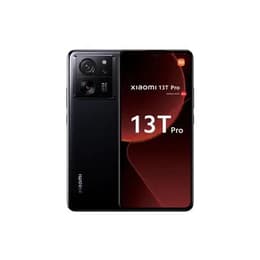


Google Pixel 9 Pro XL Vs Xiaomi 13T Pro

Google Pixel 9 Pro XL
Starting at

Refurbished price:423.00

Versus €1,298.07 new

See options
Xiaomi 13T Pro
Xiaomi 13T Pro
Starting at

Refurbished price:241.00

Versus €900.00 new

See options

Ratings

The Google Pixel 9 Pro XL (2024) and the Xiaomi 13T Pro (2023) are both advanced Android smartphones, each offering a distinct set of features and user experiences. While the Pixel 9 Pro XL emphasizes long-term software support and advanced computational photography, the Xiaomi 13T Pro focuses on rapid charging capabilities and a high-refresh-rate display. Both devices run on the Android operating system, but they differ in their software overlays and update commitments.

Scores

Durability

When considering the longevity of these devices, several factors come into play, including their release timelines, software support, and physical design for durability and repair.

  • Release Timeline and OS Support: The Google Pixel 9 Pro XL, released in August 2024, benefits from Google's commitment to providing seven years of software updates, extending its support until Android 22. This offers a significantly longer software lifespan compared to the Xiaomi 13T Pro, which was released in September 2023 and is promised four major Android OS upgrades and five years of security updates.
  • Repairability: The Pixel 9 Pro XL features a dual-entry design, allowing access to internal components from either the front screen or the back panel, which can simplify certain repairs. Key components like the USB-C port are on a separate daughterboard, making replacement more straightforward. However, some assessments indicate that screen and battery replacements can still be delicate due to strong adhesives. Repairability scores for the Pixel 9 Pro XL vary, with some sources indicating an 8.6/10 and others a 3.5/10 or 5/10, highlighting potential challenges despite design improvements. The Xiaomi 13T Pro, while featuring an IP68 rating for dust and water resistance, does not have the same publicized repair-friendly design elements, and specific repairability scores are less consistently highlighted.
  • Expected Practical Lifespan: Users prioritizing extended software support and a potentially easier path for component-level repairs (for some parts) may find the Pixel 9 Pro XL to offer a longer practical lifespan. The Xiaomi 13T Pro, while robust, has a shorter guaranteed software update window.

Year of Release

2024

2023

Compatible with latest Update

Yes

Yes

OS

Android

Android

Foldable

No

No

Performance

Both smartphones are equipped with powerful internal components designed to handle demanding applications and multitasking, though they achieve this with different underlying architectures.

  • Processor Capabilities: The Google Pixel 9 Pro XL is powered by Google's Tensor G4 processor, which is optimized for AI-driven tasks and provides a smooth user experience, particularly with Google's ecosystem of services. The Xiaomi 13T Pro utilizes the MediaTek Dimensity 9200+ chipset, known for its strong performance in gaming and intensive applications. Both processors ensure responsive app loading and efficient multitasking.
  • RAM and Storage: The Pixel 9 Pro XL comes with 16GB of RAM, providing ample capacity for heavy multitasking and ensuring applications remain active in the background. It offers storage options up to 1TB, utilizing UFS 3.1 technology. The Xiaomi 13T Pro is available with 12GB or 16GB of RAM and offers storage up to 1TB, featuring the faster UFS 4.0 standard for quicker data access.
  • Battery Behavior: The Pixel 9 Pro XL features a 5060mAh battery, generally providing a full day of use even for heavy users. It supports fast wired charging up to 37W or 45W with a compatible charger. The Xiaomi 13T Pro has a 5000mAh battery, also capable of lasting a full day. A significant differentiator is its 120W wired charging, which can fully charge the device in approximately 19 minutes. The Xiaomi 13T Pro does not support wireless charging.

Memory (GB)

16 GB

12 GB

Screen quality

The visual experience on both devices is designed to be immersive, with each offering a high-quality display tailored for vibrant content consumption and smooth interactions.

  • Display Technology and Resolution: The Google Pixel 9 Pro XL features a 6.8-inch QHD+ OLED display, providing deep blacks and vibrant colors with a resolution of 2992x1344 pixels. The Xiaomi 13T Pro sports a 6.67-inch AMOLED display with a resolution of 1220 x 2712 pixels, also delivering rich colors and contrast.
  • Brightness and Refresh Rate: The Pixel 9 Pro XL offers a peak brightness of 3,000 nits, ensuring excellent visibility even in bright outdoor conditions, and a 120Hz refresh rate for smooth scrolling and animations. The Xiaomi 13T Pro also boasts a high peak brightness of 2,600 nits and an even higher 144Hz refresh rate, contributing to a very fluid visual experience.
  • Viewing Experience: Both displays support HDR10+ and Dolby Vision (Xiaomi 13T Pro), enhancing the viewing of compatible media with improved dynamic range. The slightly larger screen of the Pixel 9 Pro XL might offer a marginally more expansive viewing area, while the Xiaomi 13T Pro's higher refresh rate could be noticeable to users who prioritize the smoothest possible motion.

Resolution

1344 x 2992

1220 x 2712

Screen type

LTPO OLED

AMOLED

Audiovisual

Both smartphones offer advanced camera systems, each with unique strengths in capturing photos and videos, catering to different photographic preferences.

  • Rear Camera System: The Google Pixel 9 Pro XL features a versatile triple-camera setup, including a 50MP wide-angle primary sensor, a 48MP ultrawide camera, and a 48MP telephoto lens with up to 5x optical zoom and 30x digital zoom. It is highly praised for its computational photography, delivering excellent color accuracy, dynamic range, and low-light performance. The Xiaomi 13T Pro also comes with a triple-camera system, co-engineered with Leica, featuring a 50MP wide sensor with OIS, a 50MP telephoto lens with 2x optical zoom, and a 12MP ultrawide lens. It is noted for its ability to capture crisp images, especially in night mode and portraits.
  • Video Recording Quality: The Pixel 9 Pro XL is capable of recording video at 8K resolution at 30 frames per second. The Xiaomi 13T Pro also supports 8K video recording, at 24 frames per second.
  • Front Camera and Audio: The Pixel 9 Pro XL includes a 42MP front camera, offering high-resolution selfies and video calls. The Xiaomi 13T Pro has a 20MP front camera, which records video at 1080p at 30 frames per second. Both devices feature stereo speakers, with the Xiaomi 13T Pro specifically mentioning Dolby Atmos support for an enhanced audio experience.

Main camera

50 megapixels

50 megapixels

Front camera

42 megapixels

20 megapixels

Miscellaneous

Beyond core performance and display, several practical elements contribute to the overall user experience and daily usability of these devices.

  • Connectivity and Ports: Both the Pixel 9 Pro XL and the Xiaomi 13T Pro support 5G connectivity, ensuring fast mobile data speeds. They also feature modern Wi-Fi standards, with the Xiaomi 13T Pro supporting Wi-Fi 7, and Bluetooth 5.4. Both devices utilize a USB-C port for charging and data transfer.
  • Biometric Security: The Pixel 9 Pro XL incorporates an ultrasonic fingerprint scanner located under the display, known for its quick and consistent unlocking. It also offers face unlock. The Xiaomi 13T Pro also features an in-display optical fingerprint sensor.
  • Design and Handling: The Pixel 9 Pro XL has dimensions of 162.8 x 76.6 x 8.5mm and a weight of 221g, with a premium feel and durable materials like Gorilla Glass Victus 2 on the screen and a recycled aluminum frame. The Xiaomi 13T Pro measures 162.2 x 75.7 x 8.5mm (glass variant) and weighs 206g (glass variant), featuring Corning Gorilla Glass 5 on the front and options for a glass or eco-leather back with a plastic frame. Both devices carry an IP68 rating for dust and water resistance. The Xiaomi 13T Pro also includes an IR blaster, a feature not present on the Pixel.

Weight

221 g

200 g

Screen size (in)

6.8

6.67

Network

5G

5G

SIM card

Physical SIM + eSIM

Physical SIM + eSIM

Carrier compatibility

Unlocked

Unlocked

Connector

USB-C

USB-C

User feedback for the Google Pixel 9 Pro XL often highlights its exceptional camera capabilities, consistently delivering high-quality images with minimal effort, and its bright, vibrant display. Users also appreciate the clean Android experience and the promise of extensive software support. Some criticisms occasionally mention its weight and size, which might be a factor for those preferring a more compact device, and varying opinions on battery performance, though many find it sufficient for a full day's use.

The Xiaomi 13T Pro receives praise for its incredibly fast 120W charging, allowing for rapid power-ups, and its smooth 144Hz AMOLED display. Its Leica-tuned camera system is also well-regarded for producing detailed photos and videos. Common points of discussion include its battery life, which some users find good for a full day, while others note it might not match the endurance of some competitors under heavy load. The absence of wireless charging is also a point of consideration for some users.

Users prioritizing long-term software updates, a highly refined camera experience with advanced computational photography, and a clean Android interface may find the Google Pixel 9 Pro XL to be a suitable choice. Its improved repairability features also contribute to its appeal for those considering device longevity. Conversely, individuals who value extremely fast charging, a very high refresh rate display, and a powerful processor for gaming and demanding tasks might lean towards the Xiaomi 13T Pro. Both devices offer a premium smartphone experience, and choosing between them often comes down to these specific priorities.

For those looking to make an informed and sustainable choice, considering quality-assured refurbished options for either of these models can be an eco-friendly alternative.


See all articles

Our recent comparisons