


Google Pixel 8a Vs Xiaomi Redmi Note 13

Google Pixel 8a
Google Pixel 8a
Starting at

Refurbished price:232.00

Versus €549.00 new

See options
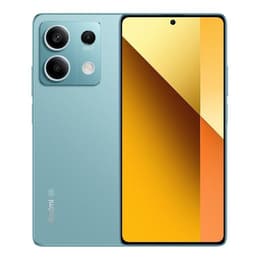
Xiaomi Redmi Note 13
Starting at

Refurbished price:137.00

Versus €340.00 new

See options

Ratings

The Google Pixel 8A, released in May 2024, and the Xiaomi Redmi Note 13, launched in January 2024, are both contemporary smartphones designed to offer a balanced experience for everyday users. While the Pixel 8A emphasizes advanced computational photography and extended software longevity, the Redmi Note 13 focuses on a larger display and faster wired charging capabilities.

Scores

Durability

The longevity of a smartphone is influenced by its software support, physical durability, and ease of repair. These two devices present different approaches to these aspects.

  • Software Support: The Google Pixel 8A offers an extensive seven years of operating system and security updates, ensuring the device remains current and secure until at least May 2031. In contrast, the Xiaomi Redmi Note 13 is committed to receiving two to three major Android OS updates and four years of security patches, extending its support until approximately 2028.
  • Physical Durability: The Pixel 8A features Corning Gorilla Glass 3 for display protection and an IP67 rating for dust and water resistance, indicating it can withstand immersion in up to one meter of water for 30 minutes. The Redmi Note 13 (4G variant) also uses Gorilla Glass 3, while the 5G variant upgrades to Gorilla Glass 5, and both carry an IP54 rating, providing protection against dust and splashes.
  • Repairability: The Redmi Note 13 has an official repairability index score of 8.2 out of 10, suggesting a design that facilitates easier repairs and component replacement. The Pixel 8A has conflicting repairability assessments, with some sources indicating a lower score due to factors like strong adhesive and a soldered charging port, while others highlight Google's provision of manuals and OEM parts.

Year of Release

2024

2024

Compatible with latest Update

Yes

Yes

OS

Android

Android

Foldable

No

No

Performance

Performance in daily use is a key consideration, encompassing how smoothly applications run, multitasking capabilities, and overall system responsiveness.

  • Processing Power: The Google Pixel 8A is equipped with a current-generation processor, which allows it to handle demanding applications, complex tasks, and graphic-intensive games with efficiency. The Xiaomi Redmi Note 13 utilizes a mid-range processor (Snapdragon 685 for the 4G model and MediaTek Dimensity 6080 for the 5G model), which provides smooth performance for everyday activities like browsing, social media, and light gaming.
  • Multitasking and Storage: Both devices offer ample RAM, with the Pixel 8A typically featuring 8GB, and the Redmi Note 13 available in configurations up to 12GB. This allows for efficient multitasking and switching between applications. Storage options for the Pixel 8A include 128GB and 256GB, while the Redmi Note 13 also offers various configurations starting from 128GB.
  • Battery Behavior: The Pixel 8A houses a 4492 mAh battery, which, combined with software optimizations, generally provides a full day of use for most users. The Redmi Note 13 comes with a larger 5000 mAh battery, often translating to extended usage times, with some users reporting over a day and a half of power on a single charge. The Redmi Note 13 also supports faster wired charging at 33W, compared to the Pixel 8A's 18W wired charging. The Pixel 8A additionally supports 7.5W wireless charging, a feature not present on the Redmi Note 13.

Memory (GB)

8 GB

8 GB

Screen quality

The visual experience is largely defined by the display, including its technology, resolution, brightness, and refresh rate.

  • Display Technology and Size: Both smartphones feature vibrant OLED displays, known for deep blacks and excellent contrast. The Pixel 8A has a 6.1-inch OLED screen, offering a compact viewing experience. The Redmi Note 13 provides a larger 6.67-inch AMOLED display, which can enhance immersion for media consumption and gaming.
  • Resolution and Brightness: Both devices offer Full HD+ resolutions (1080x2400 pixels), ensuring sharp and clear visuals. The Pixel 8A boasts a peak brightness of up to 2000 nits, making it highly visible even in bright outdoor conditions. The Redmi Note 13 (4G) also reaches a peak brightness of 1800 nits, while the 5G variant has a peak brightness of 1000 nits, providing good visibility in various lighting environments.
  • Refresh Rate: Both phones feature a 120Hz refresh rate, contributing to smoother scrolling, more fluid animations, and a more responsive feel during interactions and gaming.

Resolution

1080 x 2400

1080 x 2400

Screen type

OLED

AMOLED

Audiovisual

Camera capabilities are a significant factor for many users, encompassing photo and video quality across different scenarios.

  • Rear Camera System: The Google Pixel 8A features a dual-camera setup on the rear, including a 64MP main sensor with optical image stabilization and a 13MP ultrawide lens. The Redmi Note 13 offers a triple-camera system, typically comprising a 108MP main sensor, an 8MP ultrawide, and a 2MP macro lens.
  • Photography Performance: The Pixel 8A is known for its strong computational photography, delivering consistent and high-quality images with accurate colors and good detail, particularly in various lighting conditions, including low light. The Redmi Note 13's 108MP main camera performs well in daylight, capturing detailed images with balanced contrast and saturation.
  • Video Recording and Front Camera: The Pixel 8A supports 4K video recording at 30 frames per second on its rear cameras and 4K at 30 frames per second on its 13MP front camera. The Redmi Note 13 records video at 1080p at 30 frames per second, and its 16MP front camera captures sharp images in good lighting.

Main camera

64 megapixels

108 megapixels

Front camera

13 megapixels

16 megapixels

Miscellaneous

Beyond core specifications, several practical features contribute to the overall user experience and device utility.

  • Connectivity and Ports: Both devices support 5G connectivity, ensuring access to faster mobile networks where available. The Pixel 8A features a USB-C port for charging and data transfer but lacks a 3.5mm headphone jack. The Redmi Note 13 also uses a USB-C port and retains the 3.5mm headphone jack, which can be a convenience for users with wired audio accessories.
  • Biometric Security: Both smartphones incorporate in-display fingerprint sensors for secure unlocking. The Pixel 8A also includes face unlock, though some users report it being less secure in certain conditions.
  • Design and Handling: The Pixel 8A has a compact form factor, measuring 152.1 x 72.7 x 8.9mm and weighing 188g, making it comfortable for one-handed use. The Redmi Note 13 (4G) is slightly larger at 162.24 x 75.55 x 8.0mm and 188.5g, while the 5G variant is a bit lighter and thinner at 161.1 x 74.9 x 7.6 mm and 174.5g, offering a larger screen experience. The Pixel 8A features a matte finish on its back, while the Redmi Note 13 often has a glossy plastic back.

Weight

188 g

175 g

Screen size (in)

6.1

6.67

Network

5G

5G

SIM card

Physical SIM + eSIM

Dual Physical SIM

Carrier compatibility

Unlocked

Unlocked

The Google Pixel 8A and Xiaomi Redmi Note 13 cater to slightly different user priorities, each excelling in distinct areas. Users often praise the Pixel 8A for its exceptional camera performance, which benefits from Google's advanced image processing, and its commitment to seven years of software updates, ensuring long-term relevance and security. Some common criticisms of the Pixel 8A include its slower wired charging speed and, for some, the optical fingerprint scanner's responsiveness.

The Xiaomi Redmi Note 13 is frequently lauded for its large, vibrant AMOLED display, extended battery life, and faster wired charging capabilities. Users also appreciate the inclusion of a 3.5mm headphone jack. However, some reviews note that the processor, while capable for daily tasks, may not match the performance of higher-end chipsets for very demanding applications, and its video recording capabilities are limited to 1080p.

Therefore, users prioritizing a compact device with a top-tier camera experience, flagship-level performance, and unparalleled software longevity may find the Google Pixel 8A well-suited to their needs. Conversely, individuals who value a larger display for media consumption, a longer battery life with quicker charging, and the convenience of a headphone jack might lean towards the Xiaomi Redmi Note 13. Both devices offer compelling features, and considering a quality-assured refurbished option for either model can be an eco-friendly alternative to extend their lifecycle.


See all articles

Our recent comparisons