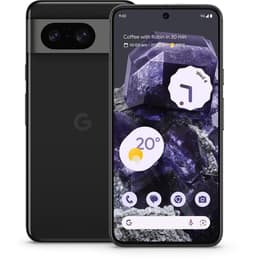
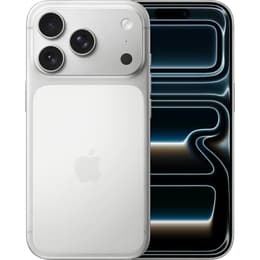


Google Pixel 8a Vs iPhone 17 Pro

Google Pixel 8a
Google Pixel 8a
Starting at

Refurbished price:232.00

Versus €549.00 new

See options
iPhone 17 Pro
iPhone 17 Pro
Starting at

Refurbished price:1,064.00

Versus €1,339.00 new

See options

Ratings

The Google Pixel 8A, released in May 2024, and the iPhone 17 Pro, launched in September 2025, represent distinct approaches to smartphone design and functionality. While the Pixel 8A focuses on delivering a strong user experience with advanced AI features within the Android ecosystem, the iPhone 17 Pro offers Apple's premium hardware and software integration. Key differentiators include their operating systems, camera capabilities, and overall performance profiles, catering to different user preferences.

Scores

Durability

When considering the longevity of these devices, both offer substantial software support and robust build quality, though with different approaches.

  • Software Support: The Google Pixel 8A stands out with an impressive commitment to seven years of OS, security, and Feature Drop updates, extending its software relevance until at least 2031. The iPhone 17 Pro, running on iOS 26, typically receives major iOS updates for approximately five to six years from its release, ensuring a long period of current features and security.
  • Physical Durability: The Pixel 8A features Corning Gorilla Glass 3 for screen protection and an IP67 rating for dust and water resistance, capable of submersion up to 1 meter for 30 minutes. The iPhone 17 Pro elevates durability with Ceramic Shield 2 on both the front and back, offering enhanced scratch and drop resistance, and boasts an IP68 rating, allowing submersion up to 6 meters for 30 minutes.
  • Expected Lifespan: Both devices are built to last, with the Pixel 8A's extended software support potentially offering a longer period of official updates, while the iPhone 17 Pro's premium materials and higher water resistance rating contribute to its physical resilience over time.

Year of Release

2024

2025

Compatible with latest Update

Yes

Yes

OS

Android

iOS

Foldable

No

No

Performance

The performance of a smartphone is crucial for daily tasks, and these two devices offer different levels of processing power and efficiency.

  • Processing Power: The Google Pixel 8A is powered by the Google Tensor G3, which provides smooth operation for everyday applications and integrates Google's AI features efficiently. The iPhone 17 Pro features the A19 Pro chip, which includes a 6-core CPU, a 6-core GPU with Neural Accelerators, and a 16-core Neural Engine, built on a 3nm process. This hardware is designed for demanding tasks like advanced gaming, video editing, and complex AI models, offering significant performance improvements over previous generations.
  • Multitasking and Responsiveness: With 8GB of RAM, the Pixel 8A handles multitasking and app switching effectively for most users. The iPhone 17 Pro comes with 12GB of LPDDR5X RAM, providing ample capacity for intensive multitasking, running multiple demanding applications simultaneously, and ensuring a highly responsive user experience.
  • Storage Options: The Pixel 8A is available with 128GB or 256GB of internal storage. The iPhone 17 Pro offers more extensive storage configurations, starting from 256GB and going up to 1TB, with a 2TB option available for the Pro Max variant, catering to users with larger storage needs.

Memory (GB)

8 GB

12 GB

Screen quality

The visual experience is a primary interaction point for smartphones, and both models offer high-quality displays with distinct characteristics.

  • Display Technology and Resolution: The Google Pixel 8A features a 6.1-inch OLED display with a 1080x2400 pixel resolution, resulting in a pixel density of approximately 430 pixels per inch (ppi). The iPhone 17 Pro boasts a 6.3-inch Super Retina XDR OLED display with a resolution of 2622x1206 pixels, providing a sharper image with 460 ppi.
  • Brightness and Refresh Rate: The Pixel 8A's display offers a 120Hz refresh rate for smoother scrolling and animations, with a claimed peak brightness of 2000 nits, and measured peak brightness around 1378-1508 nits. The iPhone 17 Pro also features a ProMotion display with an adaptive refresh rate up to 120Hz, and significantly higher brightness levels, reaching 1000 nits typical, 1600 nits for HDR content, and an impressive 3000 nits peak brightness for outdoor visibility.
  • Viewing Experience: Both devices provide vibrant colors and deep blacks characteristic of OLED technology. The iPhone 17 Pro's higher resolution, greater peak brightness, and anti-reflective coating contribute to a more refined viewing experience, especially in bright outdoor conditions.

Resolution

1080 x 2400

2622x1206

Screen type

OLED

Super Retina XDR

Audiovisual

Camera capabilities are a significant factor for many users, and these phones offer different strengths in their imaging systems.

  • Rear Camera System: The Google Pixel 8A is equipped with a dual-camera setup, including a 64MP wide-angle main sensor with optical image stabilization (OIS) and a 13MP ultrawide camera with a 120-degree field of view. The iPhone 17 Pro features a more advanced triple 48MP Fusion camera system, comprising a main wide-angle lens with OIS, an ultrawide lens with a 120-degree field of view, and a telephoto lens that offers 8x optical-quality zoom through sensor cropping, also with OIS. It also includes a LiDAR scanner for improved depth sensing.
  • Photography Features: The Pixel 8A leverages Google's computational photography with features like Night Sight for low-light conditions and AI-powered editing tools such as Magic Editor and Best Take. The iPhone 17 Pro offers a comprehensive suite of professional-grade features, including ProRes video recording up to 4K at 120fps, ProRes RAW, Apple Log 2 for advanced color grading, Cinematic mode, Action mode, and Spatial video recording.
  • Front Camera and Video Quality: The Pixel 8A has a 13MP front-facing camera with a 96.5-degree field of view. The iPhone 17 Pro features an 18MP Center Stage front camera, designed to keep subjects framed during video calls and offering enhanced image stabilization. Both devices are capable of high-quality video recording, with the iPhone 17 Pro offering more advanced options for professional video capture.

Main camera

64 megapixels

48 megapixels

Front camera

13 megapixels

18 megapixels

Miscellaneous

Beyond core performance and display, several practical elements contribute to the overall user experience of these smartphones.

  • Connectivity and Ports: Both the Google Pixel 8A and the iPhone 17 Pro support 5G connectivity for fast mobile data. The Pixel 8A uses a USB-C port for charging and data transfer. The iPhone 17 Pro also features a USB-C port, aligning with modern connectivity standards. Both devices offer Wi-Fi and Bluetooth capabilities, with the iPhone 17 Pro likely incorporating the latest standards for faster and more reliable connections.
  • Biometric Security and Design: The Pixel 8A includes an under-display optical fingerprint sensor for secure unlocking. The iPhone 17 Pro relies on secure facial authentication (Face ID) and features the Dynamic Island at the top of its display for interactive alerts and activities. The Pixel 8A has dimensions of 152.1 x 72.7 x 8.9mm and weighs 188g, with a design that includes a glass front (Gorilla Glass 3) and an aluminum frame. The iPhone 17 Pro measures 150mm x 71.9mm x 8.75mm and weighs 206g, featuring a unibody aluminum frame.
  • Battery and Charging: The Pixel 8A is equipped with a 4492 mAh battery, supporting 18W wired fast charging and 7.5W Qi wireless charging. The iPhone 17 Pro has a 4252 mAh battery (eSIM model), offering faster wired charging (up to 50% in 20-30 minutes with a 35-40W adapter), MagSafe wireless charging, Qi2 wireless charging, and even reverse wireless charging for accessories.

Weight

188 g

206 g

Screen size (in)

6.1

6.3

Network

5G

5G

SIM card

Physical SIM + eSIM

Physical SIM + eSIM

Carrier compatibility

Unlocked

Unlocked

The Google Pixel 8A and iPhone 17 Pro cater to different user priorities, each excelling in specific areas. User sentiment for the Pixel 8A often praises its camera performance, especially its computational photography features, and its long-term software support. Criticisms sometimes point to its mid-range hardware compared to more premium devices. For the iPhone 17 Pro, users frequently highlight its powerful processing capabilities, advanced camera system with extensive video features, and the vibrant, bright display. Some discussions may revolve around its weight or the incremental nature of upgrades compared to its direct predecessor.

Users prioritizing an extensive software update lifespan and a strong camera experience with AI-driven enhancements within the Android ecosystem may find the Google Pixel 8A well-suited to their needs. Its balanced performance and practical features make it a reliable daily driver. Conversely, users who require top-tier performance for demanding applications, a highly versatile and professional-grade camera system, and a premium display experience within the iOS ecosystem will likely lean towards the iPhone 17 Pro. Its robust build and advanced features are designed for power users and creative professionals.

For those considering either device, exploring quality-assured refurbished options can provide an eco-friendly alternative, offering access to these advanced technologies while supporting sustainable consumption.


See all articles

Our recent comparisons