

Google Pixel 8 Pro Vs OnePlus 10 Pro

Google Pixel 8 Pro
Google Pixel 8 Pro
Starting at

Refurbished price:293.00

Versus €1,099.00 new

See options
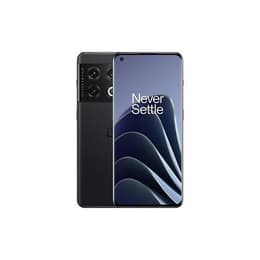
OnePlus 10 Pro
OnePlus 10 Pro
Starting at

Refurbished price:228.00

Versus €999.00 new

See options

Ratings

The Google Pixel 8 Pro (released October 2023) and the OnePlus 10 Pro (released January 2022 in China, March 2022 globally) are both high-end Android smartphones that offer distinct experiences. While the Pixel 8 Pro emphasizes advanced computational photography and long-term software support, the OnePlus 10 Pro focuses on rapid charging and a fluid display experience. Both devices run on the Android operating system, but with different software philosophies and update commitments.

Scores

Durability

The practical lifespan of a smartphone is influenced by its physical resilience and the duration of software support it receives.

  • Release Timeline: The Google Pixel 8 Pro is a more recent device, launched in October 2023, making it nearly two years newer than the OnePlus 10 Pro, which debuted in early 2022.
  • Software Longevity: Google offers an extensive seven years of OS, security, and Feature Drop updates for the Pixel 8 Pro, ensuring it remains current and secure for a prolonged period. In contrast, the OnePlus 10 Pro, having received its last major update to Android 16 and OxygenOS 16 in early 2026, concludes its major OS update cycle, though security updates may continue for a limited time.
  • Repairability & Durability: The Pixel 8 Pro has a moderate repairability score, with genuine parts available through partners like iFixit, and its construction includes Gorilla Glass Victus 2 on both front and back. The OnePlus 10 Pro also has a moderate repairability score, but some durability tests have shown concerns regarding its structural integrity, particularly a tendency to snap under significant bending pressure due to a design weakness below the camera module.

Year of Release

2023

2022

Compatible with latest Update

Yes

Yes

Foldable

No

No

Performance

Performance in daily use is a key differentiator, impacting how smoothly applications run and how efficiently the device handles demanding tasks.

  • Processor Capabilities: The Pixel 8 Pro features a current-generation processor designed by Google, which excels in AI-driven tasks and provides a generally smooth user experience for everyday operations. The OnePlus 10 Pro is powered by a powerful, though previous-generation, processor that initially delivered quick and fluid performance.
  • System Responsiveness: Users of the Pixel 8 Pro generally report a very quick and smooth interface, with efficient handling of daily processes. However, some users have noted occasional instances of the device becoming warm or experiencing minor lag during intensive use or while charging. The OnePlus 10 Pro was praised for its initial speed and responsiveness, but some long-term users reported a decline in performance over time, with instances of apps slowing down, glitches, and freezing.
  • Battery Behavior: The Pixel 8 Pro is equipped with a 5050 mAh battery. User experiences with battery life vary, with some finding it sufficient for a full day, while others report faster drainage, particularly on idle or with heavy usage, and slower charging speeds compared to some competitors. The OnePlus 10 Pro has a 5000 mAh battery and is widely recognized for its fast charging capabilities, offering 80W wired charging (65W in North America) and 50W wireless charging, allowing for rapid power replenishment. Many users report excellent battery life, often lasting a full day or more.

Memory (GB)

12 GB

8 GB

Screen quality

The display is the primary interface for interaction, and both devices offer high-quality viewing experiences with distinct characteristics.

  • Display Technology & Clarity: Both smartphones feature large 6.7-inch LTPO OLED displays, providing deep blacks and vibrant colors. The Pixel 8 Pro's Super Actua display has a resolution of 1344 x 2992 pixels, while the OnePlus 10 Pro offers a slightly higher resolution of 1440 x 3216 pixels.
  • Brightness Levels: The Pixel 8 Pro's display can reach a peak brightness of up to 2400 nits, making it exceptionally bright and highly visible even in direct sunlight. The OnePlus 10 Pro's display reaches a peak brightness of up to 1300 nits, which is still bright enough for most outdoor conditions.
  • Refresh Rate & Smoothness: Both devices feature adaptive refresh rates ranging from 1Hz to 120Hz, which helps in providing smooth scrolling and animations while conserving battery life by scaling down when static content is displayed.
  • Design & Viewing Experience: The Pixel 8 Pro features a flat display, offering a more traditional smartphone feel. The OnePlus 10 Pro, on the other hand, has a curved-edge display, which some users find enhances the immersive viewing experience and makes the phone feel more slender in hand.

Resolution

1344 x 2992

1440 x 3216

Screen type

LTPO OLED

LTPO2 Fluid AMOLED

Audiovisual

The camera systems on both devices are central to their appeal, offering different strengths for capturing photos and videos.

  • Camera System Configuration: The Google Pixel 8 Pro boasts a versatile triple-camera setup, including a 50MP main sensor, a 48MP ultrawide lens, and a 48MP telephoto lens capable of 5x optical zoom. The OnePlus 10 Pro also features a triple-camera system with a 48MP main sensor, a 50MP ultrawide lens, and an 8MP telephoto lens offering 3.3x optical zoom.
  • Photography Performance: The Pixel 8 Pro is renowned for its computational photography, delivering consistently excellent image quality with Google's signature processing, often referred to as the "Pixel touch." It performs well in various lighting conditions, and its AI features enhance photo editing. The OnePlus 10 Pro, developed in partnership with Hasselblad, generally produces good pictures, with some users praising its camera as the best from OnePlus at its release. However, some users have reported occasional lag in the camera app and issues with depth of field.
  • Video Recording & Features: The Pixel 8 Pro offers world-class video recording capabilities, though some users note it may not quite match the stabilization of certain competitors. It also includes advanced AI features for video enhancement. The OnePlus 10 Pro supports video recording with features like a Pro mode for video and the ability to save in LOG format, and it can record at 4K 120 fps.
  • Front Camera: The Pixel 8 Pro includes a 10.5MP front-facing camera with autofocus. The OnePlus 10 Pro features a 32MP front-facing camera.

Main camera

50 megapixels

48 megapixels

Front camera

10.5 megapixels

32 megapixels

Miscellaneous

Beyond core performance and display, several practical elements contribute to the overall user experience and device utility.

  • Connectivity Options: The Pixel 8 Pro supports the latest Wi-Fi 7 standard and Bluetooth 5.3, alongside 5G connectivity, offering advanced wireless performance. The OnePlus 10 Pro supports Wi-Fi 6 and Bluetooth 5.2, also providing robust 5G capabilities.
  • Biometric Security: Both devices feature under-display fingerprint sensors for secure unlocking. The Pixel 8 Pro additionally offers a reliable face unlock feature.
  • Build Materials & Handling: The Pixel 8 Pro is constructed with Gorilla Glass Victus 2 on both the front and back, encased in an aluminum frame, and carries an IP68 rating for dust and water resistance. It weighs 213g. The OnePlus 10 Pro uses Gorilla Glass Victus on the front and Gorilla Glass 5 on the back, with an aluminum frame, weighing 200.5g. Its curved design may offer a different in-hand feel.
  • Unique Features: The Pixel 8 Pro includes a temperature sensor and emphasizes AI-powered features for various tasks, from call screening to photo editing. The OnePlus 10 Pro is known for its rapid charging technology and a customizable OxygenOS experience.

Weight

213 g

201 g

Screen size (in)

6.7

6.7

Network

5G

5G

SIM card

Physical SIM + eSIM

Physical SIM

Carrier compatibility

Unlocked

Unlocked

User sentiment for the Google Pixel 8 Pro often highlights its exceptional camera quality and the long-term software support as major advantages. Many appreciate the clean Android experience and the useful AI features, such as call screening. However, some users have expressed concerns about battery drain, particularly on idle, and occasional performance inconsistencies or heating under heavy load. The charging speed is also noted as being slower compared to some competitors.

For the OnePlus 10 Pro, common praise revolves around its fast charging capabilities, the vibrant display, and generally good battery life for many users. The initial performance was also well-received. Criticisms often point to a perceived decline in performance over time, with some users reporting glitches and app slowdowns. The durability of the device has also been a point of concern for some, following specific bend tests.

Users prioritizing a cutting-edge camera experience, extensive software longevity, and advanced AI features will find the Google Pixel 8 Pro well-suited to their needs. Its commitment to seven years of updates makes it a strong choice for those who keep their devices for an extended period. Conversely, individuals who value extremely fast charging, a high-resolution curved display, and a generally smooth, customizable Android experience might lean towards the OnePlus 10 Pro. While its software support cycle is nearing its end, it still offers a capable experience for many daily tasks.

For those considering either device, exploring quality-assured refurbished options can provide an eco-friendly alternative to purchasing new, allowing access to these advanced features while making a sustainable choice.


See all articles

Our recent comparisons