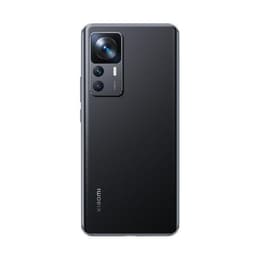


Google Pixel 7A Vs Xiaomi 12T

Google Pixel 7A
Google Pixel 7A
Starting at

Refurbished price:172.00

Versus €649.99 new

See options
Xiaomi 12T
Xiaomi 12T
Starting at

Refurbished price:131.00

Versus €649.00 new

See options

Ratings

The Google Pixel 7a, released in May 2023, and the Xiaomi 12T, launched in October 2022, are both smartphones designed to offer a comprehensive user experience. While the Pixel 7a emphasizes Google's software integration and camera capabilities, the Xiaomi 12T focuses on a larger display, faster charging, and a high-resolution main camera. Both devices operate on the Android platform, providing access to a vast ecosystem of applications and services.

Scores

Durability

The practical lifespan of a smartphone is significantly influenced by its software support and physical resilience.

  • Release Timeline: The Google Pixel 7a was released in May 2023, while the Xiaomi 12T launched earlier in October 2022. This means the Pixel 7a benefits from a slightly newer starting point for software updates.
  • OS Support: The Pixel 7a ships with Android 13 and is expected to receive 5 years of major OS upgrades and security updates, potentially upgrading to Android 16. The Xiaomi 12T launched with Android 12 (MIUI 13) and is upgradable to Android 14, with an expectation of 3 years of software updates and 4 years of security updates. Users prioritizing longer software longevity may find the Pixel 7a more aligned with their needs.
  • Durability & Repairability: The Pixel 7a features IP67 dust and water resistance and Corning Gorilla Glass 3 on the front, with a plastic back and aluminum frame. It received a repairability score of 5/10 from iFixit, indicating a moderate ease of repair. The Xiaomi 12T offers IP53 dust and splash resistance and Corning Gorilla Glass 5 for its display, with a build primarily of plastic.

Year of Release

2023

2022

Compatible with latest Update

Yes

Yes

OS

Android

Android

Foldable

No

No

Performance

Performance in daily use is a key differentiator, impacting how smoothly applications run and how efficiently tasks are handled.

  • Processor Capabilities: The Google Pixel 7a is equipped with a processor designed by Google, which contributes to its smooth operation and efficient handling of demanding applications and multitasking. The Xiaomi 12T features a MediaTek processor, which provides efficient performance for everyday tasks and gaming.
  • RAM and Storage: Both devices come with 8GB of RAM, which supports effective multitasking. The Pixel 7a offers 128GB of internal storage. The Xiaomi 12T provides options for either 128GB or 256GB of internal storage. Neither device supports expandable storage.
  • Battery Behavior: The Pixel 7a has a 4385 mAh battery, with users reporting decent battery life for typical use. The Xiaomi 12T includes a larger 5000 mAh battery, designed to provide all-day power for many users.

Memory (GB)

8 GB

8 GB

Screen quality

The display is a primary interface for user interaction, and differences in technology and specifications can significantly affect the visual experience.

  • Display Technology and Size: The Google Pixel 7a features a 6.1-inch OLED display, known for deep blacks and vibrant colors. The Xiaomi 12T offers a larger 6.67-inch CrystalRes AMOLED display, which also provides rich colors and contrast.
  • Resolution and Clarity: The Pixel 7a has a 1080x2400 (FHD+) resolution with a pixel density of approximately 431 ppi. The Xiaomi 12T boasts a 1220x2712 (1.5K) resolution, resulting in a pixel density of 446 ppi, offering slightly higher clarity.
  • Refresh Rate and Brightness: Both devices feature a 90Hz refresh rate for smoother scrolling and responsiveness. The Xiaomi 12T can reach a peak brightness of 900 nits, compared to the Pixel 7a's typical brightness, which can be conservative in bright conditions.

Resolution

1080 x 2400

1220 x 2712

Screen type

OLED

AMOLED

Audiovisual

Camera capabilities are often a deciding factor for many users, with both devices offering distinct photographic strengths.

  • Rear Camera System: The Google Pixel 7a includes a dual-camera setup with a 64 MP wide main lens (with optical image stabilization) and a 13 MP ultrawide lens. The Xiaomi 12T features a triple-camera system, highlighted by a 108 MP wide main lens (with optical image stabilization), an 8 MP ultrawide lens, and a 2 MP macro lens.
  • Photography Performance: The Pixel 7a is recognized for its advanced computational photography, delivering consistent and high-quality images in various conditions, including low light. The Xiaomi 12T's high-resolution main sensor is designed to capture detailed images, with features aimed at enhancing low-light performance.
  • Video Recording and Audio: Both phones support 4K video recording at 30fps, with the Pixel 7a also offering 4K at 60fps. The Pixel 7a has stereo speakers. The Xiaomi 12T also features stereo speakers, along with Hi-Res Audio and Dolby Atmos support, contributing to an immersive media consumption experience.

Main camera

64 megapixels

108 megapixels

Front camera

13 megapixels

20 megapixels

Miscellaneous

Beyond core specifications, several practical features and design elements contribute to the overall user experience.

  • Connectivity and Ports: Both devices support 5G connectivity, Wi-Fi 6 (or 6E for Pixel 7a), Bluetooth 5.3, and NFC for contactless payments. The Pixel 7a uses a USB-C 3.2 port, while the Xiaomi 12T uses a USB-C 2.0 port. The Xiaomi 12T also includes an infrared (IR) blaster, a feature not present on the Pixel 7a.
  • Biometric Security: Both smartphones incorporate an in-display fingerprint sensor for secure unlocking. The Pixel 7a also offers face recognition. The Xiaomi 12T supports AI face unlock.
  • Dimensions and Build: The Pixel 7a is more compact and slightly lighter at 152 x 72.9 x 9 mm and 193.5 g. The Xiaomi 12T is larger and slightly heavier at 163.1 x 75.9 x 8.6 mm and 202 g. The Pixel 7a features an aluminum frame and plastic back, while the Xiaomi 12T primarily uses plastic with a Gorilla Glass 5 front.

Weight

193 g

220 g

Screen size (in)

6.1

6.67

Network

5G

5G

SIM card

Physical SIM + eSIM

Dual Physical SIM

Carrier compatibility

Unlocked

Unlocked

Users frequently praise the Google Pixel 7a for its exceptional camera performance, often highlighting its ability to produce high-quality images with minimal effort. Its clean Android experience and consistent software updates are also commonly appreciated. Some criticisms include its charging speed and the limitation to 128GB of storage. The Xiaomi 12T is often lauded for its vibrant display, rapid charging capabilities, and robust battery life. Its overall hardware package and audio experience also receive positive mentions.

For users who prioritize a compact device with advanced computational photography and a long-term commitment to software updates, the Google Pixel 7a may be a more suitable choice. Its integrated software experience and consistent camera output cater well to those who value ease of use and image quality. On the other hand, individuals seeking a larger, more immersive display, significantly faster charging, and a higher-resolution main camera might find the Xiaomi 12T better aligns with their preferences. Its larger battery capacity also appeals to heavy users.

Both devices offer compelling features for different user profiles. When considering either of these models, exploring a quality-assured refurbished option can provide an eco-friendly alternative for making an informed and sustainable choice.


See all articles

Our recent comparisons


