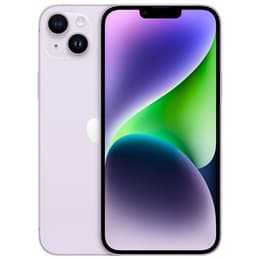


Google Pixel 7A Vs iPhone 14 Plus

Google Pixel 7A
Google Pixel 7A
Starting at

Refurbished price:172.00

Versus €649.99 new

See options
iPhone 14 Plus
iPhone 14 Plus
Starting at

Refurbished price:317.00

Versus €879.00 new

See options

Ratings

The Google Pixel 7a, released in May 2023, and the iPhone 14 Plus, launched in October 2022, are distinct smartphone offerings from their respective manufacturers. While the Pixel 7a operates on Android, showcasing Google's software innovations, the iPhone 14 Plus runs on Apple's iOS, known for its integrated ecosystem. Key differentiators include their operating systems, screen sizes, and camera philosophies.

Scores

Durability

The longevity of a smartphone is influenced by its release timeline, software support, and physical durability.

  • Software Support: The Google Pixel 7a, released in May 2023, typically receives several years of Android OS updates, with current support extending to Android 16 and beta for Android 17. The iPhone 14 Plus, launched in October 2022, benefits from Apple's reputation for extended iOS support, currently running iOS 18.x and generally receiving updates for 5-6 years from its release. This suggests a slightly longer software lifespan for the iPhone 14 Plus.
  • Physical Durability: The iPhone 14 Plus features a Ceramic Shield front and an IP68 rating for water and dust resistance, indicating robust protection against everyday elements. The Pixel 7a comes with Gorilla Glass 3 for screen protection and an IP67 rating, offering good resistance but a slightly lower ingress protection compared to the iPhone.
  • Repairability: While specific repairability scores can vary, the iPhone 14 Plus was noted for a more repair-friendly design compared to previous models. Information on the Pixel 7a's repairability is less prominent, but both devices are designed with components that may require specialized tools for repair.

Year of Release

2023

2022

Compatible with latest Update

Yes

Yes

OS

Android

iOS

Foldable

No

No

Performance

Performance in daily use is a critical factor, encompassing storage, battery behavior, and overall system responsiveness.

  • Storage Options: The Google Pixel 7a is available with 128GB of internal storage, which is not expandable. The iPhone 14 Plus offers more flexibility with storage options, including 128GB, 256GB, and 512GB variants, catering to users with greater storage needs.
  • Battery Behavior: The iPhone 14 Plus is recognized for its extended battery life, often lasting through a full day of heavy use and sometimes up to two days for moderate users, with a 4325 mAh battery. The Pixel 7a, with a 4385 mAh battery, has shown varied battery performance in user reports; some users experience a full day of use, while others note it can struggle with heavy tasks and may require more frequent charging, though adaptive battery features can improve this over time. Both support fast wired charging, and the iPhone 14 Plus also supports 15W MagSafe wireless charging, while the Pixel 7a supports 7.5W wireless charging.
  • System Responsiveness: The iPhone 14 Plus delivers smooth and consistent performance across applications and multitasking, handling demanding tasks and gaming effectively. The Pixel 7a also offers solid performance for everyday tasks and can manage demanding apps, though some user reports mention potential heating during intensive use. The Pixel 7a comes with 8GB of RAM, while the iPhone 14 Plus has 6GB of RAM, which both contribute to efficient multitasking within their respective operating systems.

Memory (GB)

8 GB

6 GB

Screen quality

The display is a primary interface, and its quality significantly impacts the user experience.

  • Display Technology and Clarity: Both devices feature OLED displays, providing deep blacks and vibrant colors. The iPhone 14 Plus has a 6.7-inch Super Retina XDR OLED display with a resolution of 2778x1284 pixels at 458 ppi, offering sharp and detailed visuals. The Google Pixel 7a has a 6.1-inch OLED display with a 2400x1080 pixel resolution, resulting in a pixel density of approximately 429 ppi.
  • Brightness and Refresh Rate: The iPhone 14 Plus offers a typical brightness of 800 nits and a peak HDR brightness of 1200 nits, ensuring good visibility in various lighting conditions. Its refresh rate is a standard 60Hz. The Pixel 7a features a 90Hz refresh rate, which provides a smoother scrolling and animation experience compared to a 60Hz display. Its display is also noted for being bright and visible outdoors.
  • Viewing Experience: The larger 6.7-inch screen of the iPhone 14 Plus provides an expansive viewing area, which is beneficial for media consumption and productivity. The Pixel 7a's 6.1-inch display offers a more compact form factor, which some users may find easier for one-handed use.

Resolution

1080 x 2400

1284 x 2778

Screen type

OLED

Super Retina XDR OLED

Audiovisual

Both smartphones offer capable camera systems, though with different strengths and features.

  • Rear Camera System: The Google Pixel 7a features a dual-camera setup with a 64MP main lens (with optical image stabilization and PDAF) and a 13MP ultrawide lens with a 120-degree field of view. The iPhone 14 Plus also has a dual-camera system, consisting of a 12MP main camera (with a larger sensor, f/1.5 aperture, and OIS) and a 12MP ultrawide camera with a 120-degree field of view.
  • Photography Performance: The Pixel 7a is highly praised for its computational photography, delivering crisp shots, good dynamic range, and effective low-light performance with its Night Sight mode. The iPhone 14 Plus also excels in photography, particularly in low light due to its larger main sensor and faster aperture, producing detailed and color-accurate images. The Pixel 7a offers 8x Super Res Zoom, while the iPhone 14 Plus lacks a dedicated telephoto lens.
  • Video Recording and Front Camera: Both devices support 4K video recording. The Pixel 7a can record 4K at up to 60fps, and its front 13MP ultrawide camera also supports 4K video at 30fps. The iPhone 14 Plus records 4K video at up to 60fps and features a 12MP TrueDepth front camera with autofocus, which also supports 4K video recording.

Main camera

64 megapixels

12 megapixels

Front camera

13 megapixels

12 megapixels

Miscellaneous

Beyond core features, connectivity, physical design, and security elements contribute to the overall user experience.

  • Connectivity and Ports: Both smartphones support 5G cellular connectivity and modern Wi-Fi standards. The iPhone 14 Plus utilizes the Lightning port for charging and data transfer. The Google Pixel 7a features a USB-C 3.2 port. Neither device includes a traditional headphone jack.
  • Biometrics and Security: The iPhone 14 Plus relies on Face ID for secure facial recognition. The Pixel 7a incorporates an under-display fingerprint reader for biometric security, alongside face unlock, though some users have reported inconsistencies with the fingerprint sensor.
  • Design and Handling: The iPhone 14 Plus has an aluminum frame with a glass back, weighing 203 grams and measuring 160.8 x 78.1 x 7.8mm. The Pixel 7a features a metal frame and a polycarbonate back, weighing 193 grams and measuring 152.4 x 72.9 x 9.0mm. The Pixel 7a is slightly more compact and lighter, potentially offering easier one-handed handling for some users, while the iPhone 14 Plus provides a larger screen experience.

Weight

193 g

150 g

Screen size (in)

6.1

6.7

Network

5G

5G

SIM card

Physical SIM + eSIM

eSIM

Carrier compatibility

Unlocked

Unlocked

User feedback for the Google Pixel 7a often highlights its exceptional camera capabilities, particularly its computational photography features, which are frequently compared favorably to more expensive devices. Users also appreciate its smooth software experience and the inclusion of features like wireless charging in its segment. Common criticisms include inconsistent battery life for heavy users, potential heating issues, and a sometimes unreliable fingerprint sensor.

The iPhone 14 Plus is widely praised for its outstanding battery life, often lasting well over a day, and its large, vibrant OLED display which enhances media consumption. Its camera system is also well-regarded for producing high-quality photos and videos. However, users frequently note the 60Hz refresh rate as a drawback compared to many Android competitors, and the continued presence of the notch design is often mentioned. The absence of a telephoto lens is another point of criticism.

Users prioritizing a large screen and industry-leading battery endurance within the Apple ecosystem will find the iPhone 14 Plus well-suited to their needs. Those who value advanced computational photography, a smoother 90Hz display, and the Android operating system's flexibility may lean towards the Google Pixel 7a. Both devices offer a quality-assured refurbished option, providing an eco-friendly alternative for consumers seeking reliable technology.
See all articles

Our recent comparisons






