

Google Pixel 7 Vs Xiaomi Redmi 14C

Google Pixel 7
Google Pixel 7
Starting at

Refurbished price:163.99

Versus €649.99 new

See options
Xiaomi Redmi 14C
Xiaomi Redmi 14C
Starting at

Refurbished price:128.20

Versus €189.00 new

See options

Ratings

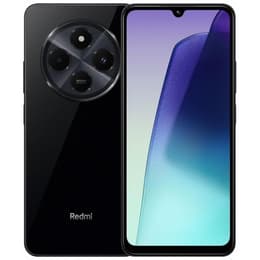
The Google Pixel 7, released in October 2022, and the Xiaomi Redmi 14C, launched in August 2024, represent distinct approaches to smartphone design and functionality. While the Pixel 7 focuses on a refined software experience and advanced computational photography, the Redmi 14C emphasizes a large display and extended battery life. Both devices operate on the Android platform, with the Pixel 7 offering a pure Android experience and the Redmi 14C running on Android 14 with Xiaomi's HyperOS overlay.

Scores

Durability

When considering the practical lifespan of these devices, several factors come into play, including their release timelines and software support.

  • Release Timeline: The Google Pixel 7 was released in October 2022, making it an established device in the market. The Xiaomi Redmi 14C, with its August 2024 launch, is a more recent addition.
  • Software Longevity: Google Pixel devices are known for receiving timely and extended software updates directly from Google, with the Pixel 7 expected to receive updates for several years, potentially up to Android 16 or beyond. The Redmi 14C runs on Android 14 with HyperOS, and while Xiaomi provides updates, the duration of major Android version updates and security patches may differ from Google's direct support.
  • Build and Repairability: The Pixel 7 features a Gorilla Glass Victus front and back with an aluminum frame, contributing to its durability. Information on the Redmi 14C indicates a glass front, plastic frame, and either a glass or eco-leather back, suggesting a different approach to material choice. Both devices are designed for a practical lifespan, and opting for a quality-assured refurbished option can extend their utility even further.

Year of Release

2022

2024

Compatible with latest Update

Yes

Yes

OS

Android

Android

Foldable

No

No

Performance

The performance of a smartphone is crucial for daily tasks, app usage, and overall responsiveness.

  • Processor Capabilities: The Google Pixel 7 is powered by Google's Tensor G2 processor, designed to handle demanding applications, advanced AI features, and multitasking smoothly. This allows for efficient processing of photos, videos, and speech recognition tasks. The Xiaomi Redmi 14C typically features a MediaTek Helio G81 Ultra processor, with some variants potentially using a Qualcomm Snapdragon 4 Gen 2. This processor is designed for everyday tasks, social media, messaging, and casual gaming.
  • System Responsiveness: Users of the Pixel 7 report that apps open quickly, and switching between applications is fluid, with minimal lag during normal usage. While the Redmi 14C handles basic tasks reliably, some minor stutters might occur during heavy multitasking or when running several apps in the background.
  • Memory and Storage: The Pixel 7 comes with 8GB of RAM, providing ample memory for smooth multitasking. Storage options include 128GB and 256GB. The Redmi 14C offers various configurations, including 4GB, 6GB, or 8GB of RAM, and 128GB or 256GB of eMMC 5.1 storage, which is expandable via a MicroSD card.

Memory (GB)

8 GB

4 GB

Screen quality

The display is a primary interface for smartphone interaction, and both devices offer different visual experiences.

  • Display Technology and Resolution: The Google Pixel 7 features a 6.3-inch OLED display with a Full HD+ resolution of 2400 x 1080 pixels, resulting in sharp and clear visuals with deep blacks and vibrant colors. The Xiaomi Redmi 14C typically comes with a larger 6.88-inch IPS LCD panel, offering an HD+ resolution of 720 x 1640 pixels. This difference in resolution means the Pixel 7 will offer a higher pixel density and finer detail.
  • Refresh Rate and Brightness: The Pixel 7 has a 90Hz refresh rate, contributing to smoother scrolling and a more responsive feel. Its display can reach up to 1400 nits peak brightness, enhancing visibility in bright outdoor conditions. The Redmi 14C boasts a 120Hz refresh rate, providing very smooth scrolling and operation. However, its peak brightness is around 600 nits, which may be less suitable for direct sunlight compared to the Pixel 7.
  • Viewing Experience: The Pixel 7's OLED panel delivers excellent contrast and color accuracy, making it suitable for media consumption and detailed viewing. The Redmi 14C's larger screen size can be beneficial for content consumption, though the lower resolution might result in a less sharp image.

Resolution

1080 x 2400

720 x 1640

Screen type

AMOLED

IPS LCD

Audiovisual

Camera capabilities are a significant differentiator, with both phones offering distinct photographic strengths.

  • Rear Camera System: The Google Pixel 7 features a dual-camera setup on the rear, including a 50MP wide-angle main sensor with optical image stabilization and a 12MP ultrawide lens. This system is highly praised for producing natural colors, sharp details, and strong low-light performance, especially with its Night Sight feature. The Xiaomi Redmi 14C typically includes a 50MP primary sensor alongside a 2MP auxiliary or depth lens. While the 50MP main sensor can capture appealing pictures in good lighting, it may sometimes struggle with fine details and color accuracy compared to the Pixel 7.
  • Front Camera and Video: For selfies and video calls, the Pixel 7 is equipped with a 10.8MP ultrawide front camera. It supports 4K video recording at both 30 and 60 frames per second. The Redmi 14C features a 13MP front camera, capable of producing decent selfies. Video recording on the Redmi 14C is generally limited to 1080p at 30 frames per second for both front and rear cameras.
  • Computational Photography: The Pixel 7 leverages its Tensor G2 chip for advanced computational photography features, enhancing image quality across various conditions. The Redmi 14C offers a more straightforward camera experience, focusing on solid performance for its segment.

Main camera

50 megapixels

50 megapixels

Front camera

10.8 megapixels

13 megapixels

Miscellaneous

Beyond core features, several practical elements contribute to the overall user experience of these smartphones.

  • Connectivity and Ports: The Google Pixel 7 supports 5G connectivity, Wi-Fi, and Bluetooth 5.2, and features a USB-C port for charging and data transfer. The Xiaomi Redmi 14C also offers Wi-Fi and Bluetooth 5.4, a USB Type-C port, and notably includes a 3.5mm headphone jack, which is absent on the Pixel 7. Some variants of the Redmi 14C also support 5G.
  • Biometric Security: The Pixel 7 incorporates an under-display optical fingerprint scanner and face unlock for secure access. The Redmi 14C features a side-mounted fingerprint sensor, often integrated into the power button, along with face unlock.
  • Design and Handling: The Pixel 7 has dimensions of 155.6 x 73.2 x 8.7 mm and weighs 197g, offering a more compact and manageable form factor. The Redmi 14C is a larger device, measuring 171.9 x 77.8 x 8.2 mm and weighing between 204-211g, which might appeal to users who prefer a bigger screen, though it can be heavier.

Weight

197 g

207 g

Screen size (in)

6.3

6.88

Network

5G

4G

SIM card

Physical SIM + eSIM

Dual Physical SIM

Carrier compatibility

Unlocked

Unlocked

User feedback for the Google Pixel 7 frequently highlights its exceptional camera performance, particularly in low-light conditions, and its clean, intuitive Android software experience with consistent updates. Common criticisms sometimes point to concerns about heat management during intensive tasks and battery life for very heavy users. The Pixel 7 is often praised for its vibrant OLED display and overall smooth performance for daily use.

For the Xiaomi Redmi 14C, users generally appreciate its large display, which offers a smooth 120Hz refresh rate, and its solid battery life that can last through a full day of moderate use. Its design is often noted for looking more premium than its segment might suggest. However, some users have noted that the HD+ resolution on a large screen can lead to a less sharp visual experience, and performance might show minor stutters with demanding multitasking. The camera, while capable in good light, may not consistently deliver the same level of detail and color accuracy as higher-end devices.

Users prioritizing a premium camera experience, a compact form factor, and a pure, regularly updated Android operating system will find the Google Pixel 7 well-suited to their needs. Its advanced computational photography and robust performance make it ideal for those who value a refined smartphone experience. Conversely, users who prioritize a larger screen for media consumption, a high refresh rate for smooth scrolling, and extended battery life for prolonged use may lean toward the Xiaomi Redmi 14C. It offers a practical and feature-rich experience for everyday tasks, especially for those who appreciate the inclusion of a headphone jack. Both devices are available as quality-assured refurbished options, providing an eco-friendly alternative for consumers.


See all articles

Our recent comparisons