


Compare models

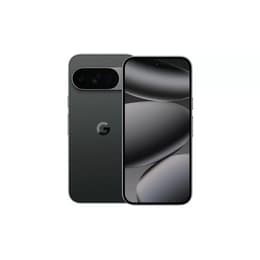
Google Pixel 10 Pro Vs Google Pixel 8 Pro

  • 1-year minimum warranty
  • Free delivery on all orders
  • Free 30-day returns
Google Pixel 10 Pro
Starting at

Refurbished price:€589.99

Versus €1,378.16 new

See options
Google Pixel 8 Pro
Starting at

Refurbished price:€322.00

Versus €1,099.00 new

See options

Differences at a glance

The Google Pixel 10 Pro (2025) and Google Pixel 8 Pro (2023) represent consecutive generations of Google's flagship smartphone line, showcasing advancements in mobile engineering and software capabilities. While both devices share a focus on intelligent daily assistance and advanced imaging, the newer Pixel 10 Pro introduces refined processing power and architectural updates that distinguish it from its predecessor. Operating on the Android ecosystem, both smartphones deliver a streamlined software experience, though they differ in their long-term update horizons and everyday responsiveness.

Available Models

Colour

Storage

Scores

Durability

When examining longevity, software update support and hardware endurance play critical roles in determining the active lifespan of each smartphone.

  • Software Update Horizons: The Google Pixel 8 Pro launched with a commitment to extended system updates, while the Google Pixel 10 Pro benefits from a later release year, ensuring software longevity that stretches further into the future.
  • Repairability and Build: Both models utilize robust glass and metal construction designed for everyday resilience, though availability of standardized repair components favors the newer model over time.
  • Expected Lifespan: Both devices are engineered to maintain functional reliability across multiple years of ownership, making a quality-assured refurbished option a sustainable choice for users seeking long-term dependability.

Year of Release

2025

2023

Compatible with latest Update

Yes

Yes

Foldable

No

No

Performance

Daily performance metrics highlight how each device handles multitasking, memory management, and power consumption during heavy workloads.

  • Multitasking and Responsiveness: The Google Pixel 10 Pro handles demanding applications and rapid switching between tasks with improved thermal efficiency, whereas the Google Pixel 8 Pro manages standard daily workflows smoothly with its respective generation of internal processing hardware.
  • Storage and Memory: Both smartphones offer multiple storage tiers to accommodate media libraries and large applications, paired with sufficient random access memory to keep background processes stable.
  • Battery Behavior: The Google Pixel 10 Pro optimizes power draw more efficiently through updated hardware integration, resulting in reliable day-long use that compares favorably to the Pixel 8 Pro under similar heavy workloads.

Screen quality

Display characteristics define how each device handles media consumption, outdoor legibility, and visual clarity.

  • Display Technology: Both models utilize vibrant OLED panels that deliver deep contrast levels and rich color reproduction for everyday viewing and video playback.
  • Outdoor Brightness: The Google Pixel 10 Pro features enhanced peak brightness levels that improve legibility under direct sunlight compared to the Pixel 8 Pro.
  • Refresh Rate and Smoothness: Both devices support high refresh rates, ensuring fluid scrolling through web pages and responsive touch interactions during daily navigation.

Resolution

1280x2856

1344 x 2992

Screen type

OLED

LTPO OLED

Audiovisual

Imaging capabilities and multimedia output vary between the two generations, affecting photography, video recording, and audio reproduction.

  • Camera Systems: The Google Pixel 8 Pro relies on a versatile triple-lens setup with dedicated telephoto capabilities, while the Google Pixel 10 Pro refines sensor performance and computational photography algorithms for improved detail in varied lighting conditions.
  • Video and Audio: Both smartphones capture stable, high-definition video footage with clear internal microphones, while their stereo speakers provide balanced sound output for hands-free calls and media consumption.
  • Low-Light Performance: Computational processing on both devices brightens dark scenes effectively, though the newer model captures refined shadow details and reduces noise more consistently.

Front camera

42 megapixels

10.5 megapixels

Miscellaneous

Practical physical attributes and connectivity standards shape the everyday handling and utility of both smartphones.

  • Connectivity Standards: Both models support 5G networks, modern Wi-Fi frequencies, and Bluetooth pairing for reliable wireless accessory integration.
  • Physical Dimensions: The Google Pixel 10 Pro and Google Pixel 8 Pro offer similar screen dimensions and ergonomic curves, though subtle shifts in weight distribution affect how each device rests in the hand.
  • Security and Authentication: Both smartphones incorporate secure face recognition and under-display fingerprint sensors for quick device unlocking and authorization.

Weight

207 g

213 g

Screen size (in)

6.3

6.7

Network

5G

5G

SIM card

Physical SIM + eSIM

Physical SIM + eSIM

Carrier compatibility

Unlocked

Unlocked

What the community thinks

User discussions across community forums highlight distinct preferences when evaluating these two generations. Owners of the Google Pixel 8 Pro frequently praise its reliable daily performance, expansive display, and comprehensive camera system, noting that it remains a capable companion for standard tasks. At the same time, users discussing the Google Pixel 10 Pro often emphasize its refined processing efficiency, brighter screen, and extended software support window as key advantages for long-term ownership.

Users prioritizing maximum software longevity and enhanced processing efficiency will find the Google Pixel 10 Pro well-suited to their needs. Conversely, users seeking a balanced flagship experience with a proven track record may lean toward the Google Pixel 8 Pro as an eco-friendly alternative when chosen through a quality-assured refurbished option. Ultimately, both devices fulfill different user requirements depending on whether the priority lies in the latest hardware refinements or established daily reliability.