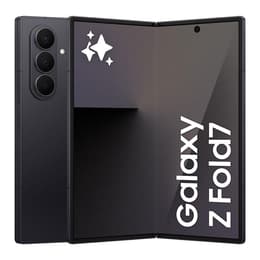



Compare models

Galaxy Z Fold7 Vs Google Pixel 9 Pro XL

  • 1-year minimum warranty
  • Free delivery on all orders
  • Free 30-day returns
Galaxy Z Fold7
Starting at

Refurbished price:€907.00

Versus €2,236.37 new

See options
Google Pixel 9 Pro XL
Starting at

Refurbished price:€520.97

Versus €1,298.07 new

See options

Differences at a glance

The Samsung Galaxy Z Fold7 (2025) and the Google Pixel 9 Pro XL (2024) represent two distinct approaches to high-end mobile engineering, contrasting a book-style folding screen layout with a traditional candy bar slab format. While both devices run on the Android operating system and target power users, their physical form factors and core feature sets create fundamentally different user experiences.

Available Models

Colour

Storage

Scores

Durability

Both devices offer extensive software support lifecycles designed to keep them functional and secure for years, though their unique hardware architectures present different long-term considerations.

  • Software longevity: Both manufacturers provide up to seven years of major operating system upgrades and security patches, ensuring long-term software relevance.
  • Hardware resilience: The Galaxy Z Fold7 features an intricate folding hinge mechanism requiring careful handling, whereas the Pixel 9 Pro XL uses a conventional rigid body design with standard drop protection glass.
  • Expected lifespan: Users can anticipate multi-year usability from both models, with traditional slab phones typically experiencing fewer mechanical wear points over extended periods.

Year of Release

2025

2024

Compatible with latest Update

Yes

Yes

OS

Android

Android

Foldable

Yes

No

Performance

Handling daily workloads, heavy applications, and intensive multitasking efficiently, both smartphones deliver robust processing power coupled with generous RAM configurations.

  • Multitasking capacity: Both models include ample RAM configurations that allow dozens of browser tabs and demanding apps to stay open simultaneously without sluggish reloading.
  • Battery behavior: The Pixel 9 Pro XL houses a larger battery capacity that reliably powers through a full day of mixed usage, while the Galaxy Z Fold7's dual-screen setup can result in faster energy consumption during heavy folding screen sessions.
  • System responsiveness: App launching, smooth scrolling, and graphically complex tasks execute instantaneously thanks to current-generation internal processors.

Screen quality

Display technology is the primary differentiator between these devices, offering a choice between an expanding tablet-sized workspace and a traditional expansive viewing panel.

  • Display technology: The Galaxy Z Fold7 utilizes a flexible LTPO AMOLED inner panel that opens into an 8.0-inch tablet workspace alongside a usable cover screen, while the Pixel 9 Pro XL features a rigid 6.8-inch LTPO OLED screen.
  • Outdoor visibility: Both screens feature high peak brightness capabilities, ensuring content remains legible under direct sunlight or bright ambient lighting conditions.
  • Visual fluidity: Both displays support a 120Hz refresh rate, delivering smooth motion during web browsing, animations, and gaming.

Resolution

1968x2184

1344 x 2992

Audiovisual

Equipped with versatile multi-lens rear setups, both devices capture detailed imagery across diverse lighting conditions and record high-definition video.

  • Photography performance: Both models excel at everyday shooting, low-light environments, and distant zoom shots, with software-driven processing enhancing clarity and color accuracy.
  • Video and audio: High-resolution video recording comes standard with advanced stabilization features, paired with clear stereo speakers suitable for media playback and hands-free calls.
  • Front-facing capture: Selfie cameras on both devices deliver sharp results for video conferencing and self-portraits, though the Fold7 adds an extra camera lens integrated into its folding display structure.

Miscellaneous

Physical dimensions, connectivity standards, and daily ergonomics highlight the practical differences in how each phone fits into daily routines.

  • Build and dimensions: The Pixel 9 Pro XL follows a standard wider phone profile weighing 221 grams, while the Galaxy Z Fold7 adopts a narrower folded profile that opens into a thin 215-gram tablet form factor.
  • Connectivity: Both models support widespread 5G networks, modern Wi-Fi standards, and Bluetooth for seamless accessory pairing.
  • Authentication: Both devices rely on biometric security features, utilizing side-mounted or in-display fingerprint sensors alongside facial recognition options.

Weight

215 g

221 g

Screen size (in)

8.0

6.8

Network

5G

5G

SIM card

Dual Physical SIM + eSIM

Physical SIM + eSIM

Carrier compatibility

Unlocked

Unlocked

Connector

USB-C (USB 3)

USB-C

What the community thinks

Users prioritizing multitasking estate and a transforming workspace often lean toward the Galaxy Z Fold7 for its expansive folding display and pocketable closed dimensions. Conversely, users prioritizing a traditional candy bar layout with a simpler structural design frequently prefer the Google Pixel 9 Pro XL for its classic ergonomics and straightforward daily reliability.

When exploring options for either device, opting for a quality-assured refurbished option serves as an eco-friendly alternative that reduces electronic waste while delivering the same core hardware performance. Selecting between the two ultimately depends on whether a flexible multi-window canvas or a conventional slab configuration better suits daily workflow preferences.


Our recent comparisons






