

Compare models
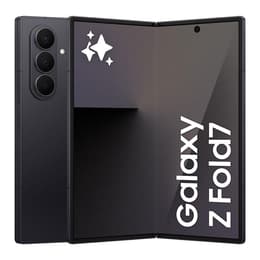
Galaxy Z Fold7 Vs Google Pixel 7A
- 1-year minimum warranty
- Free delivery on all orders
- Free 30-day returns
Differences at a glance
The Samsung Galaxy Z Fold7 (2025) and the Google Pixel 7a (2023) represent two completely distinct approaches to modern mobile device design and functionality. While the Galaxy Z Fold7 offers an innovative foldable form factor with expansive screen real estate, the Google Pixel 7a delivers a compact, traditional smartphone experience focused on everyday reliability. Running on Android operating systems, these devices cater to vastly different user preferences regarding physical structure and portability.
Available Models
Colour
Storage
Scores
Durability
Durability and expected longevity differ notably between these two models due to their release timelines, physical construction, and unique mechanical designs.
- Release timeline and software support: The Galaxy Z Fold7 launched in 2025 with long-term software update commitments running deep into future Android generations, whereas the Google Pixel 7a debuted in 2023. Consequently, the newer Samsung device provides a broader window of expected software longevity.
- Physical durability and maintenance: Traditional slate designs like the Pixel 7a feature fixed glass and a rigid frame that generally withstand general wear and tear predictably. In contrast, book-style foldables like the Galaxy Z Fold7 require more careful physical handling of the flexible inner screen, though both models incorporate robust outer glass protection.
Year of Release
2025
2023
Compatible with latest Update
Yes
Yes
OS
Android
Android
Foldable
Yes
No
Performance
Underneath their exteriors, these devices handle daily computing tasks, multitasking, and power consumption differently based on their internal hardware configurations.
- Multitasking and system responsiveness: The Galaxy Z Fold7 features ample system memory options and a current-generation processor that handle heavy multi-app windowing and demanding applications smoothly. The Pixel 7a utilizes balanced mid-range components with sufficient RAM to switch between standard daily apps, web browsing, and casual streaming without noticeable friction.
- Battery behavior and storage: Battery capacities vary slightly, but real-world endurance depends heavily on screen usage habits, with the Z Fold7's larger inner display consuming more energy during extended multitasking sessions. Storage configurations range from standard capacities on the Pixel 7a up to extensive tiers on the Z Fold7 to accommodate large media libraries.
Screen quality
Display characteristics form one of the most substantial contrasts when evaluating how users interact with visual content on each device.
- Display technology and format: The Pixel 7a features a single, traditional 6.1-inch OLED screen with a fluid refresh rate for comfortable scrolling. Meanwhile, the Galaxy Z Fold7 employs a dual-screen setup consisting of a usable 6.5-inch cover display and an 8.0-inch foldable main screen, both utilizing advanced OLED technology.
- Brightness and outdoor visibility: Both panels achieve high peak brightness levels, ensuring readability under bright sunlight, though the Z Fold7's expansive inner canvas offers a tablet-like viewing area well-suited for document editing and media consumption.
Resolution
1968x2184
1080 x 2400
Audiovisual
Optics and media playback capabilities cater to different photography habits and audio-visual preferences.
- Camera versatility: The Galaxy Z Fold7 incorporates a versatile triple-lens rear array including a high-resolution main sensor and a telephoto lens for optical zoom. The Pixel 7a relies on a dual-rear camera system paired with computational photography software that excels at capturing everyday moments and balanced low-light shots.
- Audio output and recording: Both smartphones feature stereo speakers that deliver clear sound for hands-free calls and casual video watching, alongside reliable multi-microphone setups for voice recording.
Miscellaneous
Physical dimensions, connectivity standards, and daily handling characteristics determine how comfortably each device fits into various routines.
- Form factor and handling: The Pixel 7a maintains a traditional, lightweight profile that handles easily in one hand. The Galaxy Z Fold7 features a remarkably thin folding chassis that expands from a standard pocketable width into a wider tablet format.
- Connectivity and security: Both devices support modern 5G networks, fast Wi-Fi standards, and secure biometric authentication methods such as facial recognition or fingerprint sensors. Choosing a quality-assured refurbished option provides a sustainable way to access these features while supporting eco-friendly technology cycles.
Weight
215 g
193 g
Screen size (in)
8.0
6.1
Network
5G
5G
SIM card
Dual Physical SIM + eSIM
Physical SIM + eSIM
Carrier compatibility
Unlocked
Unlocked
Connector
USB-C (USB 3)
USB-C
What the community thinks
Deciding between the Galaxy Z Fold7 and the Google Pixel 7a ultimately depends on individual preferences for form factor and daily utility. Users prioritizing expansive screen space for productivity, multi-window multitasking, and versatile viewing formats may prefer the innovative design of the Galaxy Z Fold7. Conversely, users prioritizing a compact footprint, straightforward single-screen operation, and reliable everyday simplicity often lean toward the Google Pixel 7a.
Reviewers and everyday community members frequently praise the Pixel 7a for delivering consistent core functionality in a manageable size, while noting that its battery requires routine daily charging under heavy loads. For the Galaxy Z Fold7, users highlight the impressive engineering of its slim folding profile and expansive display, though some point out the careful handling required for foldable panels. Exploring quality-assured refurbished options on Back Market offers an eco-friendly alternative for acquiring either device while contributing to sustainable electronics consumption.










