

Galaxy Z Fold5 Vs Xiaomi Redmi 14C

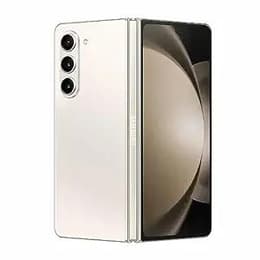
Galaxy Z Fold5
Galaxy Z Fold5
Starting at

Refurbished price:568.00

Versus €1,899.00 new

See options
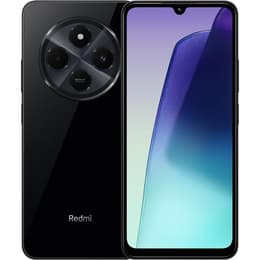
Xiaomi Redmi 14C
Xiaomi Redmi 14C
Starting at

Refurbished price:128.20

Versus €189.00 new

See options

Ratings

The Samsung Galaxy Z Fold5 (2023) and the Xiaomi Redmi 14C (released late 2024/early 2025) represent distinct approaches to smartphone design and functionality. The Galaxy Z Fold5 is a premium foldable device that transforms from a traditional smartphone into a tablet-like experience, while the Redmi 14C is a more conventional, budget-friendly smartphone. These devices cater to different user needs, primarily differing in their form factor, display technology, and overall performance capabilities.

Scores

Durability

When considering the longevity of a smartphone, factors like release timeline, software support, and physical durability are key. The Galaxy Z Fold5, as a flagship device, typically receives extended software support compared to more budget-oriented phones like the Redmi 14C.

  • Release Timeline: The Galaxy Z Fold5 was released in August 2023, making it a more established device. The Redmi 14C was released in late 2024 or early 2025, making it a newer model [1, 4, 8, 16].
  • Software Longevity: Samsung generally provides several years of major Android updates and security patches for its flagship devices, often extending to four or five years. The Redmi 14C is promised two years of major Android updates and four years of security patches, which is considered generous for its segment [1].
  • Physical Durability: The Galaxy Z Fold5 features an Armor Aluminum frame and Gorilla Glass Victus 2 on its cover screen and back panel, along with an IPX8 water resistance rating, indicating protection against submersion [4, 17, 31]. The Redmi 14C features a glass-like or eco-leather back and a plastic frame, and while it undergoes durability testing, it does not carry an official IP rating for water or dust resistance [8, 15].

Year of Release

2023

2024

Compatible with latest Update

Yes

Yes

OS

Android

Android

Foldable

Yes

No

Performance

The performance of these two devices is tailored to their respective market segments, with the Galaxy Z Fold5 offering high-end capabilities and the Redmi 14C focusing on efficient daily operation.

  • Processing Power: The Galaxy Z Fold5 is equipped with a high-performance processor designed for demanding applications, intensive multitasking, and advanced gaming, ensuring smooth operation across its dual-screen interface [4, 17, 21]. The Redmi 14C utilizes a processor suitable for essential daily tasks such as messaging, web browsing, light gaming, and media playback, handling these activities adequately but not designed for heavy multitasking or graphically intensive 3D games [1, 2, 19].
  • Memory and Storage: The Galaxy Z Fold5 comes with 12 GB of RAM and offers storage options up to 1 TB, providing ample space and responsiveness for power users [4, 6, 20]. The Redmi 14C offers RAM configurations from 4 GB to 8 GB and up to 256 GB of expandable storage, which is sufficient for typical app usage and media storage in its category [1, 3, 8].
  • Battery Behavior: The Galaxy Z Fold5 has a 4400 mAh battery, which, combined with its efficient processor, provides a full day of use for many users, with some reporting around 11 hours and 20 minutes of video streaming on the main screen [6, 17, 21]. The Redmi 14C features a larger 5160 mAh battery, and while it aims for extended use, real-world testing suggests it offers around 39 hours of total usage under light to moderate conditions, which is considered average for its class [1, 24, 25].

Memory (GB)

12 GB

4 GB

Screen quality

The display experience is a primary differentiator between these two smartphones, reflecting their distinct designs and intended uses.

  • Display Technology and Size: The Galaxy Z Fold5 features a foldable 7.6-inch Dynamic AMOLED 2X main display and a 6.2-inch Dynamic AMOLED 2X cover display, both offering vibrant colors and deep blacks [4, 6, 14, 22]. The Redmi 14C has a single, large 6.88-inch IPS LCD screen [1, 3, 7, 8].
  • Resolution and Clarity: The Galaxy Z Fold5's main display boasts a resolution of 2176 x 1812 pixels, providing a sharp and detailed viewing experience, while its cover screen has a resolution of 904 x 2316 pixels [4, 6, 22]. The Redmi 14C offers an HD+ resolution of 720 x 1640 pixels, which is suitable for casual viewing but may appear less sharp compared to higher-resolution displays [1, 3, 7, 8].
  • Brightness and Smoothness: Both displays on the Galaxy Z Fold5 support a 120Hz refresh rate and can reach a peak brightness of 1750 nits, ensuring smooth scrolling and good visibility even in bright outdoor conditions [4, 17, 22]. The Redmi 14C also features a 120Hz refresh rate for smooth navigation and a peak brightness of 600 nits, which is adequate for indoor use and generally usable outdoors, though direct sunlight may pose challenges [1, 2, 7, 8, 23].

Resolution

1812 x 2176

720 x 1640

Screen type

Foldable Dynamic AMOLED 2X

IPS LCD

Audiovisual

The camera systems of the Galaxy Z Fold5 and Redmi 14C are designed with different photographic ambitions and capabilities.

  • Rear Camera System: The Galaxy Z Fold5 features a versatile triple-camera setup, including a 50 MP wide-angle lens with optical image stabilization (OIS), a 12 MP ultra-wide lens, and a 10 MP telephoto lens with 3x optical zoom [4, 14, 22]. The Redmi 14C comes with a 50 MP main rear camera, often accompanied by an auxiliary lens primarily for depth perception, making it effectively a single functional rear camera for most users [1, 2, 7, 8, 10].
  • Photography Performance: The Galaxy Z Fold5 excels in various lighting conditions, capturing detailed and vibrant photos, with software enhancements improving low-light performance and dynamic range [27, 28]. The Redmi 14C's 50 MP main camera captures bright and detailed photos in daylight, but low-light scenarios can result in softer images with more noise [1, 2].
  • Video Recording and Front Cameras: The Galaxy Z Fold5 supports video recording up to 8K at 24fps and 4K at 60fps, and includes a 10 MP cover camera and a 4 MP under-display camera for selfies and video calls [4, 14, 22]. The Redmi 14C records video at up to 1080p at 30fps and features a 13 MP front camera that produces decent selfies, even offering a soft light ring for improved low-light results [1, 2, 5, 29].

Main camera

50 megapixels

50 megapixels

Front camera

4 megapixels

13 megapixels

Miscellaneous

Beyond core performance and display, several practical features contribute to the overall user experience of these devices.

  • Connectivity: The Galaxy Z Fold5 supports 5G, Wi-Fi 6E, and Bluetooth 5.3, offering advanced and fast wireless connectivity options [4]. The Redmi 14C supports dual SIM 4G LTE, Wi-Fi 5, and Bluetooth 5.4, providing reliable connectivity for everyday use [1, 7].
  • Ports and Biometrics: The Galaxy Z Fold5 uses a USB Type-C 3.2 Gen 1 port and features a side-mounted fingerprint sensor for secure access [4, 6]. The Redmi 14C also includes a USB-C port, a side-mounted fingerprint scanner, and a 3.5mm headphone jack, a feature not present on the Fold5 [1, 2, 7, 8].
  • Design and Handling: The Galaxy Z Fold5 has a unique foldable design, weighing 253 grams, and offers a compact form factor when folded and an expansive screen when unfolded [4, 6, 14]. The Redmi 14C has a more traditional slab design, weighing around 204-211 grams, and its large 6.88-inch display can feel substantial in hand [1, 7, 8, 9].

Weight

253 g

207 g

Screen size (in)

7.6

6.88

Network

5G

4G

SIM card

Physical SIM + eSIM

Dual Physical SIM

Carrier compatibility

Unlocked

Unlocked

Connector

USB-C

USB-C

The Samsung Galaxy Z Fold5 and Xiaomi Redmi 14C cater to vastly different user expectations and budgets. The Galaxy Z Fold5 is praised for its innovative foldable design, offering a large, immersive screen experience for productivity and media consumption, coupled with top-tier performance and a capable camera system. Users frequently highlight its versatility and the premium feel of the device. Some common considerations include its weight and the inherent nature of a foldable screen.

The Redmi 14C, on the other hand, is generally lauded for providing a smooth display experience with its 120Hz refresh rate and a large battery capacity that supports extended usage for many. Users appreciate its solid performance for daily tasks and its feature set for its category. Criticisms sometimes point to its HD+ resolution display, which may not be as sharp as higher-end devices, and its camera performance in challenging lighting conditions.

Users prioritizing a cutting-edge, versatile device for multitasking, advanced media consumption, and high-performance applications will find the Galaxy Z Fold5 well-suited to their needs. Its unique form factor and powerful internals make it ideal for those who want a smartphone and a tablet in one device. Conversely, users seeking a reliable, straightforward smartphone for everyday communication, social media, and casual entertainment, with a focus on a large display and dependable battery life, may lean toward the Redmi 14C. It represents a practical choice for those who value core smartphone functionalities without the need for advanced features or a foldable design. Both devices, whether new or as a quality-assured refurbished option, offer distinct advantages depending on individual priorities.


See all articles

Our recent comparisons