

Galaxy S9 Vs iPhone 11 Pro Max

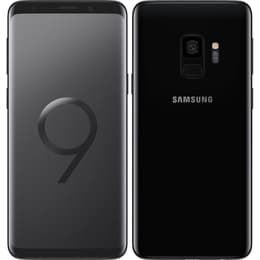
Galaxy S9
Galaxy S9
Starting at

Refurbished price:131.41

Versus €499.00 new

See options
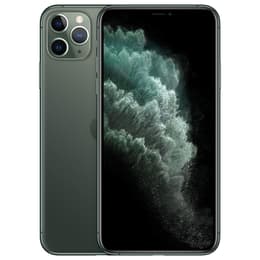
iPhone 11 Pro Max
iPhone 11 Pro Max
Starting at

Refurbished price:219.00

Versus €939.00 new

See options

Ratings

The Samsung Galaxy S9, released in March 2018, and the iPhone 11 Pro Max, launched in September 2019, represent different generations and operating systems in the smartphone landscape. While the Galaxy S9 runs on Android, the iPhone 11 Pro Max operates on iOS. These devices offer distinct user experiences, primarily differing in their camera capabilities, overall performance, and software longevity.

Scores

Durability

The practical lifespan of a smartphone is heavily influenced by software support and physical durability. The Galaxy S9, released in March 2018, received its last major Android update to Android 10 in early 2020 and ceased receiving security updates in April 2022, marking its end-of-life for official software support. In contrast, the iPhone 11 Pro Max, launched in September 2019, typically benefits from Apple's longer software support cycle, likely receiving major iOS updates for several more years beyond the S9's cutoff.

  • Software Longevity: The iPhone 11 Pro Max offers a longer period of official operating system and security updates, which is crucial for accessing new features and maintaining device security.
  • Repairability: The Galaxy S9 received a repairability score of 4 out of 10 from iFixit, indicating that while some components are modular, the extensive use of glue and glass makes repairs challenging, particularly for the display and battery. The iPhone 11 Pro Max scored 6 out of 10, with critical display and battery repairs being prioritized in its design, and many components being independently accessible.
  • Physical Durability: Both devices feature glass construction and IP68 water and dust resistance. The iPhone 11 Pro Max, however, was noted for its enhanced water resistance, capable of submersion at greater depths for longer durations compared to many contemporaries.

Year of Release

2018

2019

Compatible with latest Update

No

Yes

OS

Android

iOS

Foldable

No

No

Performance

Performance in smartphones dictates how smoothly applications run, how quickly tasks are completed, and the overall responsiveness of the user interface. The iPhone 11 Pro Max, being a newer device, generally offers a more robust performance profile.

  • Processing Power: The iPhone 11 Pro Max features a more advanced processor, which translates to faster app loading times, smoother multitasking, and enhanced capabilities for demanding applications and mobile gaming. The Galaxy S9, while capable for its time, may exhibit slower performance with newer, more resource-intensive applications.
  • Battery Endurance: The iPhone 11 Pro Max is recognized for its extended battery life, with users often reporting it lasting through a full day of heavy use and achieving around 11 to 12 hours in web browsing tests. The Galaxy S9, with its smaller battery capacity, typically provides a full day of use for moderate users but may require more frequent charging for heavy usage, often yielding around 7 to 8 hours in similar tests.
  • Storage Options: Both devices offered various internal storage configurations at launch. The Galaxy S9 also provided expandable storage via a microSD card, a feature not available on the iPhone 11 Pro Max.

Memory (GB)

4 GB

4 GB

Screen quality

The display is a primary interface for smartphone interaction, and both devices offer high-quality viewing experiences with distinct characteristics.

  • Display Technology: Both the Galaxy S9 and the iPhone 11 Pro Max feature OLED displays, known for their deep blacks and vibrant colors. The iPhone 11 Pro Max's display is branded as a Super Retina XDR display, indicating advanced color accuracy and dynamic range.
  • Resolution and Clarity: The Galaxy S9 has a 5.8-inch display with a resolution of 2960 x 1440 pixels, resulting in a high pixel density. The iPhone 11 Pro Max features a larger 6.5-inch display with a resolution of 2688 x 1242 pixels. Both offer sharp and clear visuals for everyday viewing.
  • Brightness and Outdoor Visibility: The iPhone 11 Pro Max's display can reach higher peak brightness levels, especially for HDR content, making it highly visible in bright outdoor conditions. The Galaxy S9 also offers a high brightness mode for outdoor use, with a peak brightness of 1,130 nits.

Resolution

1440 x 2960

1242 x 2688

Screen type

Super AMOLED

Super Retina XDR OLED

Audiovisual

Camera capabilities are a significant factor for many users, and there are notable differences between these two models, particularly in their photographic versatility.

  • Rear Camera System: The Galaxy S9 features a single 12-megapixel rear camera with a variable aperture, allowing it to adapt to different lighting conditions. The iPhone 11 Pro Max boasts a triple 12-megapixel camera system, including a wide, ultra-wide, and telephoto lens, providing greater flexibility for various photographic scenarios.
  • Low-Light Performance: The iPhone 11 Pro Max introduced a dedicated Night mode, significantly improving its ability to capture detailed and well-exposed photos in challenging low-light environments. While the Galaxy S9's variable aperture helps in low light, it does not offer the same level of dedicated low-light processing.
  • Video Recording: Both devices are capable of recording 4K video. The iPhone 11 Pro Max offers advanced video recording features and improved stabilization, making it a strong option for capturing high-quality video content.

Main camera

12 megapixels

12 megapixels

Front camera

8 megapixels

12 megapixels

Miscellaneous

Beyond core features, several other elements contribute to the overall user experience and practical utility of these smartphones.

  • Connectivity: The iPhone 11 Pro Max supports Wi-Fi 6 and Bluetooth 5.0, offering faster and more stable wireless connections. The Galaxy S9 supports Wi-Fi 5 (802.11ac) and Bluetooth 5.0. Neither device supports 5G connectivity.
  • Ports and Biometrics: The Galaxy S9 includes a 3.5mm headphone jack and a USB-C port for charging and data transfer. It features both a fingerprint sensor and an iris scanner for biometric authentication. The iPhone 11 Pro Max uses a Lightning port and relies on Face ID for secure facial recognition.
  • Design and Build: The iPhone 11 Pro Max has a stainless steel frame and a frosted glass back, contributing to its premium feel and durability. The Galaxy S9 features an aluminum frame and a glass back. The iPhone 11 Pro Max is also heavier at 226 grams compared to the Galaxy S9.

Weight

163 g

226 g

Screen size (in)

5.8

6.5

Network

4G

4G

SIM card

Physical SIM

Physical SIM + eSIM

Carrier compatibility

Unlocked

Unlocked

Connector

USB-C + Jack 3.5mm

Lightning

User feedback for the Galaxy S9 often praises its vibrant display, the inclusion of a headphone jack, and expandable storage as practical advantages. Criticisms frequently centered on its battery life, which for many users required mid-day charging, and the eventual cessation of major software updates.

The iPhone 11 Pro Max generally receives acclaim for its exceptional battery life, powerful performance, and the versatility of its triple-camera system, particularly its low-light capabilities. Some users noted its larger size and weight as a consideration.

Users prioritizing a longer software support timeline, superior camera versatility, and extended battery endurance for demanding tasks may find the iPhone 11 Pro Max better suited to their needs. Conversely, individuals who value a traditional headphone jack, expandable storage, and a slightly more compact form factor might lean towards the Galaxy S9. Both devices, when considering a quality-assured refurbished option, offer a sustainable choice for consumers seeking reliable smartphone technology.


See all articles

Our recent comparisons