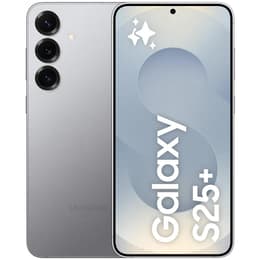


Galaxy S25+ Vs Google Pixel 7A

Galaxy S25+
Galaxy S25+
Starting at

Refurbished price:624.00

Versus €1,401.57 new

See options
Google Pixel 7A
Google Pixel 7A
Starting at

Refurbished price:177.00

Versus €649.99 new

See options

Ratings

The Samsung Galaxy S25 Plus, a flagship smartphone released in February 2025, and the Google Pixel 7a, a mid-range device launched in May 2023, offer distinct experiences within the Android ecosystem. While both devices provide a comprehensive smartphone experience, the Galaxy S25 Plus emphasizes cutting-edge hardware and a premium build, whereas the Pixel 7a focuses on a streamlined software experience and advanced computational photography. Both operate on the Android platform, with each manufacturer offering their unique software interpretations.

Scores

Durability

When considering the long-term usability of these devices, their release timelines and software support policies are key factors.

  • Release Timeline: The Google Pixel 7a was released in May 2023, making it an older model compared to the Samsung Galaxy S25 Plus, which launched in February 2025. This age difference inherently impacts their remaining support cycles.
  • OS Support: The Galaxy S25 Plus is designed for extended longevity, offering seven years of operating system upgrades and seven years of security updates, with support expected to continue until 2032. In contrast, the Pixel 7a receives five years of OS and security updates, with support concluding in May 2028. This difference means the Galaxy S25 Plus will remain current with the latest Android features and security patches for a longer period.
  • Repairability: The Galaxy S25 Plus has shown improvements in repairability, with some teardowns noting easier access to components like the battery. The Pixel 7a initially scored a 4/10 on the iFixit repairability scale but was later uprated to 5/10 after Google published a thorough service manual.

Year of Release

2025

2023

Compatible with latest Update

Yes

Yes

OS

Android

Android

Foldable

No

No

Performance

Performance is a significant differentiator, with the Galaxy S25 Plus featuring more recent and powerful internal components compared to the Pixel 7a.

  • Processor Capabilities: The Galaxy S25 Plus is equipped with a current-generation processor, enabling it to handle demanding applications, intensive multitasking, and graphic-heavy games with fluidity. Users can expect super-fast performance and blazing-fast operation. The Pixel 7a, powered by its own custom-designed processor, offers good performance for everyday tasks, streaming, and mobile gaming.
  • System Responsiveness: The Galaxy S25 Plus provides a highly responsive user experience, ensuring smooth transitions and quick app loading. The Pixel 7a is generally snappy and fluid in its operation, though some users have reported heating issues during sustained heavy use.
  • Battery Behavior: The Galaxy S25 Plus features a 4900 mAh battery, often lasting about a day and a half with regular use and demonstrating strong endurance in various tests. The Pixel 7a has a 4385 mAh battery, typically providing a full day of moderate use, though some users have noted battery degradation or faster drain over time.

Memory (GB)

12 GB

8 GB

Screen quality

The visual experience on both devices is vibrant, though the Galaxy S25 Plus offers a more advanced display with higher resolution and brightness.

  • Display Technology and Clarity: The Galaxy S25 Plus features a 6.7-inch Dynamic LTPO AMOLED 2X display with a QHD+ resolution (3120x1440 pixels), resulting in exceptionally sharp and detailed visuals. The Pixel 7a sports a 6.1-inch OLED display with an FHD+ resolution (2400x1080 pixels), providing clear and vibrant images for everyday viewing.
  • Brightness and Refresh Rate: The Galaxy S25 Plus can reach a peak brightness of 2600 nits, ensuring good visibility even in bright outdoor conditions, and features an adaptive refresh rate that scales from 1 Hz to 120 Hz for smooth scrolling and power efficiency. The Pixel 7a offers a 90 Hz refresh rate for a smooth experience, but its brightness levels may require maximum adjustment for comfortable outdoor viewing.
  • Screen Protection: The Galaxy S25 Plus incorporates Gorilla Glass Victus 2 for enhanced durability. The Pixel 7a uses Gorilla Glass 3 for screen protection.

Resolution

1440 x 3120 pixels

1080 x 2400

Audiovisual

Both smartphones offer capable camera systems, though with different configurations and strengths.

  • Camera System Capabilities: The Galaxy S25 Plus features a versatile triple-camera system on the rear, including a 50 MP wide-angle main sensor, a 12 MP ultra-wide lens, and a 10 MP telephoto lens with 3x optical zoom. This setup allows for a wide range of photographic scenarios, from expansive landscapes to detailed close-ups. The Pixel 7a comes with a dual-camera system, featuring a 64 MP wide-angle main sensor and a 13 MP ultra-wide lens, relying on its advanced software for zoom capabilities.
  • Photography Performance: The Galaxy S25 Plus delivers sharp, vibrant photos with strong detail, particularly benefiting from its dedicated telephoto lens for optical zoom. However, some user feedback notes occasional softness in images. The Pixel 7a is highly praised for its computational photography, delivering natural and vibrant colors, and performing well in low-light conditions, often matching the quality of more expensive Pixel models.
  • Video Recording and Audio: The Galaxy S25 Plus supports video recording up to 8K resolution from its rear cameras, offering high-quality video capture. The Pixel 7a records 4K video at up to 60 frames per second from its main rear camera and 4K at 30 frames per second from its front camera. Both devices offer good microphone quality for calls and recording, and stereo speakers for media consumption.

Front camera

12MP

13 megapixels

Miscellaneous

Beyond core features, several practical elements differentiate these two devices.

  • Connectivity Options: The Galaxy S25 Plus supports the latest Wi-Fi 7 and Bluetooth 5.4 standards, alongside 5G connectivity, offering advanced and future-proof wireless performance. The Pixel 7a provides 5G, Wi-Fi 6E, and Bluetooth 5.3, which are robust for current network demands.
  • Port Types and Sensors: Both devices utilize a USB-C port for charging and data transfer. For biometric security, the Galaxy S25 Plus features an ultrasonic in-screen fingerprint sensor, while the Pixel 7a uses an under-display optical fingerprint sensor, which some users have found to be inconsistent.
  • Build Materials and Handling: The Galaxy S25 Plus features a premium build with Gorilla Glass Victus 2 on both the front and back, encased in an aluminum frame, and boasts an IP68 rating for dust and water resistance. It weighs 190g. The Pixel 7a has a plastic back and an aluminum frame, with Gorilla Glass 3 protecting the display, and an IP67 rating. Its weight is 193.5g.

Weight

190 g

193 g

Screen size (in)

6.7

6.1

Network

5G

5G

SIM card

Physical SIM + eSIM

Physical SIM + eSIM

Carrier compatibility

Unlocked

Unlocked

Connector

USB-C

USB-C

User feedback for the Galaxy S25 Plus often highlights its excellent AI features, outstanding cameras, and impressive battery life, along with a long software support window. Some criticisms have pointed to the camera sometimes producing softer images. For the Pixel 7a, users frequently praise its capable cameras, fluid performance, and generally good battery life. However, common concerns include potential heating issues during heavy use, a screen that can appear dim outdoors, and some reports of battery degradation or inconsistent fingerprint sensor performance over time.

Users prioritizing long-term software support, cutting-edge performance, and a premium display for media consumption and demanding tasks may find the Samsung Galaxy S25 Plus well-suited to their needs. Its advanced camera system with optical zoom also appeals to those who value photographic versatility. Conversely, users who prioritize a streamlined Android experience, excellent computational photography without needing a telephoto lens, and a more compact form factor might lean toward the Google Pixel 7a. It remains a solid choice for everyday use and capturing high-quality photos.

Both devices are available as quality-assured refurbished options, providing an eco-friendly alternative for consumers looking to make a sustainable choice.


See all articles

Our recent comparisons






