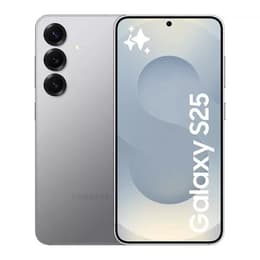
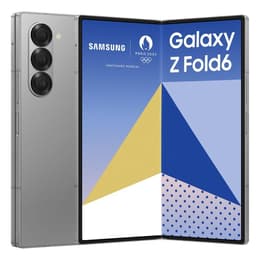


Galaxy S25 Vs Galaxy Z Fold6

Galaxy S25
Galaxy S25
Starting at

Refurbished price:483.00

Versus €910.00 new

See options
Galaxy Z Fold6
Galaxy Z Fold6
Starting at

Refurbished price:750.00

Versus €1,973.53 new

See options

Ratings

The Samsung Galaxy S25, released in February 2025, represents the latest iteration of Samsung's traditional flagship smartphone line, offering a conventional slate design. In contrast, the Samsung Galaxy Z Fold6, launched in July 2024, is a foldable smartphone that transforms from a compact device into a larger tablet-like experience. While both devices operate on the Android platform with Samsung's One UI, their fundamental form factors lead to distinct user experiences and priorities in design, display, and functionality.

Scores

Durability

Both the Galaxy S25 and the Galaxy Z Fold6 are designed for extended use, benefiting from Samsung's commitment to long-term software support, typically offering up to seven years of Android operating system upgrades and security updates. This ensures a prolonged practical lifespan for both devices.

  • Software Longevity: The Galaxy S25, being released slightly later, may receive software updates for a few months longer than the Z Fold6, though both are expected to maintain current functionality for many years.
  • Physical Durability: The Galaxy S25 features Corning Gorilla Glass Victus 2 on its front and back, with some variants like the S25 Ultra using Gorilla Armor 2 for enhanced scratch and drop resistance. The Z Fold6 utilizes Corning Gorilla Glass Victus 2 for its cover screen and back panel, while the inner display uses Samsung's ultra-thin flexible glass. The Z Fold6 also introduces an IP48 rating, marking Samsung's first foldable with certified dust protection, alongside water resistance. Both devices carry an IP68 rating for water and dust resistance, allowing submersion in up to 1.5 meters of water for 30 minutes.
  • Repairability Considerations: While specific repairability scores can vary, the traditional design of the Galaxy S25 generally offers a more straightforward repair process compared to the complex foldable mechanism of the Z Fold6. The Z Fold6's hinge and flexible display introduce additional components that can influence repair complexity.

Year of Release

2025

2024

OS

Android

Android

Foldable

No

Yes

Performance

Both the Galaxy S25 and the Galaxy Z Fold6 are equipped with powerful processors designed to handle demanding tasks, though they feature slightly different generations of the same processor family.

  • Processing Power: The Galaxy S25 series is powered by a current-generation processor, optimized for high performance and efficiency, ensuring smooth operation across various applications. The Galaxy Z Fold6 features a slightly earlier generation of the same processor, also delivering robust performance for multitasking and intensive applications. Both processors are designed to manage demanding apps and multitasking smoothly, with the S25 showing a slight edge in benchmark tests for raw CPU power.
  • Multitasking and Responsiveness: Both devices come with 12GB of RAM in their base configurations, providing ample capacity for running multiple applications simultaneously without significant slowdowns. Users can expect quick app loading times and fluid transitions between tasks on both models. The Z Fold6's larger internal display offers a unique advantage for split-screen multitasking, allowing for a more expansive workspace.
  • Gaming and Thermal Management: For graphically intensive games, both phones deliver a smooth experience at high settings. The Galaxy S25 incorporates a redesigned vapor chamber cooling system to dissipate heat effectively during heavy workloads, contributing to sustained performance. The Z Fold6 also maintains comfortable temperatures during extended use, indicating efficient thermal management for its form factor.

Memory (GB)

12 GB

12 GB

Screen quality

The display experience is a primary differentiator between these two devices, with the Galaxy S25 offering a single, high-quality screen and the Z Fold6 providing a versatile dual-screen setup.

  • Display Technology and Clarity: Both devices feature Dynamic LTPO AMOLED 2X displays, known for vibrant colors, deep blacks, and excellent contrast. The Galaxy S25 has a 6.2-inch display with a Full HD+ resolution (2340x1080 pixels), providing a sharp viewing experience for everyday content. The Galaxy Z Fold6 offers a 6.3-inch cover display with a resolution of 2376x968 pixels and a 7.6-inch main foldable display with a resolution of 2160x1856 pixels, both delivering high clarity.
  • Brightness and Refresh Rate: Both the Galaxy S25 and the Galaxy Z Fold6 boast impressive peak brightness levels of up to 2600 nits, ensuring excellent visibility even in bright outdoor conditions. Both displays also feature an adaptive 120Hz refresh rate, providing smooth scrolling and fluid animations, dynamically adjusting to content to optimize power consumption.
  • Viewing Experience and Aspect Ratio: The Galaxy S25 offers a traditional smartphone viewing experience, ideal for one-handed use and standard media consumption. The Z Fold6's cover screen has a wider aspect ratio compared to its predecessor, making it more usable as a conventional smartphone when folded. When unfolded, its large 7.6-inch main screen provides an expansive canvas for productivity, media, and gaming, offering a more immersive experience akin to a small tablet.

Resolution

1080x2340

1856 x 2160

Audiovisual

Both the Galaxy S25 and the Galaxy Z Fold6 offer capable camera systems, but they cater to slightly different photographic needs and experiences.

  • Rear Camera Systems: The Galaxy S25 features a versatile triple-camera setup, typically including a 50MP main sensor, a 12MP ultrawide lens, and a 10MP telephoto lens with 3x optical zoom. The Galaxy Z Fold6 also comes with a triple-camera system, comprising a 50MP wide-angle lens, a 12MP ultra-wide lens, and a 10MP telephoto lens with 3x optical zoom. While the core specifications are similar, the S25's camera system is often noted for its consistent performance in various conditions.
  • Photography Performance: In good lighting, both devices capture detailed images with natural colors and balanced dynamic range. The S25's main camera performs reliably, with good portrait shots and sharp selfies. The Z Fold6's camera system is praised for its wide dynamic range and good exposure, with low noise in bright environments. However, some reviews suggest the Z Fold6's cameras, particularly the ultrawide and telephoto, may show limitations in low-light conditions compared to traditional flagships. Both benefit from Samsung's ProVisual Engine for AI-based image processing.
  • Video and Audio: Both phones are capable of high-quality video recording, including 4K and 8K options, with good stabilization. The S25 offers smooth and stable 4K video, suitable for everyday recording. The Z Fold6 also provides effective video stabilization and good colors in video recordings. Microphone quality on both devices is generally good for calls and recording, though the S25 Ultra's microphone was noted to capture background noise. Speaker output on both devices provides a clear audio experience for media consumption.

Miscellaneous

Beyond core features, several practical elements distinguish the Galaxy S25 and Galaxy Z Fold6, influencing daily usability and connectivity.

  • Connectivity and Ports: Both devices support 5G connectivity, Wi-Fi 7, and Bluetooth 5.4, ensuring fast and reliable wireless communication. They also feature a USB Type-C 3.2 port for data transfer and charging. The Galaxy S25 offers dual SIM capabilities (Nano-SIM and eSIM).
  • Sensors and Security: Both the Galaxy S25 and Z Fold6 include an ultrasonic in-screen fingerprint sensor for secure and convenient unlocking. The Z Fold6 also features a 4MP under-display camera on its main screen, used for video calls and facial recognition.
  • Design, Weight, and Materials: The Galaxy S25 (base model) has an aluminum body and glass back, weighing around 162g and measuring 7.2mm thick, offering a compact and comfortable feel. The Galaxy Z Fold6, due to its foldable design, is heavier at 239g and thicker when folded (12.1mm), but becomes very thin when unfolded (5.6mm). Its frame is made of matte aluminum. The Z Fold6's wider cover screen and overall thinner profile compared to previous Fold models enhance its usability in the folded state.

Weight

162 g

239 g

Screen size (in)

6.2

7.6

Network

5G

5G

SIM card

Physical SIM + eSIM

Physical SIM + eSIM

Carrier compatibility

Unlocked

Unlocked

The Samsung Galaxy S25 and Galaxy Z Fold6 cater to different user preferences, each excelling in distinct areas. User sentiment often praises the Galaxy S25 for its balanced performance, reliable camera system, and comfortable, traditional smartphone form factor. It is frequently highlighted for its powerful processing capabilities and extended battery life, making it a solid choice for everyday use and demanding applications. Criticisms, when present, sometimes point to its camera system not always offering significant upgrades over previous generations, though it remains highly capable.

The Galaxy Z Fold6, on the other hand, receives acclaim for its innovative foldable design, offering the versatility of a large tablet screen in a pocketable device. Users appreciate the expansive internal display for multitasking, media consumption, and creative work. The improved cover screen usability and enhanced durability are also common praise points. However, some users note that the camera system, while competent, may not match the absolute best of traditional flagships in all scenarios, and the device's weight and thickness when folded can be a consideration for some.

Users prioritizing a compact, traditional smartphone experience with top-tier performance and a dependable camera will find the Galaxy S25 well-suited to their needs. It offers a streamlined experience for those who value a familiar form factor and robust capabilities. Conversely, users who desire a larger, more immersive display for productivity and entertainment, and are willing to embrace the unique form factor, will lean toward the Galaxy Z Fold6. Its ability to transform from a phone to a tablet provides unparalleled flexibility for specific workflows and media consumption habits.

For those considering either of these advanced devices, exploring quality-assured refurbished options can provide an eco-friendly alternative, offering access to premium technology while supporting sustainable consumption practices.


See all articles

Our recent comparisons