

Galaxy S25 Ultra Vs iPhone 14 Plus

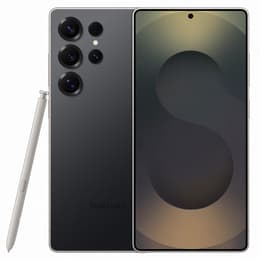
Galaxy S25 Ultra
Galaxy S25 Ultra
Starting at

Refurbished price:735.00

Versus €1,408.78 new

See options
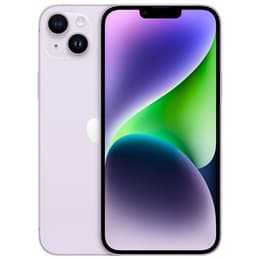
iPhone 14 Plus
iPhone 14 Plus
Starting at

Refurbished price:317.00

Versus €879.00 new

See options

Ratings

The Samsung Galaxy S25 Ultra, released in early 2025, and the Apple iPhone 14 Plus, launched in late 2022, represent distinct approaches to the large-screen smartphone experience. While both devices offer expansive displays and robust performance, the Galaxy S25 Ultra emphasizes advanced camera capabilities, a versatile S Pen, and a highly customizable Android operating system, whereas the iPhone 14 Plus focuses on a streamlined user experience, strong ecosystem integration, and reliable performance within Apple's iOS environment. These differences cater to varying user preferences, from those seeking cutting-edge features and flexibility to those prioritizing simplicity and a familiar interface.

Scores

Durability

The longevity of a smartphone is influenced by its release timeline, software support, and physical durability. The Galaxy S25 Ultra, being a newer device, benefits from a longer expected support window compared to the iPhone 14 Plus.

  • Software Updates: The Galaxy S25 Ultra launched with Android 15 and One UI 7, with Samsung promising 7 years of OS and security updates, extending support into 2032. The iPhone 14 Plus, released with iOS 16, typically receives 5-6 years of major iOS updates from its release date, meaning its software support will conclude sooner than the S25 Ultra.
  • Physical Durability: The Galaxy S25 Ultra features a titanium body and Gorilla Glass Armor 2 for its front display and rear panel, offering enhanced scratch resistance and drop protection. The iPhone 14 Plus utilizes a Ceramic Shield front and an aluminum design with glass back, providing good resistance to drops and scratches. Both devices carry an IP68 rating for dust and water resistance.
  • Repairability: The Galaxy S25 Ultra has shown improvements in repairability, with iFixit giving it a provisional score of 5 out of 10, noting easier battery access. While this is an improvement for Samsung, some iPhone models, like the iPhone 16 Pro Max, have received higher repairability scores.

Year of Release

2025

2022

Compatible with latest Update

Yes

Yes

OS

Android

iOS

Foldable

No

No

Performance

Performance in daily use, from app handling to gaming, is a key differentiator between these two devices, largely influenced by their internal components and software optimization.

  • Processing Power: The Galaxy S25 Ultra is equipped with a current-generation processor, the Snapdragon 8 Elite for Galaxy, designed for demanding applications and multitasking. The iPhone 14 Plus uses the A15 Bionic chip, which provides smooth performance for everyday tasks and gaming.
  • Multitasking and Responsiveness: The Galaxy S25 Ultra typically offers 12GB of RAM, contributing to fluid multitasking and app management. The iPhone 14 Plus comes with 6GB of RAM, which, combined with iOS optimization, ensures a responsive user experience even with multiple applications open.
  • Storage Options: Both devices offer various internal storage configurations. The Galaxy S25 Ultra is available with 256GB, 512GB, and 1TB options. The iPhone 14 Plus is available in 128GB, 256GB, and 512GB capacities.

Memory (GB)

12 GB

6 GB

Screen quality

The visual experience on a smartphone is heavily dependent on its display technology, resolution, and brightness, which vary between these two models.

  • Display Technology and Size: The Galaxy S25 Ultra features a 6.9-inch Dynamic LTPO AMOLED 2X display with a 120 Hz refresh rate, offering vibrant colors and smooth scrolling. The iPhone 14 Plus has a 6.7-inch Super Retina XDR OLED display with a standard 60 Hz refresh rate, known for its color accuracy and deep blacks.
  • Brightness and Clarity: The S25 Ultra's display can reach up to 2600 nits peak brightness, providing excellent visibility in various lighting conditions. The iPhone 14 Plus offers a typical brightness of 800 nits and a peak HDR brightness of 1200 nits. Both displays offer high resolutions, with the S25 Ultra at 3120x1440 pixels and the iPhone 14 Plus at 2778x1284 pixels, resulting in sharp images and text.
  • Special Features: The Galaxy S25 Ultra includes ProScaler, an AI-based upscaling technology designed to enhance lower-resolution content to QHD+ for improved visual consistency. The iPhone 14 Plus features True Tone technology for adaptive color and HDR support for enhanced contrast.

Resolution

1080 x 2340 pixels

1284 x 2778

Audiovisual

Both the Galaxy S25 Ultra and the iPhone 14 Plus offer capable camera systems, though they differ in their approach to hardware and computational photography.

  • Rear Camera System: The Galaxy S25 Ultra boasts a quad-camera setup, including a 200 MP wide-angle main camera, a 50 MP ultra-wide camera, a 10 MP telephoto with 3x optical zoom, and a 50 MP periscope telephoto with 5x optical zoom. This configuration allows for significant versatility in zoom and detail. The iPhone 14 Plus features a dual-camera system with a 12 MP main camera and a 12 MP ultra-wide camera.
  • Photography Features: The S25 Ultra supports 8K video recording at 30fps and includes AI-powered image processing for sharper, more detailed photos, along with features like Nightography and AI zoom. The iPhone 14 Plus offers features like Photonic Engine for improved low-light performance, Cinematic mode for video with shallow depth of field, and Action mode for enhanced video stabilization.
  • Front Camera: Both devices feature a 12 MP front-facing camera. The Galaxy S25 Ultra's front camera has an f/2.2 aperture, while the iPhone 14 Plus's TrueDepth camera has an f/1.9 aperture and autofocus, which can be beneficial for selfies and video calls.

Front camera

8K@24/30fps

12 megapixels

Miscellaneous

Beyond core performance and camera, several practical elements contribute to the overall user experience and differentiate these two smartphones.

  • Connectivity and Ports: Both devices support 5G connectivity and modern Wi-Fi standards. The Galaxy S25 Ultra uses a USB-C port, while the iPhone 14 Plus features a Lightning port. The iPhone 14 Plus also includes Emergency SOS via satellite for communication in areas without cellular service.
  • Biometrics and Stylus: The Galaxy S25 Ultra incorporates an ultrasonic in-screen fingerprint sensor and features an integrated S Pen, offering capabilities for note-taking, drawing, and screen interaction. The S Pen on the S25 Ultra has seen some changes, with the removal of Bluetooth functionality for Air Actions, though core functions like quick notes and AI Select remain. The iPhone 14 Plus relies on Face ID for secure authentication.
  • Design and Handling: The Galaxy S25 Ultra has a titanium frame and a weight of 218 grams. The iPhone 14 Plus has an aluminum frame and weighs 203 grams. The S25 Ultra features rounded corners, a design shift from its predecessor.

Weight

2 g

150 g

Screen size (in)

6.9

6.7

Network

5G

5G

SIM card

Physical SIM + eSIM

eSIM

Carrier compatibility

Unlocked

Unlocked

Connector

USB-C

Lightning

The Galaxy S25 Ultra and iPhone 14 Plus cater to different user priorities, reflecting their respective ecosystems and design philosophies. Users often praise the Galaxy S25 Ultra for its highly versatile camera system, offering extensive zoom capabilities and high-resolution sensors that appeal to photography enthusiasts. The inclusion of the S Pen is a significant draw for those who value productivity, precise input, and creative expression, despite the removal of some Bluetooth features. Its expansive, high-refresh-rate display and long software support also receive positive feedback for an immersive and future-proof experience.

Conversely, the iPhone 14 Plus is frequently lauded for its consistent and intuitive iOS experience, robust ecosystem, and strong privacy features. Users appreciate its reliable performance for everyday tasks and gaming, along with its impressive battery life. The camera system, while not as numerically feature-rich as the S25 Ultra, is praised for its ease of use and consistent image quality, particularly with features like Photonic Engine and Action mode. Criticisms for the iPhone 14 Plus sometimes center on its 60Hz display refresh rate, which some users find less fluid compared to higher refresh rate screens on competing devices.

For users prioritizing a cutting-edge camera, a highly customizable Android experience, and the unique functionality of a stylus, the Galaxy S25 Ultra presents a compelling option. Those who prefer a streamlined, user-friendly interface, a strong software ecosystem, and consistent performance with excellent battery life may find the iPhone 14 Plus more suitable. Both devices offer quality-assured refurbished options, providing an eco-friendly alternative for consumers.


See all articles

Our recent comparisons




