
Compare models
Galaxy S25 FE Vs iPhone 14 Pro Max
- 1-year minimum warranty
- Free delivery on all orders
- Free 30-day returns
Differences at a glance
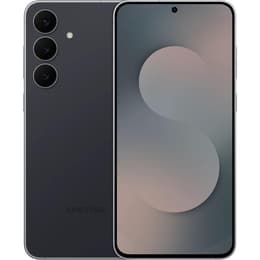
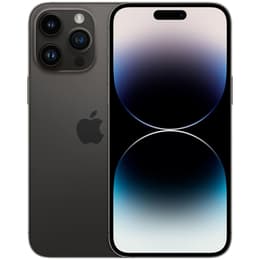
The Samsung Galaxy S25 FE (2025) and the Apple iPhone 14 Pro Max (2022) represent two distinct approaches to large-screen mobile technology, balancing modern Android hardware with Apple's established ecosystem. While they share a similar screen size, they differ significantly in their operating systems, release timelines, and core design philosophies, catering to very different daily preferences.
Available Models
Colour
Storage
Scores
Durability
When evaluating hardware longevity and software support, both devices approach long-term usability through different update strategies and build approaches.
- Software longevity and updates: The Galaxy S25 FE benefits from an extended software support window typical of recent Android releases, whereas the iPhone 14 Pro Max relies on Apple's consistent multi-year update history for iOS devices.
- Build durability: The iPhone 14 Pro Max utilizes textured matte glass and a stainless steel frame adding notable heft, while the Galaxy S25 FE employs durable Corning glass and an aluminum frame for a lighter structure. Both feature dust and water resistance ratings suitable for everyday accidental exposure.
- Expected practical lifespan: Both smartphones offer robust internal components designed to maintain day-to-day functionality over several years of regular use, depending on battery health maintenance over time.
Year of Release
2025
2022
Compatible with latest Update
Yes
Yes
OS
Android
iOS
Foldable
No
No
Performance
Under everyday conditions, both smartphones handle demanding tasks, multitasking, and media consumption efficiently through different hardware architectures.
- System responsiveness: Both devices launch applications rapidly, switch between multiple active programs without stuttering, and handle graphics-heavy gaming smoothly thanks to modern internal processing power.
- Memory and multitasking: The Galaxy S25 FE pairs its processor with ample random access memory to keep background apps active, while the iPhone 14 Pro Max utilizes Apple's memory optimization within iOS to manage background tasks efficiently.
- Battery behavior: The Galaxy S25 FE features a 4,900 mAh battery supporting full-day mixed usage, whereas the iPhone 14 Pro Max relies on a 4,323 mAh cell optimized for extended screen-on duration under typical conditions.
Screen quality
Both handsets offer expansive viewing areas with high peak brightness levels, though they employ distinct panel technologies and interface styles.
- Display technology: The Galaxy S25 FE features a 6.7-inch Dynamic AMOLED panel with vivid color reproduction, while the iPhone 14 Pro Max uses a 6.7-inch LTPO Super Retina XDR OLED display featuring the interactive Dynamic Island cutout.
- Outdoor visibility: Both screens reach high peak brightness thresholds, ensuring clear readability and sharp text contrast even under direct sunlight.
- Refresh rate and smoothness: Both models support adaptive refresh rates up to 120Hz, delivering fluid scrolling through web pages, documents, and supported applications.
Audiovisual
Imaging capabilities differ across lens configurations and software processing approaches, giving each device unique photographic strengths.
- Camera system configuration: The Galaxy S25 FE provides a versatile triple-lens setup including a high-resolution main sensor, ultra-wide lens, and dedicated telephoto zoom option. The iPhone 14 Pro Max features a 48-megapixel main sensor alongside ultra-wide and optical telephoto lenses.
- Low-light and video capture: Both devices deliver clear low-light imagery with balanced exposure and minimal noise, while recording stable, high-resolution video with advanced stabilization modes.
- Media and audio output: Stereo speaker configurations on both models produce clear audio output suitable for hands-free calls, casual video viewing, and music playback.
Miscellaneous
Practical daily features vary across connectivity standards, port types, biometric security, and physical dimensions.
- Connectivity and ports: The Galaxy S25 FE utilizes a USB-C port alongside modern Wi-Fi and 5G standards, while the iPhone 14 Pro Max employs a Lightning connector for charging and data transfer alongside cellular and wireless connectivity.
- Biometric security: Samsung offers both an in-display fingerprint scanner and facial recognition, whereas Apple relies entirely on Face ID for secure authentication and purchases.
- Physical handling: The Galaxy S25 FE weighs 190 grams with a slim profile, making it lighter to hold over extended periods than the heavier 240-gram stainless steel build of the iPhone 14 Pro Max.
Weight
190 g
150 g
Screen size (in)
6.7
6.7
Network
5G
5G
SIM card
Physical SIM + eSIM
eSIM
Carrier compatibility
Unlocked
Unlocked
Connector
USB-C
Lightning
What the community thinks
User feedback highlights distinct preferences for each device across community forums. Owners of the Galaxy S25 FE frequently praise its lighter physical footprint, versatile multi-lens camera layout, and fluid Android interface. Conversely, users of the iPhone 14 Pro Max often highlight its robust build quality, reliable battery longevity, and seamless integration within the iOS ecosystem. Common criticisms for the Samsung model sometimes point toward regional processor variations, while Apple users occasionally note the heavier device weight during one-handed use.
Users prioritizing a lightweight Android experience with flexible zoom optics may find the Galaxy S25 FE well-suited to their daily routines. Meanwhile, users who prefer iOS, facial recognition security, and a heavier premium build often lean toward the iPhone 14 Pro Max. For buyers seeking a quality-assured refurbished option as a sustainable choice, exploring verified device providers can offer a reliable path to acquiring either model while minimizing environmental impact.