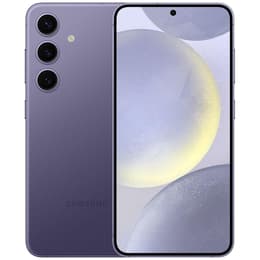
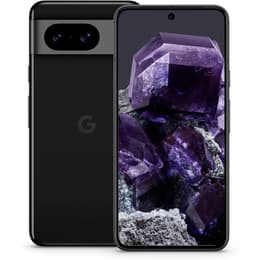


Galaxy S24 Vs Google Pixel 8

Galaxy S24
Galaxy S24
Starting at

Refurbished price:325.00

Versus €956.40 new

See options
Google Pixel 8
Google Pixel 8
Starting at

Refurbished price:247.59

Versus €819.97 new

See options

Ratings

The Samsung Galaxy S24 (released January 2024) and the Google Pixel 8 (released October 2023) are both contemporary Android smartphones that offer distinct approaches to the user experience. While both devices run on the Android operating system, they differentiate themselves through their core hardware philosophies, camera capabilities, and software features. The Galaxy S24 emphasizes a refined design and a comprehensive feature set, whereas the Pixel 8 focuses on a streamlined Android experience with advanced computational photography and artificial intelligence integration.

Scores

Durability

The longevity of a smartphone is significantly influenced by its software support and physical durability. Both the Galaxy S24 and the Pixel 8 offer an impressive commitment to long-term software updates, ensuring users receive new features and security patches for an extended period.

  • Software Support: Both the Samsung Galaxy S24 and the Google Pixel 8 are committed to providing seven years of operating system upgrades and security updates from their respective release dates. This means both devices are designed to remain current with the latest Android features and security protocols well into the future.
  • Repairability: The Galaxy S24 generally scores higher in repairability assessments, with some reports giving it a 9 out of 10. Its design allows for easier battery replacement with pull tabs and simpler access to the back panel and camera lenses. The Pixel 8, while still considered moderately repairable with scores around 6 or 7 out of 10, presents more challenges, particularly with battery removal due to strong adhesives and a main board soldered to the charger port.
  • Physical Durability: Both devices feature robust build materials, including Gorilla Glass protection for their displays and backs, and an IP68 rating for dust and water resistance, contributing to their resilience against everyday wear and tear.

Year of Release

2024

2023

Compatible with latest Update

Yes

Yes

OS

Android

Android

Foldable

No

No

Performance

Performance in modern smartphones extends beyond raw processing power, encompassing how smoothly applications run, how efficiently the battery is managed, and the overall responsiveness of the system during daily use.

  • Everyday Responsiveness: Both the Galaxy S24 and the Pixel 8 are equipped with current-generation processors designed to handle demanding applications, multitasking, and graphic-intensive games with ease. Users can expect fluid navigation and quick app loading times on both devices. The Galaxy S24, depending on the region, uses either a Samsung-developed processor or a Snapdragon variant, while the Pixel 8 features Google's Tensor G3 chip.
  • Multitasking and Storage: Both phones come with 8GB of RAM, which is sufficient for managing multiple applications simultaneously without significant slowdowns. The Galaxy S24 offers more storage options, including 128GB, 256GB, and 512GB, while the Pixel 8 is available with 128GB or 256GB of internal storage.
  • Battery Behavior: The Pixel 8 features a larger 4575mAh battery compared to the Galaxy S24's 4000mAh battery. In practical use, the Pixel 8's larger capacity may offer slightly longer usage times for some users, though actual battery life varies significantly with usage patterns and software optimization. Some Galaxy S24 users have reported that heavy usage can necessitate multiple daily charges.

Memory (GB)

8 GB

8 GB

Screen quality

The display is a primary interface for smartphone interaction, and both the Galaxy S24 and Pixel 8 offer high-quality viewing experiences with distinct characteristics.

  • Display Technology and Brightness: Both devices feature vibrant OLED displays, providing deep blacks and excellent contrast. The Galaxy S24's Dynamic AMOLED 2X display can reach a peak brightness of 2600 nits, offering exceptional visibility even in bright outdoor conditions. The Pixel 8's Actua Display also offers impressive brightness, with a peak of 2000 nits, and can reach 1600 nits fullscreen when its Smooth Display feature is active.
  • Refresh Rate and Smoothness: Both phones boast a 120Hz refresh rate, ensuring smooth scrolling and responsive interactions. The Galaxy S24's display features an adaptive refresh rate that can scale down to 1Hz, which can contribute to power efficiency. The Pixel 8's refresh rate is also variable, adjusting between 60Hz and 120Hz based on content, but does not reach as low as 1Hz.
  • Clarity and Eye Comfort: Both devices offer Full HD+ resolutions, providing sharp and clear visuals for everyday viewing. The Galaxy S24 also incorporates a higher Pulse Width Modulation (PWM) refresh rate of 492Hz, which can reduce eye strain for sensitive users compared to the Pixel 8's 246Hz.

Resolution

1080 x 2340

1080 x 2400

Screen type

Dynamic LTPO AMOLED 2X

OLED

Audiovisual

Both the Galaxy S24 and Pixel 8 are recognized for their advanced camera systems, each leveraging different strengths in hardware and computational photography to deliver high-quality images and videos.

  • Rear Camera Systems: The Galaxy S24 features a versatile triple-camera setup, including a 50MP main sensor, a 12MP ultrawide lens, and a 10MP telephoto lens with 3x optical zoom. This configuration provides flexibility for various shooting scenarios, from wide landscapes to zoomed-in subjects. The Pixel 8 employs a dual-camera system with a 50MP main sensor and a 12MP ultrawide lens with autofocus. While it lacks a dedicated telephoto lens, Google's computational photography excels at digital zoom.
  • Photography Performance: The Pixel 8 is highly praised for its computational photography, delivering consistent and detailed photos, particularly in challenging lighting conditions, with features like Night Sight. The Galaxy S24 also offers excellent image quality with improved imaging algorithms and strong low-light performance. Some early Galaxy S24 users reported issues with grainy photos and choppy transitions between zoom levels.
  • Video Recording and Audio: The Galaxy S24 supports up to 8K video recording at 30 frames per second, offering high-resolution video capture. The Pixel 8 records up to 4K at 60 frames per second and introduces 'Video Boost,' a cloud-based feature that enhances video quality, especially in low light, by applying computational photography models. Both phones offer good microphone quality for calls and recordings, and stereo speakers for media consumption.

Main camera

50 megapixels

50 megapixels

Front camera

12 megapixels

10.5 megapixels

Miscellaneous

Beyond the core features, several practical elements contribute to the overall user experience, including connectivity, physical design, and additional functionalities.

  • Connectivity and Ports: Both the Galaxy S24 and Pixel 8 support modern connectivity standards, including 5G for fast mobile data, and advanced Wi-Fi standards (Wi-Fi 6E/7 for Pixel 8, Wi-Fi 6E for S24) for robust wireless internet. Both devices utilize a USB-C port for charging and data transfer, and neither includes a traditional 3.5mm headphone jack.
  • Biometric Security and Sensors: Both smartphones offer secure and convenient biometric authentication. The Galaxy S24 features an in-display fingerprint sensor, while the Pixel 8 also includes an in-display optical fingerprint sensor and face recognition.
  • Design and Handling: The Galaxy S24 measures 147.00 x 70.60 x 7.60mm and weighs 168g, presenting a compact and lightweight profile. The Pixel 8 is slightly larger and heavier at 150.5 x 70.8 x 8.9 mm and 187g. Both devices feature premium build materials, typically glass backs and aluminum frames, contributing to a solid in-hand feel.

Weight

167 g

187 g

Screen size (in)

6.2

6.2

Network

5G

5G

SIM card

Dual Physical SIM + eSIM

Physical SIM + eSIM

Carrier compatibility

Unlocked

Unlocked

User sentiment for both the Samsung Galaxy S24 and the Google Pixel 8 highlights their respective strengths and areas for consideration. The Galaxy S24 is often praised for its bright and vibrant display, comprehensive camera system with a dedicated telephoto lens, and its sleek, compact design. However, some users have noted initial concerns regarding display color calibration, occasional camera inconsistencies, and specific software glitches like scrolling lag or Android Auto connectivity issues.

The Google Pixel 8 receives strong acclaim for its exceptional computational photography, delivering consistent and high-quality images, particularly in challenging lighting. Its clean Android experience and commitment to long-term software support are also frequently highlighted as major advantages. Some users, however, have pointed out that while video quality has improved with features like Video Boost, it may not always match the top-tier performance of some competitors in all scenarios, and the battery life, while good, might not always outperform devices with larger capacities.

Users prioritizing a versatile camera system with optical zoom and a very bright, high PWM refresh rate display may find the Galaxy S24 well-suited to their needs. Those who value a streamlined Android experience, cutting-edge computational photography, and a slightly larger battery capacity might lean towards the Google Pixel 8. Both devices offer robust performance for daily tasks and are excellent choices for users seeking a quality-assured refurbished option, providing an eco-friendly alternative to purchasing new. The decision ultimately depends on whether a user prioritizes Samsung's feature-rich ecosystem and hardware versatility or Google's software-centric approach and advanced AI camera capabilities.

See all articles

Our recent comparisons