

Galaxy S24 Ultra Vs Xiaomi Redmi Note 12 Pro

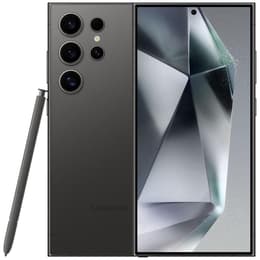
Galaxy S24 Ultra
Galaxy S24 Ultra
Starting at

Refurbished price:542.00

Versus €1,141.93 new

See options
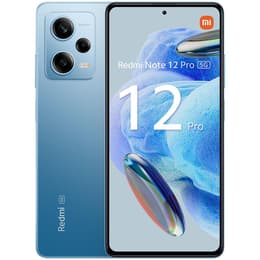
Xiaomi Redmi Note 12 Pro
Starting at

Refurbished price:112.00

Versus €399.00 new

See options

Ratings

The Samsung Galaxy S24 Ultra, released in January 2024, stands as a premium flagship smartphone, while the Xiaomi Redmi Note 12 Pro, launched in late 2022, positions itself as a capable mid-range device. These two Android smartphones cater to different user expectations, primarily differing in their processing power, camera capabilities, and long-term software support. Both devices operate on the Android platform, though they feature distinct user interfaces: Samsung's One UI and Xiaomi's MIUI.

Scores

Durability

When considering the long-term usability of a smartphone, factors like software support and physical durability play a significant role. The Galaxy S24 Ultra and Redmi Note 12 Pro offer different propositions in this regard.

  • Software Longevity: The Samsung Galaxy S24 Ultra is designed for extended use, promising seven years of major Android operating system upgrades and security updates from its release. In contrast, the Xiaomi Redmi Note 12 Pro typically receives fewer major OS updates, generally around two to three, and security updates for a shorter period, often three to four years. This means the S24 Ultra will remain current with the latest software features and security patches for a considerably longer duration.
  • Physical Durability: The Galaxy S24 Ultra features a robust build with a titanium frame and Gorilla Glass Armor protecting its display, contributing to its resistance against drops and scratches. It also boasts an IP68 rating for dust and water resistance. The Redmi Note 12 Pro utilizes Gorilla Glass 5 for screen protection and has a glass back with a plastic frame, offering an IP53 rating for splash and dust resistance.
  • Repairability: The Samsung Galaxy S24 Ultra has received a high repairability score, with many components being relatively easy to replace, though the display can be challenging to remove without damage. Information regarding the specific repairability score for the Redmi Note 12 Pro is less prominent, but mid-range devices generally present varying levels of repair complexity.

Year of Release

2024

2022

Compatible with latest Update

Yes

No

OS

Android

Android

Foldable

No

No

Performance

The performance of these two devices reflects their respective market segments, with the Galaxy S24 Ultra offering a more powerful and responsive experience compared to the Redmi Note 12 Pro.

  • Processing Power: The Galaxy S24 Ultra is equipped with a current-generation processor that handles demanding applications, intensive multitasking, and graphic-heavy gaming with exceptional smoothness and efficiency. Users can expect rapid app loading and seamless transitions. The Redmi Note 12 Pro features a mid-range processor that provides a capable experience for everyday tasks, social media, and moderate gaming. It offers smooth performance for general use, though it may show limitations with the most demanding applications or prolonged heavy gaming.
  • Battery Performance: The Galaxy S24 Ultra, with its 5000 mAh battery, consistently delivers excellent battery life, often lasting more than a full day of heavy use and sometimes extending into a second day for many users. The Redmi Note 12 Pro also houses a 5000 mAh battery, providing reliable all-day power for typical usage.
  • Memory and Storage: The Galaxy S24 Ultra typically comes with 12GB of RAM, ensuring robust multitasking capabilities, and offers storage options up to 1TB. The Redmi Note 12 Pro is available with 6GB or 8GB of RAM, which is sufficient for most users, and offers storage up to 256GB, though it lacks expandable storage.

Memory (GB)

12 GB

8 GB

Screen quality

The visual experience on both smartphones is a key differentiator, with the Galaxy S24 Ultra providing a more advanced display technology and higher overall clarity.

  • Display Technology and Resolution: The Samsung Galaxy S24 Ultra features a 6.8-inch Dynamic AMOLED 2X display with a QHD+ resolution (3120x1440 pixels), offering exceptional sharpness and detail. The Redmi Note 12 Pro comes with a 6.67-inch Flow AMOLED display with an FHD+ resolution (2400x1080 pixels), providing clear and vibrant visuals suitable for its class.
  • Brightness and Refresh Rate: The S24 Ultra's display can reach a peak brightness of 2600 nits, ensuring excellent visibility even in bright outdoor conditions, and features an adaptive refresh rate from 1Hz to 120Hz for smooth scrolling and power efficiency. The Redmi Note 12 Pro offers a peak brightness of up to 900 nits (or 1200 nits in some contexts) and a 120Hz refresh rate, providing a fluid viewing experience, though its adaptive refresh rate behavior may vary.
  • Viewing Experience: Both displays offer vibrant colors and deep blacks characteristic of AMOLED technology. The S24 Ultra's larger size and higher resolution contribute to a more immersive viewing experience, particularly for high-definition content. The Redmi Note 12 Pro's display also supports Dolby Vision and HDR10+, enhancing media consumption.

Resolution

1440 x 3120

1080 x 2400

Screen type

Dynamic LTPO AMOLED 2X

AMOLED

Audiovisual

The camera systems on the Galaxy S24 Ultra and Redmi Note 12 Pro are designed for different levels of photographic versatility and image quality.

  • Rear Camera System: The Galaxy S24 Ultra boasts a versatile quad-camera setup, including a 200-megapixel main sensor, a 12-megapixel ultrawide lens, a 50-megapixel telephoto lens with 5x optical zoom, and a 10-megapixel telephoto lens with 3x optical zoom. This configuration allows for detailed photos, wide-angle shots, and significant optical zoom capabilities. The Redmi Note 12 Pro features a triple-camera system with a 50-megapixel main sensor (often with OIS), an 8-megapixel ultrawide lens, and a 2-megapixel macro lens, providing a solid photography experience for everyday moments.
  • Photography Performance: The S24 Ultra excels in various lighting conditions, producing sharp images with vibrant colors and strong dynamic range, and offers advanced features like 8K video recording. Its telephoto capabilities allow for clear zoomed-in shots. The Redmi Note 12 Pro delivers good image quality in well-lit environments, with its main sensor capturing decent detail and color. It supports 4K video recording.
  • Audio Experience: Both devices feature stereo speakers for an enhanced media consumption experience. The Redmi Note 12 Pro also includes a 3.5mm headphone jack, a feature absent on the Galaxy S24 Ultra, which can be a consideration for users who prefer wired audio accessories.

Main camera

200 megapixels

50 megapixels

Front camera

12 megapixels

16 megapixels

Miscellaneous

Beyond core performance, several practical features and design elements differentiate the Galaxy S24 Ultra and the Redmi Note 12 Pro, impacting daily usability and convenience.

  • Connectivity and Ports: Both smartphones support 5G connectivity, Wi-Fi, and Bluetooth for wireless communication. The Galaxy S24 Ultra features a USB-C port for charging and data transfer. The Redmi Note 12 Pro also uses a USB-C port and notably includes a 3.5mm headphone jack, offering flexibility for wired audio.
  • Biometrics and Special Features: The Galaxy S24 Ultra incorporates an ultrasonic in-screen fingerprint sensor and supports facial recognition for secure unlocking. A standout feature is the integrated S Pen stylus, offering enhanced productivity for note-taking, drawing, and navigation. The Redmi Note 12 Pro features a side-mounted fingerprint sensor and AI face unlock.
  • Build and Handling: The S24 Ultra has a premium build with a titanium frame and Gorilla Glass Armor, contributing to its durability and a solid in-hand feel. It weighs around 232-233 grams and measures 162.3 x 79 x 8.6 mm. The Redmi Note 12 Pro has a glass front and back with a plastic frame, weighing approximately 187-201.8 grams and measuring around 162.9 x 76 x 7.9 mm.

Weight

232 g

187 g

Screen size (in)

6.8

6.67

Network

5G

5G

SIM card

Physical SIM + eSIM

Dual Physical SIM

Carrier compatibility

Unlocked

Unlocked

User feedback for the Samsung Galaxy S24 Ultra frequently praises its exceptional battery life, powerful performance for demanding tasks, and the versatility of its camera system, particularly the advanced zoom capabilities. The integrated S Pen is also a consistent highlight for productivity and creative users. Some users note that while the device is highly capable, its size and weight can be a factor for one-handed use. The long-term software support is also a significant positive for many.

For the Xiaomi Redmi Note 12 Pro, users generally appreciate its vibrant AMOLED display, reliable all-day battery life, and solid performance for everyday smartphone activities. The inclusion of a 3.5mm headphone jack is often cited as a convenient feature. Criticisms sometimes point to its performance not matching higher-end devices for intensive tasks and the software update policy being less extensive than premium alternatives.

Users prioritizing a device with cutting-edge performance, a highly versatile camera system, and the longest possible software support, along with the unique functionality of a stylus, will find the Samsung Galaxy S24 Ultra well-suited to their needs. Those seeking a capable smartphone for daily use, media consumption, and moderate gaming, with a good display and solid battery life, may lean towards the Xiaomi Redmi Note 12 Pro. Both devices offer a pathway to owning a quality smartphone, and exploring quality-assured refurbished options can provide an eco-friendly alternative for either model.


See all articles

Our recent comparisons