

Galaxy S24 Ultra Vs Xiaomi 12T Pro

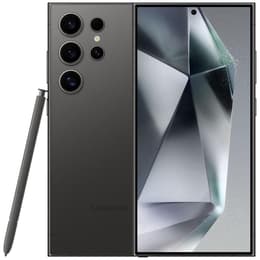
Galaxy S24 Ultra
Galaxy S24 Ultra
Starting at

Refurbished price:540.00

Versus €1,589.00 new

See options
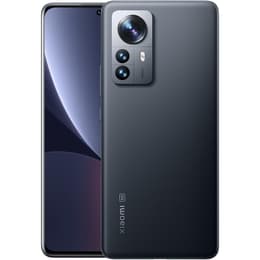
Xiaomi 12T Pro
Xiaomi 12T Pro
Starting at

Refurbished price:201.00

Versus €1,199.00 new

See options

Ratings

The Samsung Galaxy S24 Ultra, released in January 2024, and the Xiaomi 12T Pro, launched in October 2022, are both high-performance smartphones designed to cater to demanding users. While both devices offer robust specifications, the Galaxy S24 Ultra distinguishes itself with a more advanced display and a longer software support commitment, whereas the Xiaomi 12T Pro focuses on rapid charging capabilities.

Both phones operate on the Android platform, but they feature different custom user interfaces: Samsung's One UI and Xiaomi's MIUI, each offering a distinct user experience and set of features.

Scores

Durability

The longevity of a smartphone is influenced by its release timeline, software support, and physical durability.

  • Release Timeline: The Samsung Galaxy S24 Ultra is a more recent device, having been released in January 2024. The Xiaomi 12T Pro was launched earlier, in October 2022. This difference in release dates impacts their expected software support windows.
  • Software Longevity: The Galaxy S24 Ultra benefits from an extensive software commitment, promising seven years of operating system updates and seven years of security updates, which means it is expected to receive updates through Android 21. In contrast, the Xiaomi 12T Pro is slated to receive three major Android OS updates (up to Android 15) and four years of security updates from its launch. This makes the S24 Ultra a more future-proof option in terms of software.
  • Repairability and Build: The Galaxy S24 Ultra features a titanium frame and Gorilla Glass Armor on the front, contributing to its robust build and IP68 dust and water resistance. It has received high repairability scores, with components generally accessible, though the display can be challenging to remove without damage. The Xiaomi 12T Pro has a glass front with Gorilla Glass 5 protection, a plastic frame, and a glass back, offering IP53 dust and splash resistance. Its repairability score is also considered good, with features like pull tabs for battery removal aiding in servicing.

Year of Release

2024

2022

Compatible with latest Update

Yes

Yes

OS

Android

Android

Foldable

No

No

Performance

Performance in daily use is a key differentiator, affecting how smoothly applications run and how efficiently the device handles demanding tasks.

  • Processing Power: The Galaxy S24 Ultra is equipped with a current-generation processor, which provides substantial power for intensive applications, advanced gaming, and complex multitasking. This results in very responsive performance and efficient handling of heavy workloads. The Xiaomi 12T Pro features a previous-generation high-end processor, which still delivers strong performance for most daily tasks, gaming, and general multitasking, though it may not match the peak capabilities of the S24 Ultra's newer chip.
  • Storage and Multitasking: Both devices offer ample storage options, with the Galaxy S24 Ultra starting at 256GB and going up to 1TB, paired with 12GB of RAM across all variants. The Xiaomi 12T Pro offers configurations up to 256GB of storage with either 8GB or 12GB of RAM. The higher base RAM in the S24 Ultra and larger maximum storage options can provide a slight edge for users who frequently switch between many applications or store large files.
  • Battery Behavior: Both smartphones house a 5000 mAh battery. User reports indicate that the Galaxy S24 Ultra offers excellent battery endurance, often lasting more than a full day even with heavy use, including extensive camera usage and navigation. The Xiaomi 12T Pro also provides solid battery life, capable of lasting through a full day of typical usage, complemented by exceptionally fast 120W wired charging that can fully recharge the device in a short period.

Memory (GB)

12 GB

8 GB

Screen quality

The display is a primary interface for smartphone interaction, and differences in technology and specifications can significantly impact the visual experience.

  • Display Technology and Clarity: The Samsung Galaxy S24 Ultra features a 6.8-inch Dynamic AMOLED 2X display with a QHD+ resolution (3120 x 1440 pixels), offering exceptional sharpness and vibrant colors. The Xiaomi 12T Pro comes with a 6.67-inch AMOLED display with a 1.5K resolution (1220 x 2712 pixels), which also provides a clear and colorful viewing experience. The S24 Ultra's higher resolution results in a slightly finer detail for text and images.
  • Brightness and Refresh Rate: The Galaxy S24 Ultra's display can reach a peak brightness of up to 2600 nits (advertised), making it highly visible even in bright outdoor conditions. It also features an adaptive refresh rate ranging from 1Hz to 120Hz, which contributes to smooth scrolling and efficient power consumption. The Xiaomi 12T Pro offers a peak brightness of up to 900 nits and a consistent 120Hz refresh rate, providing a fluid visual experience in most environments.
  • Viewing Experience: Both displays support HDR content, enhancing contrast and color depth for media consumption. The S24 Ultra's slightly larger screen and higher resolution, combined with its superior peak brightness, offer a more immersive and detailed viewing experience, particularly for high-quality video and intricate graphics.

Resolution

1440 x 3120

1220 x 2712

Screen type

Dynamic LTPO AMOLED 2X

AMOLED

Audiovisual

Camera capabilities are often a deciding factor for many users, with both devices offering high-megapixel main sensors but differing in their overall camera systems.

  • Main Camera Performance: Both the Galaxy S24 Ultra and the Xiaomi 12T Pro feature a 200MP main camera with optical image stabilization (OIS), capable of capturing highly detailed images. The S24 Ultra's main sensor, combined with its processing, tends to produce images with good dynamic range and color accuracy in various lighting conditions. The 12T Pro's 200MP sensor also excels in capturing detail, especially in well-lit conditions, though some users note that processing can lead to over-sharpening.
  • Versatility and Zoom: The Galaxy S24 Ultra offers a more versatile quad-camera system, including a 12MP ultrawide lens, a 10MP telephoto lens with 3x optical zoom, and a 50MP periscope telephoto lens with 5x optical zoom, which can also achieve high-quality 10x zoom through computational photography. This provides extensive zoom capabilities and flexibility for different photographic scenarios. The Xiaomi 12T Pro includes an 8MP ultrawide camera and a 2MP macro camera, which offer less versatility compared to the S24 Ultra's telephoto options.
  • Video and Audio: The S24 Ultra supports 8K video recording at 30fps and 4K at up to 120fps, along with advanced audio recording features. The 12T Pro can record 8K video at 24fps and 4K at 30fps or 60fps, with OIS helping to stabilize footage. Both devices offer stereo speakers, with the Xiaomi 12T Pro featuring Harman Kardon tuning and Dolby Atmos support for an enhanced audio experience.

Main camera

200 megapixels

200 megapixels

Front camera

12 megapixels

20 megapixels

Miscellaneous

Beyond core performance and display, several practical features contribute to the overall user experience and device utility.

  • Connectivity and Ports: Both smartphones support 5G connectivity, modern Wi-Fi standards (Wi-Fi 6E for S24 Ultra, Wi-Fi 6 for 12T Pro), and Bluetooth for wireless accessories. The Galaxy S24 Ultra uses a USB-C port and includes the integrated S Pen stylus, which offers unique productivity features. The Xiaomi 12T Pro also uses a USB-C port but lacks a stylus.
  • Biometric Security: Both devices incorporate in-display fingerprint sensors for secure unlocking. The Galaxy S24 Ultra also offers advanced facial recognition, contributing to a comprehensive suite of biometric security options.
  • Build Materials and Handling: The Galaxy S24 Ultra features a premium build with a titanium frame and Gorilla Glass Armor, providing a durable and substantial feel. It weighs approximately 232 grams. The Xiaomi 12T Pro has a glass front and back with a plastic frame, weighing around 205 grams. The S24 Ultra's flat display and titanium edges offer a distinct in-hand feel compared to the 12T Pro's slightly more curved design.

Weight

232 g

204 g

Screen size (in)

6.8

6.67

Network

5G

5G

SIM card

Dual Physical SIM + eSIM

Dual Physical SIM

Carrier compatibility

Unlocked

Unlocked

The Samsung Galaxy S24 Ultra and the Xiaomi 12T Pro cater to different priorities within the high-end smartphone market. Users frequently praise the Galaxy S24 Ultra for its exceptional battery life, versatile camera system with strong zoom capabilities, and the integrated S Pen for productivity. Its long-term software support is also a significant advantage for those seeking extended device longevity. Some criticisms have noted occasional over-processing in images and potential shutter lag for fast-moving subjects.

The Xiaomi 12T Pro is often lauded for its incredibly fast 120W wired charging, which can fully replenish the battery in a very short time, and its capable 200MP main camera. Its display is also well-regarded for its clarity and smooth refresh rate. However, some users have pointed out that its secondary cameras are less impressive, and the lack of wireless charging or a higher IP rating can be drawbacks.

Users prioritizing a device with the longest possible software support, a highly versatile camera system with advanced zoom, and integrated stylus functionality will find the Samsung Galaxy S24 Ultra well-suited to their needs. For those who value rapid charging, a strong main camera, and a solid overall performance for everyday tasks, the Xiaomi 12T Pro presents a compelling option. Both devices are available as quality-assured refurbished options, offering an eco-friendly alternative for consumers.


See all articles

Our recent comparisons