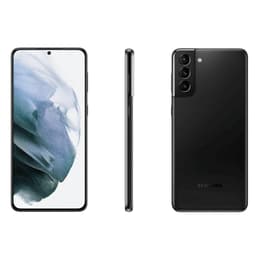



Galaxy S21+ 5G Vs Google Pixel 7 Pro

Galaxy S21+ 5G
Galaxy S21+ 5G
Starting at

Refurbished price:185.00

Versus €1,059.00 new

See options
Google Pixel 7 Pro
Google Pixel 7 Pro
Starting at

Refurbished price:201.00

Versus €640.98 new

See options

Ratings

The Samsung Galaxy S21 Plus 5G, released in January 2021, and the Google Pixel 7 Pro, launched in October 2022, are both prominent Android smartphones. While both devices offer a premium experience, they cater to slightly different user priorities. The Galaxy S21 Plus 5G emphasizes a robust hardware ecosystem and a vibrant display, whereas the Pixel 7 Pro focuses on advanced computational photography and a streamlined software experience. Both devices run on the Android operating system, offering a wide range of applications and customization.

Scores

Durability

When considering the long-term usability of these devices, their release timelines and software support are key factors. The Pixel 7 Pro, being a newer device, generally benefits from a longer period of official software updates.

  • Release and Software Support: The Galaxy S21 Plus 5G was released in early 2021, while the Pixel 7 Pro followed in late 2022. Samsung typically provides four major Android OS updates and five years of security updates for its flagship devices, meaning the S21 Plus 5G is nearing the end of its major OS update cycle. Google, for the Pixel 7 Pro, generally offers three major OS updates and five years of security updates from its release date, extending its software longevity further into the future.
  • Practical Lifespan: Users prioritizing the latest software features and security patches for the longest possible duration will find the Pixel 7 Pro offers a more extended practical lifespan due to its later release and Google's update policy. Both devices feature robust build materials, including Gorilla Glass Victus on their displays, contributing to their physical durability.
  • Repairability: The Pixel 7 Pro has received a repairability score of 5.5 out of 10 in some assessments, noting challenges with battery removal and soldered components. While specific scores for the S21 Plus 5G are less commonly cited, Samsung devices from a similar era have sometimes been noted for slightly better repairability in certain aspects.

Year of Release

2021

2022

Compatible with latest Update

Yes

Yes

OS

Android

Android

Foldable

No

No

Performance

The performance of a smartphone is crucial for daily tasks, from navigating apps to demanding gaming sessions. Both devices offer capable hardware, but their underlying architectures provide different user experiences.

  • Everyday Responsiveness: The Pixel 7 Pro, with its newer generation processor and 12GB of RAM, generally offers a smoother and more responsive experience, especially when handling multiple applications simultaneously or engaging in graphically intensive tasks. Users have noted its ability to handle demanding apps and multitasking smoothly. The Galaxy S21 Plus 5G, equipped with 8GB of RAM, provides solid performance for most everyday usage, though it may show its age with the most intensive applications compared to newer devices.
  • Battery Behavior: The Pixel 7 Pro houses a 5000 mAh battery, while the Galaxy S21 Plus 5G features a 4800 mAh battery. In real-world usage, the Pixel 7 Pro's battery life is generally considered solid, often lasting a full day for many users, though some heavy users have reported needing to charge before the day ends. The S21 Plus 5G also offers good battery life, with many users reporting it lasts through a full day of typical use.
  • Storage Options: Both devices offer internal storage options of 128GB and 256GB. The Pixel 7 Pro also provides a 512GB option, offering more space for users with extensive media libraries or numerous applications.

Memory (GB)

8 GB

12 GB

Screen quality

The display is a primary interface for any smartphone, and both the Galaxy S21 Plus 5G and the Pixel 7 Pro offer high-quality viewing experiences with distinct characteristics.

  • Display Technology and Clarity: The Galaxy S21 Plus 5G features a 6.7-inch Dynamic AMOLED 2X display with a Full HD+ resolution (2400 x 1080 pixels). The Pixel 7 Pro boasts a slightly larger 6.7-inch LTPO AMOLED display with a Quad HD+ resolution (3120 x 1440 pixels), resulting in a higher pixel density and sharper visuals. This higher resolution on the Pixel 7 Pro can lead to a more detailed viewing experience, particularly for text and high-resolution content.
  • Brightness and Smoothness: Both phones offer a 120Hz adaptive refresh rate for smooth scrolling and fluid animations. The Pixel 7 Pro can reach a peak brightness of 1500 nits, while the S21 Plus 5G reaches 1300 nits, making both displays highly visible in bright outdoor conditions. The Pixel 7 Pro's LTPO technology allows for more dynamic adjustment of the refresh rate, potentially contributing to better power efficiency.
  • Viewing Experience: The Galaxy S21 Plus 5G features a flat display, which some users prefer for avoiding accidental touches and reflections. The Pixel 7 Pro has subtly curved edges, which can contribute to a more immersive feel but may also introduce minor reflections or make edge interactions slightly different.

Resolution

1080 x 2400

1440 x 3120

Screen type

Dynamic AMOLED 2X

LTPO AMOLED

Audiovisual

Both smartphones offer advanced camera systems, but they approach photography with different philosophies, leading to distinct results in various scenarios.

  • Rear Camera Systems: The Galaxy S21 Plus 5G features a triple-camera setup with a 12MP main, 12MP ultrawide, and a 64MP telephoto lens offering 3x hybrid optical zoom. The Pixel 7 Pro also has a triple-camera system, comprising a 50MP main, 12MP ultrawide with a wider field of view and autofocus, and a 48MP telephoto lens with 5x optical zoom. The Pixel 7 Pro's dedicated 5x optical zoom provides superior reach for distant subjects.
  • Photography Performance: The Pixel 7 Pro is widely praised for its computational photography, producing detailed and color-accurate still images, especially in challenging lighting conditions, and features like Macro Focus. The Galaxy S21 Plus 5G delivers vibrant and sharp photos, characteristic of Samsung's processing, with good dynamic range. Both excel in everyday photography, but the Pixel often has an edge in low-light and computational enhancements.
  • Video Recording and Audio: Both devices support 4K video recording at 60 frames per second, with the S21 Plus 5G also capable of 8K video at 24fps. User feedback suggests that while the Pixel 7 Pro excels in still photography, its video quality, particularly in low light or with zooming, can be less consistent compared to some competitors. The S21 Plus 5G offers a comprehensive video suite with good stabilization and various shooting modes. Both provide clear audio recording and stereo speakers for media consumption.

Main camera

12 megapixels

50 megapixels

Front camera

10 megapixels

10.8 megapixels

Miscellaneous

Beyond core performance and display, several practical elements contribute to the overall user experience and differentiate these two devices.

  • Connectivity: Both smartphones support 5G networks, ensuring fast mobile data speeds. The Pixel 7 Pro includes Wi-Fi 6E, offering access to a less congested 6GHz band for potentially faster and more stable wireless connections where available, while the S21 Plus 5G supports Wi-Fi 6. Both feature USB-C ports for charging and data transfer.
  • Biometric Security: The Galaxy S21 Plus 5G utilizes an ultrasonic under-display fingerprint sensor, known for its speed and reliability. The Pixel 7 Pro employs an optical under-display fingerprint sensor and also offers Face Unlock for convenient access.
  • Design and Handling: The Galaxy S21 Plus 5G measures 161.5 x 75.6 x 7.8 mm and weighs around 200-202 grams. The Pixel 7 Pro is slightly larger and heavier at 162.9 x 76.6 x 8.9 mm and 212 grams. Both devices feature glass backs and aluminum frames, contributing to a premium feel. The S21 Plus 5G's flatter display might offer a more comfortable grip for some users compared to the Pixel 7 Pro's subtly curved screen.

Weight

200 g

212 g

Screen size (in)

6.7

6.7

Network

5G

5G

SIM card

Physical SIM + eSIM

Physical SIM + eSIM

Carrier compatibility

Unlocked

Unlocked

The choice between the Samsung Galaxy S21 Plus 5G and the Google Pixel 7 Pro depends heavily on individual priorities and usage patterns. User feedback on platforms like Reddit often highlights the Pixel 7 Pro's exceptional camera capabilities, particularly for still photos, and its clean Android experience. However, some users have noted concerns regarding its video performance and occasional battery life inconsistencies under heavy use. The Galaxy S21 Plus 5G is frequently praised for its vibrant display, consistent performance, and robust build quality. Criticisms sometimes point to its software update longevity compared to newer models.

Users prioritizing cutting-edge computational photography, a streamlined software experience, and a longer period of software support may find the Pixel 7 Pro to be a more suitable option. Its advanced zoom capabilities and macro photography features are particularly appealing for photography enthusiasts. Conversely, individuals who value a consistently bright and colorful display, a slightly more compact design, and a well-established ecosystem of features might lean towards the Galaxy S21 Plus 5G. Both devices represent excellent choices, especially when considering quality-assured refurbished options, which provide an eco-friendly alternative for accessing premium technology. Ultimately, the decision rests on whether a user prioritizes Google's software-centric approach and camera prowess or Samsung's hardware refinement and display excellence.


See all articles

Our recent comparisons