

Galaxy S21 Ultra 5G Vs Xiaomi 13T

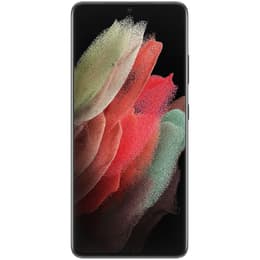
Galaxy S21 Ultra 5G
Galaxy S21 Ultra 5G
Starting at

Refurbished price:229.00

Versus €1,297.00 new

See options
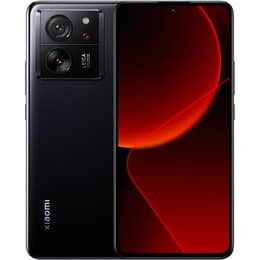
Xiaomi 13T
Xiaomi 13T
Starting at

Refurbished price:183.00

Versus €630.00 new

See options

Ratings

The Samsung Galaxy S21 Ultra 5G, released in January 2021, and the Xiaomi 13T, launched in September 2023, are both Android smartphones designed to offer capable performance and advanced features. While the Galaxy S21 Ultra 5G was a flagship device at its release, the Xiaomi 13T aims to deliver a premium experience with a more recent launch. Key differentiators include their camera systems, display technologies, and the overall software support timelines.

Scores

Durability

The practical lifespan of a smartphone is significantly influenced by its release timeline and the manufacturer's commitment to software updates.

  • Release Timeline: The Galaxy S21 Ultra 5G was released in January 2021, making it an older device compared to the Xiaomi 13T, which launched in September 2023. This difference in release dates directly impacts their remaining software support.
  • Software Longevity: Samsung typically provides four generations of Android OS updates and five years of security patches for its flagship devices. The Galaxy S21 Ultra 5G, having launched with Android 11, would have received updates up to Android 15, with security patches concluding around early 2026. In contrast, Xiaomi has committed to four Android OS updates and five years of security patches for the 13T series, meaning the Xiaomi 13T, launched with Android 13, is expected to receive updates up to Android 17 and security patches until 2028.
  • Durability Features: Both devices feature IP68 ratings for dust and water resistance, indicating protection against submersion in fresh water up to 1.5 meters for 30 minutes. The Galaxy S21 Ultra 5G uses Gorilla Glass Victus for screen protection, while the Xiaomi 13T uses Gorilla Glass 5.

Year of Release

2021

2023

Compatible with latest Update

Yes

Yes

OS

Android

Android

Foldable

No

No

Performance

Both devices are equipped with processors designed to handle a range of tasks, though their capabilities reflect their respective release eras.

  • Processing Power: The Galaxy S21 Ultra 5G features a processor that delivers smooth performance for demanding applications and multitasking, ensuring a responsive user experience. The Xiaomi 13T, with its more recent processor, also handles everyday usage and demanding apps with fluidity, providing a smooth experience for scrolling and general navigation.
  • Multitasking and Storage: The Galaxy S21 Ultra 5G was available with 12GB or 16GB of RAM, alongside storage options up to 512GB, allowing for extensive multitasking and ample space for files. The Xiaomi 13T typically comes with 8GB or 12GB of RAM and 256GB of internal storage. Neither device offers expandable storage via a microSD card.
  • Battery Behavior: The Galaxy S21 Ultra 5G houses a 5000mAh battery, generally providing a full day of use for many users, with some reports indicating over 11 hours of web browsing on a single charge. The Xiaomi 13T also includes a 5000mAh battery, aiming for all-day power, though some heavy users have reported needing to recharge before the end of the day. The Galaxy S21 Ultra 5G supports 25W wired and 15W wireless charging, while the Xiaomi 13T offers faster 67W wired charging but lacks wireless charging capabilities.

Memory (GB)

12 GB

8 GB

Screen quality

The display is a central feature for both smartphones, offering vibrant visuals and smooth interactions.

  • Display Technology and Clarity: The Galaxy S21 Ultra 5G features a 6.8-inch Dynamic AMOLED 2X display with a resolution of 3200 x 1440 pixels, providing sharp images and vibrant colors. The Xiaomi 13T has a 6.67-inch AMOLED display with a resolution of 2712 x 1220 pixels, also delivering clear visuals and rich colors.
  • Brightness and Refresh Rate: Both devices offer high brightness levels for visibility in various lighting conditions. The Galaxy S21 Ultra 5G can reach a peak brightness of 1500 nits, with an adaptive refresh rate that scales from 10Hz to 120Hz for smooth scrolling and power efficiency. The Xiaomi 13T boasts a peak brightness of 2600 nits and a higher adaptive refresh rate of up to 144Hz, contributing to a very fluid visual experience.
  • Viewing Experience: Both displays support HDR10+ content, with the Xiaomi 13T also supporting Dolby Vision, enhancing the viewing experience for compatible media.

Resolution

1440 x 3200

1220 x 2712

Screen type

Dynamic AMOLED 2X

AMOLED

Audiovisual

Both smartphones offer advanced camera systems, each with distinct strengths for photography and videography.

  • Rear Camera Systems: The Galaxy S21 Ultra 5G features a versatile quad-camera setup, including a 108MP main sensor, a 12MP ultrawide, and two 10MP telephoto lenses providing 3x and 10x optical zoom capabilities. This allows for significant zoom flexibility. The Xiaomi 13T offers a triple camera system co-engineered with Leica, comprising a 50MP main sensor, a 50MP telephoto lens with 2x optical zoom, and a 12MP ultrawide lens.
  • Photography Performance: The Galaxy S21 Ultra 5G is known for its detailed images and impressive zoom capabilities, with a laser autofocus system to improve focus accuracy. The Xiaomi 13T's Leica-tuned cameras are praised for their color reproduction and detail, particularly in daylight, and offer specific Leica Authentic and Vibrant photo styles. Both perform well in low-light conditions, with dedicated night modes.
  • Video and Front Camera: The Galaxy S21 Ultra 5G can record video up to 8K resolution and features a 40MP front camera for detailed selfies. The Xiaomi 13T records video up to 4K at 30fps and includes a 20MP front camera.

Main camera

108 megapixels

50 megapixels

Front camera

40 megapixels

20 megapixels

Miscellaneous

Beyond core performance, several practical features contribute to the overall user experience of these devices.

  • Connectivity and Ports: Both phones support 5G connectivity for fast mobile data. The Galaxy S21 Ultra 5G supports Wi-Fi 6E and Bluetooth 5.2, while the Xiaomi 13T features Wi-Fi 7 and Bluetooth 5.4, offering more recent wireless standards. Both utilize a USB-C port for charging and data transfer, and neither includes a traditional 3.5mm headphone jack.
  • Biometrics and Additional Features: The Galaxy S21 Ultra 5G incorporates an ultrasonic in-display fingerprint sensor and supports face recognition. It also features Ultra Wideband (UWB) for enhanced short-range communication. The Xiaomi 13T also has an optical in-display fingerprint sensor and face recognition, along with an infrared (IR) blaster, allowing it to function as a universal remote control.
  • Build and Handling: The Galaxy S21 Ultra 5G has a substantial feel, weighing between 227g and 229g, with dimensions of 165.1 x 75.6 x 8.9mm. The Xiaomi 13T is slightly lighter and more compact, weighing 193g (for the vegan leather back) or 197g (for the glass back) and measuring 162.2 x 75.7 x 8.49mm.

Weight

227 g

193 g

Screen size (in)

6.8

6.67

Network

5G

5G

SIM card

Physical SIM + eSIM

Dual Physical SIM

Carrier compatibility

Unlocked

Unlocked

Connector

USB-C

USB-C

The Samsung Galaxy S21 Ultra 5G and the Xiaomi 13T offer distinct propositions for smartphone users, reflecting their different release periods and design philosophies.

Users often praise the Galaxy S21 Ultra 5G for its highly capable and versatile camera system, particularly its advanced zoom capabilities, and its vibrant, high-resolution display. Common criticisms sometimes point to its considerable size and weight, and for some heavy users, the battery life might require mid-day top-ups despite its large capacity. The absence of a charger in the box was also a point of discussion upon its release.

The Xiaomi 13T is frequently lauded for its bright and smooth 144Hz AMOLED display, its fast wired charging, and its Leica-tuned camera system which delivers appealing photo quality. Some users have noted that while the battery capacity is generous, real-world battery performance for very heavy usage can be average, and the software interface might feel busy to some.

For individuals prioritizing an extensive and highly flexible camera system with significant zoom capabilities, and who appreciate a very high-resolution display, the Galaxy S21 Ultra 5G may be a suitable choice. Its robust build and UWB features also cater to those seeking a comprehensive flagship experience from its era. Conversely, users who value a more recent device with a longer software update commitment, faster wired charging, and a display with an even higher refresh rate might find the Xiaomi 13T more aligned with their needs. Its Leica-tuned cameras offer a distinct photographic style that could appeal to creative users. Both devices, as quality-assured refurbished options, present sustainable choices for consumers.


See all articles

Our recent comparisons