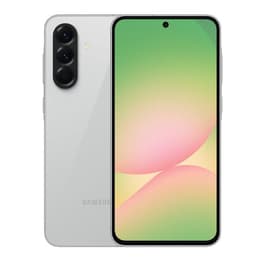



Galaxy A56 Vs Xiaomi Redmi Note 11 Pro 5G

Galaxy A56
Galaxy A56
Starting at

Refurbished price:294.00

Versus €502.00 new

See options
Xiaomi Redmi Note 11 Pro 5G
Starting at

Refurbished price:112.00

Versus €349.00 new

See options

Ratings

The Samsung Galaxy A56 (2025) and the Xiaomi Redmi Note 11 Pro 5G (2022) are both smartphones designed for everyday use, yet they originate from different release cycles. The Galaxy A56, a more recent offering, brings updated hardware and extended software support, while the Redmi Note 11 Pro 5G, released earlier, focuses on a balanced feature set for its time. Both devices operate on the Android platform, but with distinct user interfaces and varying levels of ongoing software commitment.

Scores

Durability

The longevity of a smartphone is influenced by its build quality, software support, and the availability of repairs. These two devices present different profiles in terms of expected lifespan and ongoing usability.

  • Software Support: The Galaxy A56, launched in March 2025, is set to receive six major Android OS upgrades and six years of security updates, offering a significantly longer period of official software support. In contrast, the Redmi Note 11 Pro 5G, released in January 2022 with Android 11, has likely reached or is nearing the end of its major OS update cycle, typically receiving 2-3 major Android versions and 3-4 years of security patches.
  • Physical Durability: The Galaxy A56 features Corning Gorilla Glass Victus+ on both the front and back, along with an aluminum frame, providing enhanced resistance against scratches and drops. It also boasts an IP67 rating for dust and water resistance, allowing submersion in up to 1 meter of freshwater for 30 minutes. The Redmi Note 11 Pro 5G includes Gorilla Glass 5 for screen protection and has an IP53 rating, indicating splash resistance.
  • Practical Lifespan: Users prioritizing long-term software updates and robust physical protection will find the Galaxy A56 better suited for extended use. The Redmi Note 11 Pro 5G, while durable for its class, offers a shorter window for the latest software features and security patches.

Year of Release

2025

2022

Compatible with latest Update

Yes

No

OS

Android

Android

Foldable

No

No

Performance

The performance of a smartphone dictates its responsiveness and ability to handle various applications, from daily tasks to more demanding operations.

  • Processing Power: The Galaxy A56 is equipped with a newer generation octa-core processor, which provides a noticeable boost in speed and efficiency compared to its predecessor. This allows for smooth multitasking and responsive app loading, making it suitable for everyday use and moderate gaming. The Redmi Note 11 Pro 5G utilizes an older octa-core processor, which handles general tasks and casual gaming adequately but may show limitations with more intensive applications or graphically demanding games.
  • System Responsiveness: The Galaxy A56 offers a fluid user experience, with applications opening quickly and transitions feeling seamless. Its enhanced processor contributes to a more consistent performance, even when managing multiple apps simultaneously. The Redmi Note 11 Pro 5G provides a generally smooth experience for typical smartphone activities, though some users might observe occasional delays when switching between numerous active applications or during peak usage.
  • Storage and RAM: Both devices offer multiple configurations for RAM and internal storage. The Galaxy A56 comes with 8GB or 12GB of RAM and 128GB or 256GB of internal storage. There is conflicting information regarding microSD card support for the A56, with some sources indicating no slot and others suggesting expandability up to 1TB. The Redmi Note 11 Pro 5G is available with 6GB or 8GB of RAM and 64GB or 128GB of storage, with expandable storage up to 1TB via a microSD card.

Memory (GB)

8 GB

8 GB

Screen quality

The display is a primary interface for smartphone interaction, and its quality significantly impacts the viewing experience for media, browsing, and daily tasks.

  • Display Technology and Clarity: Both smartphones feature Super AMOLED displays, known for their vibrant colors, deep blacks, and excellent contrast. The Galaxy A56 has a 6.7-inch screen, while the Redmi Note 11 Pro 5G has a 6.67-inch screen, both offering FHD+ resolution (1080x2340 pixels for A56, 1080x2400 pixels for Redmi). This results in sharp and clear visuals for both devices.
  • Brightness and Refresh Rate: Both devices offer a 120Hz refresh rate, contributing to smoother scrolling and more fluid animations. The Galaxy A56 boasts a peak brightness of 1900 nits and 1200 nits in High Brightness Mode (HBM), ensuring excellent visibility even in bright outdoor conditions. The Redmi Note 11 Pro 5G also offers a high peak brightness of 1200 nits and 700 nits HBM, providing good outdoor visibility.
  • Viewing Experience: Both displays deliver an immersive viewing experience with rich colors. The slightly higher peak brightness of the Galaxy A56 may offer a marginal advantage in extremely sunny environments.

Resolution

1080 x 2340

1080 x 2400

Screen type

Super AMOLED

Super AMOLED

Audiovisual

Camera capabilities are a significant factor for many users, influencing how they capture and share moments.

  • Rear Camera System: The Galaxy A56 features a triple rear camera setup consisting of a 50MP main sensor with Optical Image Stabilization (OIS), a 12MP ultrawide lens, and a 5MP macro camera. It includes AI capabilities for enhanced subject detection and editing features like Object Eraser. The Redmi Note 11 Pro 5G also has a triple rear camera system with a 108MP main sensor, an 8MP ultrawide camera, and a 2MP macro lens.
  • Photography and Video Performance: The Galaxy A56 excels in detail preservation, natural color accuracy, and well-balanced exposure, particularly with its primary camera. It supports 4K video recording at 30 frames per second (fps) for both front and rear cameras, with good stabilization and autofocus. The Redmi Note 11 Pro 5G's 108MP main camera can capture detailed still images, but its ultrawide and macro cameras are considered less capable. A notable limitation is its inability to record 4K video, being restricted to 1080p at 30fps for both front and rear cameras.
  • Front Camera: The Galaxy A56 is equipped with a 12MP front camera, capable of capturing clear selfies and 4K video. The Redmi Note 11 Pro 5G has a 16MP front camera, which produces good results for selfies and 1080p video calls.

Main camera

4K@30fps

108 megapixels

Front camera

13 megapixels

16 megapixels

Miscellaneous

Beyond core features, several practical elements contribute to the overall user experience and daily convenience of a smartphone.

  • Connectivity and Ports: Both devices support 5G connectivity, enabling fast download and streaming speeds. They also feature Wi-Fi 802.11 a/b/g/n/ac and NFC. The Galaxy A56 uses a USB Type-C 2.0 port and does not include a 3.5mm headphone jack. The Redmi Note 11 Pro 5G also has a USB Type-C port but retains a 3.5mm headphone jack, which can be a convenience for users with wired audio accessories.
  • Biometric Security: The Galaxy A56 incorporates an optical in-display fingerprint sensor for secure unlocking. The Redmi Note 11 Pro 5G features a side-mounted fingerprint sensor and AI Face Unlock.
  • Design and Handling: The Galaxy A56 has a glass front and back with an aluminum frame, weighing 198g and measuring 7.4mm thick. The Redmi Note 11 Pro 5G has a glass front and back, weighing 202g and measuring 8.12mm thick. Both offer a comfortable grip, with the A56 being slightly thinner and lighter.

Weight

197 g

202 g

Screen size (in)

6.5

6.67

Network

5G

5G

SIM card

Dual Physical SIM + eSIM

Dual Physical SIM

Carrier compatibility

Unlocked

Unlocked

The Samsung Galaxy A56 and the Xiaomi Redmi Note 11 Pro 5G cater to different user priorities, largely due to their respective release timelines. User feedback for the Galaxy A56 often praises its robust build quality, extended software support, and capable camera system with AI enhancements. Some users, however, might note its performance as sufficient for everyday tasks but not for highly demanding gaming, and the absence of a charger in the box. For the Redmi Note 11 Pro 5G, common positive sentiments highlight its vibrant AMOLED display, fast charging capabilities with an included charger, and the presence of a 3.5mm headphone jack. Criticisms often point to its older processor, which limits gaming performance and restricts video recording to 1080p, as well as its shorter software update lifespan.

Users prioritizing long-term software longevity, superior physical durability, and advanced camera features with 4K video recording will find the Samsung Galaxy A56 well-suited to their needs. Its newer processor also offers a more responsive experience for general use. Conversely, users who value faster charging out-of-the-box, expandable storage, and the convenience of a headphone jack may lean towards the Xiaomi Redmi Note 11 Pro 5G. It remains a solid option for everyday tasks and media consumption, particularly for those who do not require the latest performance benchmarks or extended software support.

For those considering either device, exploring quality-assured refurbished options can provide an eco-friendly alternative, extending the life cycle of these products and offering a sustainable choice.


See all articles

Our recent comparisons





