


Compare models
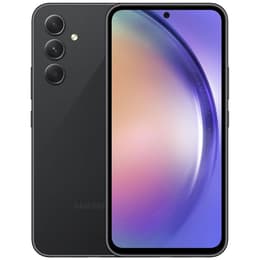
Galaxy A54 Vs Xiaomi Redmi Note 13 4G
- 1-year minimum warranty
- Free delivery on all orders
- Free 30-day returns
Differences at a glance
The Samsung Galaxy A54 (2023) and the Xiaomi Redmi Note 13 4G (2024) are popular mid-range smartphones designed for everyday communication, media consumption, and casual mobile use. While both devices run on the Android operating system with custom interface overlays, they approach hardware performance, design protection, and core features quite differently. These two models cater to distinct user groups seeking reliable everyday technology.
Available Models
Colour
Storage (GB)
Scores
Durability
When comparing longevity and durability, the Samsung Galaxy A54 and Xiaomi Redmi Note 13 4G offer different update schedules and build protections that influence their total lifespan.
- Software Support: The Galaxy A54 provides an extended software update timeline spanning multiple major operating system upgrades, whereas the Redmi Note 13 4G follows a shorter update cycle typical of standard mid-range devices.
- Build Protection: The Galaxy A54 features a higher dust and water resistance rating, allowing it to withstand accidental submersion, while the Redmi Note 13 4G offers basic splash resistance for everyday minor exposures.
- Expected Lifespan: Both models are built to last several years of daily use, though extended software backing helps the Samsung model maintain security features further into the future.
Year of Release
2023
2024
Compatible with latest Update
Yes
Yes
OS
Android
Android
Foldable
No
No
Performance
Under everyday workloads, the Galaxy A54 and Redmi Note 13 4G handle common tasks like web browsing, social media, and video streaming reliably through their respective internal configurations.
- System Responsiveness: The Galaxy A54 utilizes a balanced processor that manages demanding background apps and multitasking smoothly, while the Redmi Note 13 4G relies on an efficient processor suited best for lighter, daily communication tasks.
- Storage and Multitasking: Both devices are available in multiple storage configurations and support expandable memory options or ample RAM variants to keep multiple apps open simultaneously without excessive reloading.
- Battery Behavior: Each device packs a large battery capacity that easily powers through a full day of standard use, though charging speeds vary with the Xiaomi model supporting slightly faster wired replenishment.
Screen quality
Both smartphones feature bright, vibrant displays that make viewing photos and streaming videos comfortable in various lighting conditions.
- Display Technology: The Galaxy A54 features a Super AMOLED display with deep contrast levels, while the Redmi Note 13 4G incorporates a standard AMOLED panel known for vivid color reproduction.
- Refresh Rate and Smoothness: Both screens support a high refresh rate, ensuring smooth scrolling through web pages and fluid animations throughout the user interface.
- Outdoor Visibility: High peak brightness levels on both devices allow users to read messages and view maps clearly under direct sunlight outdoors.
Resolution
1080 x 2340
1080 x 2400
Screen type
Super AMOLED
AMOLED
Audiovisual
Imaging capabilities differ across these two models, offering distinct options for capturing everyday moments and recording home videos.
- Main Photography: The Galaxy A54 includes optical image stabilization on its primary sensor to reduce blur during movement, whereas the Redmi Note 13 4G relies on a high-resolution sensor to capture fine details in well-lit environments.
- Versatility: Both include ultra-wide lenses for landscape shots, alongside secondary macro lenses for close-up photography of small objects.
- Audio and Video: Stereo speakers on both devices provide balanced sound output for media playback, while built-in microphones record clear audio for voice calls and video clips.
Main camera
50 megapixels
108 megapixels
Front camera
32 megapixels
16 megapixels
Miscellaneous
Practical everyday features, connectivity options, and physical handling characteristics vary between the two smartphones.
- Connectivity: The Galaxy A54 offers full next-generation mobile network compatibility, while the Redmi Note 13 4G is restricted to standard fourth-generation cellular networks depending on the specific regional version.
- Physical Dimensions: The Galaxy A54 features a slightly more compact glass body with a heavier feel in the hand, whereas the Redmi Note 13 4G offers a slightly lighter, boxy frame with a plastic build.
- Security Sensors: Both models utilize under-display optical fingerprint sensors and facial recognition options for quick and secure device unlocking.
Weight
202 g
175 g
Screen size (in)
6.4
6.67
Network
5G
4G
SIM card
Dual Physical SIM
Dual Physical SIM
Carrier compatibility
Unlocked
Unlocked
Connector
USB-C
USB-C
What the community thinks
User discussions across online communities indicate that owners appreciate the reliable daily performance, vibrant screens, and solid battery endurance of both devices. Common criticisms for the Galaxy A54 mention its slightly heavier build, while Redmi Note 13 4G users sometimes note that processing speeds can stutter during heavy gaming or intensive multitasking sessions. Choosing between these two smartphones depends heavily on individual daily habits and feature priorities.
Users who prioritize long-term software updates, robust water resistance, and modern cellular connectivity will find the Samsung Galaxy A54 well-suited to their needs. Conversely, users who prefer a lighter frame, faster charging speeds, and a budget-conscious device will lean toward the Xiaomi Redmi Note 13 4G. Buyers looking for an eco-friendly alternative can also explore quality-assured refurbished options on Back Market to make a sustainable choice without compromising on functional reliability.