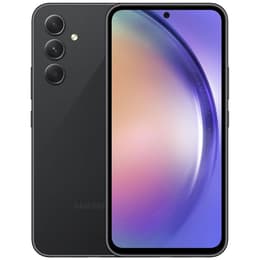



Galaxy A54 Vs Xiaomi Redmi Note 11

Galaxy A54
Galaxy A54
Starting at

Refurbished price:178.00

Versus €527.33 new

See options
Xiaomi Redmi Note 11
Starting at

Refurbished price:108.00

Versus €249.99 new

See options

Ratings

The Samsung Galaxy A54 and the Xiaomi Redmi Note 11 are both smartphones designed to offer a comprehensive mobile experience. The Galaxy A54, released in March 2023, features a focus on extended software support and enhanced camera capabilities. The Redmi Note 11, launched in January 2022, emphasizes a vibrant display and robust battery performance. Both devices operate on the Android platform, but they differ in their approach to hardware and long-term software commitment.

Scores

Durability

When considering the practical lifespan of these devices, their release timelines and software support policies are key factors.

  • Release Timeline and Software Support: The Samsung Galaxy A54, released in March 2023, benefits from Samsung's commitment to providing four major Android OS updates and five years of security patches. This means the Galaxy A54 is expected to receive updates up to Android 17, ensuring a longer period of current software features and security. In contrast, the Xiaomi Redmi Note 11, launched in January 2022, shipped with Android 11 and MIUI 13. Xiaomi typically provides two to three years of Android updates and three to four years of security updates for its devices, and the Redmi Note 11 series has reached the end of its update lifecycle as of February 2025.
  • Physical Durability: The Galaxy A54 features Corning Gorilla Glass 5 on both its front and back, offering a degree of protection against scratches and drops. It also carries an IP67 rating for dust and water resistance, meaning it can withstand submersion in up to 1 meter of freshwater for up to 30 minutes. The Redmi Note 11 comes with Gorilla Glass 3 protection on its display and has an IP53 rating, indicating resistance to dust and splashing water.
  • Expected Practical Lifespan: Users prioritizing long-term software support and enhanced physical durability will find the Galaxy A54 offers a more extended practical lifespan due to its newer release, longer update policy, and higher ingress protection rating.

Year of Release

2023

2022

Compatible with latest Update

Yes

No

OS

Android

Android

Foldable

No

No

Performance

The performance of a smartphone is influenced by its internal components, affecting how smoothly applications run and how efficiently it handles daily tasks.

  • Processor Capabilities: The Samsung Galaxy A54 is equipped with a current-generation processor designed to handle a variety of daily tasks, providing a smooth and responsive user experience. This allows for efficient multitasking and generally fluid navigation through the operating system. The Xiaomi Redmi Note 11 features a processor that is capable for everyday use, but some users have noted occasional lag during extended periods of heavy use. It is designed more for general usage rather than demanding applications or intensive gaming.
  • Storage and RAM: Both devices offer various configurations of RAM and internal storage. The Galaxy A54 is available with 6GB or 8GB of RAM and 128GB or 256GB of internal storage, with expandable storage via a hybrid microSD card slot. The Redmi Note 11 comes with 4GB or 6GB of RAM and 64GB or 128GB of internal storage, and it also supports expandable storage through a dedicated microSD card slot.
  • Battery Behavior: Both smartphones house a 5000mAh battery. The Galaxy A54 typically provides up to 1.5 days or around 39 hours of daily usage, though heavy users might experience varying screen-on times. It supports 25W fast charging. The Redmi Note 11 also offers robust battery life, often lasting a full day with moderate to heavy use, and potentially two days with careful management. It supports 33W Pro fast charging, with a charger included in the box.

Memory (GB)

8 GB

4 GB

Screen quality

The display is a primary interface for smartphone interaction, and both devices offer vibrant viewing experiences with distinct characteristics.

  • Display Technology and Clarity: Both the Samsung Galaxy A54 and the Xiaomi Redmi Note 11 feature AMOLED displays, known for their deep blacks and vibrant colors. The Galaxy A54 has a 6.4-inch Super AMOLED display with a resolution of 1080 x 2340 pixels (FHD+). The Redmi Note 11 offers a 6.43-inch AMOLED DotDisplay with a resolution of 1080x2400 pixels (FHD+).
  • Brightness and Refresh Rate: The Galaxy A54 boasts a 120Hz refresh rate, contributing to smoother scrolling and animations, and a peak brightness of 1000 nits in high brightness mode, ensuring good outdoor visibility. The Redmi Note 11 features a 90Hz refresh rate, providing a smooth experience for daily interactions, and also achieves a peak brightness of 1000 nits.
  • Screen Protection: The Galaxy A54's display is protected by Corning Gorilla Glass 5. The Redmi Note 11's display is protected by Corning Gorilla Glass 3.

Resolution

1080 x 2340

1080 x 2400

Screen type

Super AMOLED

AMOLED

Audiovisual

The camera systems on both smartphones are designed to capture moments, though they offer different capabilities and features.

  • Rear Camera System: The Samsung Galaxy A54 features a triple rear camera setup, including a 50MP main sensor with optical image stabilization (OIS) and phase-detection autofocus (PDAF), a 12MP ultrawide lens, and a 5MP macro lens. Users often praise the main camera for producing images that are close to real life with good color reproduction and dynamic range. The Xiaomi Redmi Note 11 comes with a quad-camera system, featuring a 50MP main sensor, an 8MP ultrawide lens with a 118-degree field of view, a 2MP macro lens, and a 2MP depth sensor. Its rear camera performs adequately in good lighting conditions but may struggle in low-light or challenging scenarios.
  • Video Recording and Front Camera: The Galaxy A54 is capable of recording video at up to 4K resolution at 30 frames per second (fps) with both its main and front-facing 32MP camera, and includes Video Digital Image Stabilization (VDIS) for smoother footage. The Redmi Note 11's 13MP front camera is suitable for selfies and video calls. Its video recording capabilities are limited to 1080p at 30fps, and it does not support 4K video recording.
  • Audio Experience: The Galaxy A54 includes stereo speakers, enhancing the audio experience for media consumption. The Redmi Note 11 also features dual speakers and retains a 3.5mm headphone jack, offering flexibility for audio output.

Main camera

50 megapixels

50 megapixels

Front camera

32 megapixels

13 megapixels

Miscellaneous

Beyond core performance and display, several practical features contribute to the overall user experience of these smartphones.

  • Connectivity and Ports: The Samsung Galaxy A54 supports 5G connectivity, offering faster mobile data speeds where available. It also includes Wi-Fi 802.11 a/b/g/n/ac, Bluetooth v5.3, NFC, and a USB Type-C port. The Xiaomi Redmi Note 11 is a 4G-only device, featuring Wi-Fi 802.11 a/b/g/n/ac, Bluetooth v5.0, an infrared blaster, and a USB Type-C port. It also includes a 3.5mm headphone jack.
  • Biometric Security and Sensors: Both devices offer modern biometric security options. The Galaxy A54 features an under-display fingerprint sensor. The Redmi Note 11 incorporates a side-mounted fingerprint sensor and supports AI Face Unlock. Both phones include a range of sensors such as accelerometers, ambient light sensors, and gyroscopes.
  • Design and Handling: The Galaxy A54 has dimensions of 158.2 x 76.7 x 8.2 mm and weighs 202g, featuring a premium glass finish on both the front and back. The Redmi Note 11 has a flat frame design, measuring 159.87 x 73.87 x 8.09mm and weighing 179g, making it slightly lighter.

Weight

202 g

179 g

Screen size (in)

6.4

6.43

Network

5G

4G

SIM card

Physical SIM + eSIM

Dual Physical SIM

Carrier compatibility

Unlocked

Unlocked

The Samsung Galaxy A54 and the Xiaomi Redmi Note 11 cater to different user priorities, reflecting their respective release timelines and design philosophies.

For the Samsung Galaxy A54, common praise points include its extended software support, offering a longer period of updates and security patches, which is a significant advantage for users who keep their devices for several years. Its capable camera system, particularly the main sensor with optical image stabilization and 4K video recording, is also frequently highlighted for producing quality images and videos. Some users have noted that while battery life is generally good, it can vary with heavy usage, and some have reported inconsistent performance.

The Xiaomi Redmi Note 11 is often praised for its vibrant AMOLED display with a 90Hz refresh rate and its robust battery life, which can comfortably last a full day or more for many users. The inclusion of a fast charger in the box is also a positive point. Criticisms often revolve around its processor, which, while adequate for daily tasks, may show limitations with demanding applications or extended use, leading to occasional lag. The camera system, while versatile, is generally considered to be good in ideal lighting but less impressive in challenging conditions, and the lack of 4K video recording is a notable difference. Furthermore, the Redmi Note 11 has reached its end-of-life for software updates, which means it will no longer receive official Android version upgrades or security patches.

Users prioritizing long-term software support, enhanced camera video capabilities, 5G connectivity, and a higher degree of physical durability may find the Samsung Galaxy A54 well-suited to their needs. Conversely, users who prioritize a vibrant display, strong battery endurance with fast charging out of the box, and a slightly lighter build, and who are comfortable with a device that has concluded its software update cycle, might lean towards the Xiaomi Redmi Note 11. Both devices offer a quality-assured refurbished option, providing a sustainable choice for consumers.


See all articles

Our recent comparisons