

Galaxy A53 5G Vs Xiaomi Redmi Note 14 4G

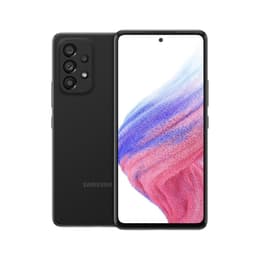
Galaxy A53 5G
Galaxy A53 5G
Starting at

Refurbished price:119.00

Versus €459.00 new

See options
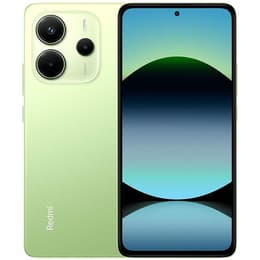
Xiaomi Redmi Note 14 4G
Starting at

Refurbished price:162.00

Versus €229.99 new

See options

Ratings

The Samsung Galaxy A53 5G, released in April 2022, and the Xiaomi Redmi Note 14 4G, launched in January 2025, are both smartphones designed for everyday use. While the Galaxy A53 5G offers 5G connectivity and a slightly older release, the Redmi Note 14 4G is a more recent device focusing on 4G networks. Both devices run on the Android operating system, providing access to a wide range of applications and services.

Scores

Durability

When considering the long-term usability of these devices, several factors contribute to their expected lifespan, including software support and physical resilience.

  • Software Longevity: The Samsung Galaxy A53 5G was promised four major Android OS upgrades and five years of security updates from its release, offering extended software support. The Xiaomi Redmi Note 14 4G, being a newer device, launched with Android 14 and Xiaomi HyperOS, suggesting a contemporary software experience.
  • Durability Features: The Galaxy A53 5G features an IP67 rating for dust and water resistance, indicating protection against immersion in water up to 1 meter for 30 minutes. The Redmi Note 14 4G comes with an IP54 rating, providing resistance against dust and splashes of water. Both devices utilize Corning Gorilla Glass 5 for display protection.
  • Repairability Considerations: While specific repairability scores can vary by region and independent assessments, the availability of parts and service networks can influence the practical lifespan. Users considering a quality-assured refurbished option for either model can benefit from devices that have undergone professional inspection and repair.

Year of Release

2022

2025

OS

Android

Android

Foldable

No

No

Performance

The performance of a smartphone is crucial for daily tasks, from browsing and social media to more demanding applications and gaming. Both devices offer capabilities suited for general use, with differences in their underlying hardware.

  • Everyday Responsiveness: The Galaxy A53 5G handles demanding apps and multitasking smoothly, thanks to its processor and available RAM configurations of 6GB or 8GB. The Redmi Note 14 4G, powered by a different current-generation processor, also provides decent performance for daily operations and can manage multitasking effectively with 6GB or 8GB of RAM.
  • Storage Options: Both smartphones offer internal storage options typically starting at 128GB, with some variants extending to 256GB. The Galaxy A53 5G supports expandable storage via microSD up to 1TB, and the Redmi Note 14 4G also includes a hybrid slot for memory card expansion.
  • Battery Behavior: The Galaxy A53 5G is equipped with a 5000 mAh battery, designed to provide extended usage on a single charge. The Redmi Note 14 4G features a larger 5500 mAh battery, which contributes to prolonged battery life, even for heavy users. Both devices support wired fast charging, with the Galaxy A53 5G supporting 25W and the Redmi Note 14 4G supporting 33W.

Memory (GB)

4 GB

6 GB

Screen quality

The display is a primary interface for smartphone interaction, and both the Galaxy A53 5G and Redmi Note 14 4G offer vibrant viewing experiences with distinct characteristics.

  • Display Technology and Clarity: The Samsung Galaxy A53 5G features a 6.5-inch Super AMOLED display, known for its deep blacks and vibrant colors, with a Full HD+ resolution of 1080x2400 pixels. The Xiaomi Redmi Note 14 4G sports a slightly larger 6.67-inch AMOLED display, also with a 1080x2400 pixel resolution, offering sharp and clear visuals.
  • Brightness and Refresh Rate: Both devices boast a 120Hz refresh rate, contributing to smoother scrolling and a more fluid visual experience. The Galaxy A53 5G offers a brightness of up to 800 nits, while the Redmi Note 14 4G can reach a peak brightness of 1800 nits, enhancing outdoor visibility.
  • Viewing Experience: The larger screen of the Redmi Note 14 4G may offer a more expansive viewing area for media consumption and gaming. Both displays are protected by Corning Gorilla Glass 5, providing a degree of scratch and drop resistance.

Resolution

1080 x 2400

1080x2400

Audiovisual

For many users, the camera system is a key differentiator, and both smartphones provide versatile options for capturing photos and videos.

  • Rear Camera Systems: The Galaxy A53 5G features a quad-camera setup with a 64MP main sensor that includes Optical Image Stabilization (OIS), a 12MP ultrawide lens, a 5MP macro lens, and a 5MP depth sensor. The Redmi Note 14 4G comes with a triple camera system, typically featuring a 108MP main sensor, a 2MP macro lens, and a 2MP depth sensor. Some sources also indicate OIS for the main camera of the Redmi Note 14 4G.
  • Photography Performance: The Galaxy A53 5G's OIS on its main camera assists in capturing clearer photos in various lighting conditions and more stable videos. The higher megapixel count on the Redmi Note 14 4G's main sensor can allow for more detailed images, especially in good lighting.
  • Front Camera and Video: For selfies and video calls, the Galaxy A53 5G has a 32MP front camera, while the Redmi Note 14 4G offers a 20MP front camera. Both devices are capable of recording video at 4K resolution at 30fps with their main rear cameras.

Miscellaneous

Beyond core features, several practical elements contribute to the overall user experience and connectivity of these smartphones.

  • Connectivity and Ports: The Samsung Galaxy A53 5G supports 5G networks, offering faster data speeds where available, along with Wi-Fi 5 (802.11ac) and Bluetooth 5.1. It features a USB Type-C 2.0 port but lacks a 3.5mm headphone jack. The Xiaomi Redmi Note 14 4G, as its name suggests, is limited to 4G connectivity but includes Wi-Fi 5 (dual-band) and Bluetooth 5.3. It retains a 3.5mm headphone jack and uses a USB Type-C port.
  • Biometrics and Sensors: Both devices incorporate modern biometric security. The Galaxy A53 5G features an under-display fingerprint sensor, while the Redmi Note 14 4G also includes an in-display fingerprint reader. Both phones offer a suite of sensors for navigation and interaction.
  • Design and Handling: The Galaxy A53 5G has dimensions of 159.6 x 74.8 x 8.1 mm and weighs 189 grams. The Redmi Note 14 4G is slightly larger and heavier at 163.25 x 76.55 x 8.16 mm and 196.5 grams. Both phones feature a slim design, with the Galaxy A53 5G having a matte frame.

Weight

189 g

196 g

Screen size (in)

6.5

6.67

Network

5G

4G

SIM card

Physical SIM

Physical SIM + eSIM

Carrier compatibility

Unlocked

Unlocked

User feedback for the Samsung Galaxy A53 5G often praises its vibrant Super AMOLED display, reliable camera performance with OIS, and Samsung's commitment to long-term software updates. Some common criticisms have revolved around its processor performance compared to some competitors at its release. The Redmi Note 14 4G, being a newer entrant, is frequently lauded for its large, bright AMOLED display, substantial battery capacity, and the inclusion of a 3.5mm headphone jack. User discussions sometimes point to its 4G-only connectivity as a trade-off, though for many, this is not a significant concern.

Users prioritizing extended software support and 5G connectivity may find the Samsung Galaxy A53 5G to be a suitable choice. Its IP67 water and dust resistance also offers an additional layer of durability. Conversely, users who value a larger, brighter display, a bigger battery, and the convenience of a traditional headphone jack might lean towards the Xiaomi Redmi Note 14 4G. Its more recent release also means it starts with a newer version of Android. Both devices offer solid performance for everyday tasks, making them practical options for students, professionals, and travelers alike. Exploring a quality-assured refurbished option for either model can be an eco-friendly way to acquire these devices.


See all articles

Our recent comparisons