


Compare models

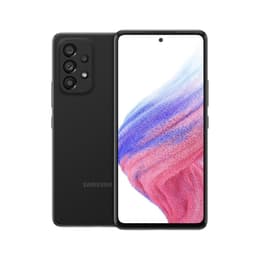
Galaxy A53 5G Vs Xiaomi Redmi Note 13 4G

  • 1-year minimum warranty
  • Free delivery on all orders
  • Free 30-day returns
Galaxy A53 5G
Starting at

Refurbished price:€170.00

Versus €459.00 new

See options
Xiaomi Redmi Note 13 4G
Starting at

Refurbished price:€180.00

Versus €299.00 new

See options

Differences at a glance

The Samsung Galaxy A53 5G (2022) and the Xiaomi Redmi Note 13 4G (2024) are popular mid-range smartphones designed for everyday mobile users. While both devices deliver reliable everyday features and large displays, they differ significantly in their network connectivity, software support timelines, and hardware configurations. The Galaxy A53 5G operates on Samsung's customized interface built over Android, whereas the Xiaomi Redmi Note 13 4G runs Xiaomi's software ecosystem. These distinct approaches cater to varying user preferences for long-term support and daily functionality.

Available Models

Colour

Storage

Scores

Durability

Both smartphones offer robust build qualities for their category, but they handle software longevity and structural durability quite differently.

  • Software longevity and update support: The Galaxy A53 5G benefits from an extended multi-year update commitment covering multiple operating system upgrades, ensuring prolonged software currency. The Xiaomi Redmi Note 13 4G provides standard software updates typical of its release timeframe.
  • Durability ratings and physical protection: The Galaxy A53 5G features a higher dust and water resistance rating, allowing it to withstand accidental submersion in shallow water. The Xiaomi Redmi Note 13 4G includes basic splash and dust resistance suited for everyday minor exposure.
  • Expected practical lifespan: Due to its extended software support window and high-tier water resistance, the Samsung device maintains security readiness further into its lifecycle, while the Xiaomi model relies on its newer hardware release date to remain current.

Year of Release

2022

2024

Compatible with latest Update

Yes

Yes

OS

Android

Android

Foldable

No

No

Performance

Daily responsiveness and multitasking capabilities vary across these models based on their internal hardware configurations and memory capacity.

  • Processor capabilities for everyday tasks: Both devices handle standard web browsing, social media applications, and streaming smoothly, though heavier applications and intensive mobile gaming show distinct processing speeds depending on the hardware architecture.
  • Battery behavior and endurance: Each model houses a large battery capacity capable of lasting through a full day of typical mixed usage, paired with varying wired charging speeds that replenish power at different rates.
  • RAM and storage management: Available in multiple memory configurations with expandable storage options via external memory cards, both phones manage background apps efficiently during routine multitasking.

Screen quality

Viewing experiences on both handsets excel through vibrant display technologies designed for media consumption and clear readability.

  • Display technology and clarity: Both smartphones utilize bright AMOLED screens with crisp high-definition resolutions, delivering deep contrast levels, rich colors, and sharp text rendering.
  • Refresh rate and smoothness: Each device supports a high refresh rate capability, ensuring fluid scrolling through menus, web pages, and supported applications.
  • Outdoor visibility: High peak brightness output on both displays allows content to remain visible and legible even under direct sunlight conditions.

Resolution

1080 x 2400

1080 x 2400

Screen type

Super AMOLED

AMOLED

Audiovisual

Photography and media recording setups cater to casual creators and daily snapshot needs with differing sensor configurations.

  • Camera system hardware: The Galaxy A53 5G employs a versatile multi-lens rear array featuring optical image stabilization for steady handheld shots, whereas the Xiaomi Redmi Note 13 4G centers its photography around a high-megapixel main sensor.
  • Low-light and video performance: Both phones capture clear daytime imagery, while handling low-light environments through software processing modes that balance exposure and reduce digital noise.
  • Audio and media output: Built-in stereo speaker configurations provide clear sound output for casual video watching and speakerphone calls, with the Xiaomi model retaining a traditional headphone jack for wired audio connections.

Main camera

64 megapixels

108 megapixels

Front camera

32 megapixels

16 megapixels

Miscellaneous

Practical physical features and connectivity options define how each smartphone integrates into daily accessories and routines.

  • Connectivity and network bands: The Galaxy A53 5G supports next-generation cellular data networks for faster mobile browsing, while the Xiaomi Redmi Note 13 4G focuses strictly on 4G connectivity alongside a handy infrared blaster for home appliance control.
  • Biometric security sensors: Both devices incorporate under-display fingerprint sensors and facial recognition options to secure personal data and simplify unlocking.
  • Physical dimensions and handling: Comparable physical weights and slim profiles make both handsets comfortable for one-handed navigation and pocket storage.

Weight

189 g

175 g

Screen size (in)

6.5

6.67

Network

5G

4G

SIM card

Physical SIM

Dual Physical SIM

Carrier compatibility

Unlocked

Unlocked

Connector

USB-C

USB-C

What the community thinks

User discussions across community forums highlight distinct preferences for each device based on everyday priorities. Owners of the Galaxy A53 5G frequently praise its comprehensive water resistance rating and long-term software update schedule, though some note occasional stuttering during heavy system tasks. Conversely, users of the Xiaomi Redmi Note 13 4G appreciate its responsive high-refresh-rate screen, inclusion of a headphone jack, and quick charging capabilities, while pointing out the absence of advanced cellular data support as a limitation for future network transitions.

Users prioritizing extended software updates and robust water protection may prefer the Galaxy A53 5G, while users focusing on multimedia convenience, fast charging, and traditional audio ports will find the Xiaomi Redmi Note 13 4G well-suited to their needs. Exploring a quality-assured refurbished option through platforms like Back Market provides an eco-friendly alternative for acquiring either device with verified functional reliability. Ultimately, the choice depends entirely on which hardware features and network compatibilities align best with daily routines.









