

Galaxy A53 5G Vs iPhone SE (2020)

Galaxy A53 5G
Galaxy A53 5G
Starting at

Refurbished price:119.00

Versus €459.00 new

See options
iPhone SE (2020)
iPhone SE (2020)
Starting at

Refurbished price:103.99

Versus €319.00 new

See options

Ratings

The Samsung Galaxy A53 5G, released in April 2022, and the Apple iPhone SE (2020), launched in April 2020, are two distinct smartphones offering different user experiences. While the Galaxy A53 5G runs on the Android operating system with Samsung's One UI, the iPhone SE (2020) operates on Apple's iOS. Key differentiators between these models include their display technology, camera systems, and overall design philosophy.

Scores

Durability

When considering the longevity of these devices, both offer robust software support, though their timelines differ due to their respective release dates and manufacturer policies.

  • Software Updates: The Galaxy A53 5G was guaranteed four major Android OS upgrades and five years of security updates from its release, meaning it is expected to receive updates up to Android 16 and security patches until 2027. The iPhone SE (2020), released earlier, has received updates to current iOS versions, such as iOS 26.3.1 as of March 2026, and Apple typically provides 5-6 years of major OS updates for its devices.
  • Physical Durability: Both devices feature an IP67 rating for dust and water resistance, allowing them to withstand immersion in up to 1 meter of water for 30 minutes. The Galaxy A53 5G uses Corning Gorilla Glass 5 for screen protection, while the iPhone SE (2020) features ion-strengthened glass.
  • Expected Lifespan: Users can expect several years of practical use from either device, with the Galaxy A53 5G potentially offering a slightly longer period of guaranteed software updates from its newer release date.

Year of Release

2022

2020

Compatible with latest Update

Yes

Yes

OS

Android

iOS

Foldable

No

No

Performance

The performance of a smartphone is crucial for daily operations, and these two devices approach it with different hardware architectures.

  • Processing Power: The iPhone SE (2020) is equipped with a powerful processor that enables smooth handling of demanding applications and multitasking. The Galaxy A53 5G features an octa-core processor designed to manage everyday tasks efficiently, though some users have noted occasional lag.
  • Multitasking and Storage: The Galaxy A53 5G offers configurations with 6GB or 8GB of RAM and storage options of 128GB or 256GB, with the added flexibility of expandable storage via a microSD card. The iPhone SE (2020) comes with 3GB of RAM and storage options of 64GB, 128GB, or 256GB, but does not support expandable storage.
  • Battery Performance: The Galaxy A53 5G includes a larger 5000 mAh battery, which users report can last through a full day of heavy use or even two days with casual use. The iPhone SE (2020) has a smaller 1821 mAh battery, and while it supports fast charging and wireless charging, heavy users may find it requires more frequent charging.

Memory (GB)

4 GB

3 GB

Screen quality

The visual experience is a significant factor for many users, and these phones offer distinct display technologies and sizes.

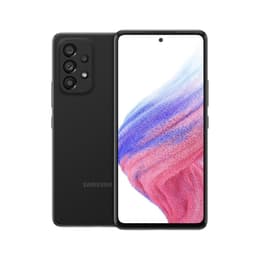
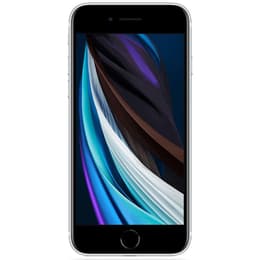
  • Display Technology and Size: The Galaxy A53 5G features a 6.5-inch Super AMOLED display, known for its vibrant colors and deep blacks. In contrast, the iPhone SE (2020) has a more compact 4.7-inch Retina IPS LCD display.
  • Resolution and Clarity: The Galaxy A53 5G offers a resolution of 1080x2400 pixels, resulting in a sharp image quality. The iPhone SE (2020) provides a resolution of 1334x750 pixels, which delivers clear visuals on its smaller screen.
  • Brightness and Refresh Rate: The Galaxy A53 5G boasts a 120Hz refresh rate for smoother scrolling and animations, along with a peak brightness of 800 nits for good visibility in various lighting conditions. The iPhone SE (2020) has a standard 60Hz refresh rate and a peak brightness of 625 nits.

Resolution

1080 x 2400

750 x 1334

Screen type

Super AMOLED

Retina IPS LCD

Audiovisual

Camera capabilities are often a deciding factor, and both devices offer different approaches to photography and videography.

  • Rear Camera System: The Galaxy A53 5G features a versatile quad-camera setup on the rear, including a 64MP main sensor with optical image stabilization (OIS), a 12MP ultrawide lens, a 5MP macro lens, and a 5MP depth sensor. The iPhone SE (2020) has a single 12MP wide-angle rear camera with OIS, which is praised for its image processing and ability to capture detailed photos.
  • Front Camera and Video Recording: For selfies and video calls, the Galaxy A53 5G is equipped with a 32MP front camera, capable of recording 4K video at 30 frames per second. The iPhone SE (2020) features a 7MP front camera, which also supports portrait mode and records video at 1080p at 30 frames per second. Both devices offer 4K video recording with their main rear cameras.
  • Photography Experience: Users generally find the Galaxy A53 5G's camera system to be versatile, offering various lenses for different shooting scenarios, though some note that image quality can be inconsistent in certain conditions. The iPhone SE (2020) is often lauded for its consistent image quality, excellent dynamic range, and strong video capabilities, despite having fewer lenses.

Main camera

64 megapixels

12 megapixels

Front camera

32 megapixels

7 megapixels

Miscellaneous

Beyond core features, several practical elements contribute to the overall user experience of these smartphones.

  • Connectivity and Ports: The Galaxy A53 5G supports 5G connectivity, Wi-Fi 5 (802.11ac), and Bluetooth 5.1, featuring a USB-C 2.0 port for charging and data transfer. The iPhone SE (2020) offers Gigabit-class 4G LTE, Wi-Fi 6 (802.11ax), and Bluetooth 5.0, utilizing Apple's proprietary Lightning port. Neither device includes a 3.5mm headphone jack.
  • Biometrics and Design: The Galaxy A53 5G incorporates an in-display optical fingerprint sensor, while the iPhone SE (2020) uses a front-mounted capacitive fingerprint sensor (Touch ID). The Galaxy A53 5G has a modern, nearly bezel-less design with a punch-hole camera and a plastic back. The iPhone SE (2020) retains a classic iPhone design with larger bezels, a physical home button, and a glass back with an aluminum frame.
  • Dimensions and Weight: The Galaxy A53 5G measures 159.6 x 74.8 x 8.1 mm and weighs 189 grams, offering a larger form factor. The iPhone SE (2020) is more compact at 138.4 x 67.3 x 7.3 mm and weighs 148 grams, making it easier for one-handed use.

Weight

189 g

148 g

Screen size (in)

6.5

4.7

Network

5G

4G

SIM card

Physical SIM

Physical SIM + eSIM

Carrier compatibility

Unlocked

Unlocked

Connector

USB-C

Lightning

User feedback for the Samsung Galaxy A53 5G often highlights its vibrant Super AMOLED display, long-lasting battery, and the versatility offered by its multiple camera lenses. Some common criticisms include occasional performance lags and camera software that could be more refined. Conversely, the iPhone SE (2020) is frequently praised for its powerful processor, compact design, and consistent camera performance, particularly for video recording and portrait mode. Users sometimes express concerns about its smaller battery capacity and the older design with larger bezels.

Users prioritizing a large, high-refresh-rate display, extensive battery life, and a versatile multi-lens camera system may find the Galaxy A53 5G well-suited to their needs. Its expandable storage also appeals to those who require more space for media and apps. On the other hand, users who value a compact form factor, a highly optimized operating system, and a powerful processor for smooth performance, along with strong video capabilities, might prefer the iPhone SE (2020). Both devices are available as quality-assured refurbished options, providing an eco-friendly alternative for consumers.


See all articles

Our recent comparisons







