


Compare models

Galaxy A35 Vs Xiaomi Redmi Note 13 4G

  • 1-year minimum warranty
  • Free delivery on all orders
  • Free 30-day returns
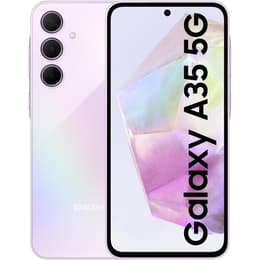
Galaxy A35
Starting at

Refurbished price:€218.00

Versus €429.00 new

See options
Xiaomi Redmi Note 13 4G
Starting at

Refurbished price:€188.00

Versus €299.00 new

See options

Differences at a glance

The Samsung Galaxy A35 and the Xiaomi Redmi Note 13 4G are mid-range smartphones released in early 2024 to cater to everyday mobile users seeking reliable performance and modern features. While both devices run on the Android operating system with custom interface overlays, they approach daily computing, camera design, and build quality through different engineering priorities. Choosing between them depends on how users weigh software longevity against everyday multimedia capabilities.

Available Models

Colour

Storage

Scores

Durability

Both models debuted in early 2024, meaning they share a similar hardware generation context, though their long-term software support frameworks differ notably in duration.

  • Software longevity: The Samsung Galaxy A35 benefits from an extended multi-year commitment for operating system upgrades and security patches, whereas the Xiaomi Redmi Note 13 4G offers a more standard support cycle typical of its tier.
  • Build durability: The Galaxy A35 features higher-grade glass protection and a robust dust-and-water resistance rating, while the Redmi Note 13 4G relies on standard splash protection suitable for everyday environments.
  • Expected lifespan: Users prioritizing prolonged software updates and resilient physical construction will find the Samsung model tailored for extended service, while the Xiaomi alternative suits standard multi-year usage cycles.

Year of Release

2024

2024

Compatible with latest Update

Yes

Yes

OS

Android

Android

Foldable

No

No

Performance

Daily operation relies on distinct hardware architectures that handle multitasking, app launching, and battery management through varying processing efficiencies.

  • Processor capabilities: The Galaxy A35 handles demanding applications and smooth multitasking with an efficient internal processor, while the Redmi Note 13 4G manages routine social media and browsing tasks adequately using its standard processor configuration.
  • Storage and memory: Both options provide flexible configurations with ample random access memory to keep background tasks active, paired with generous internal storage expandable via memory cards.
  • Battery behavior: Each device integrates a large battery capacity that easily sustains a full day of standard use, though charging speeds differ when replenishing power through compatible wired adapters.

Screen quality

Viewing experiences on both handsets center around bright, high-refresh-rate panels designed to make scrolling and media consumption fluid.

  • Display technology: The Galaxy A35 utilizes a vibrant Super AMOLED display with robust scratch resistance, while the Redmi Note 13 4G offers a similarly crisp AMOLED panel protected by standard hardened glass.
  • Brightness and outdoor visibility: Both screens reach high peak brightness levels to maintain clarity under direct sunlight, ensuring text and images remain legible outdoors.
  • Refresh rate: A smooth refresh rate ensures fluid animations and transitions across user interfaces on both devices during daily navigation and web browsing.

Resolution

1080 x 2340

1080 x 2400

Screen type

Super AMOLED

AMOLED

Audiovisual

Photography hardware across these two models accommodates various shooting scenarios, balancing high-resolution sensors with specialized lenses.

  • Main camera system: The Redmi Note 13 4G features a high-pixel-count primary sensor designed for detailed daylight photography, whereas the Galaxy A35 equips an optical image stabilization sensor that reduces blur in diverse lighting conditions.
  • Supporting lenses: Both include ultra-wide sensors for landscape shots and macro lenses for close-up photography, accompanied by competent front-facing cameras for selfies and video calls.
  • Media and audio: Stereo speaker setups on both models deliver clear audio output for video streaming and casual listening, supported by reliable microphone clarity during calls.

Main camera

50 megapixels

108 megapixels

Front camera

13 megapixels

16 megapixels

Miscellaneous

Physical dimensions and connectivity options shape the ergonomics and daily usability of each smartphone.

  • Handling and design: The Galaxy A35 features a slightly heavier glass-backed frame with flat edges, whereas the Redmi Note 13 4G offers a lighter profile that rests comfortably in one hand.
  • Connectivity standards: The Samsung model includes modern cellular network compatibility alongside advanced wireless protocols, while the Xiaomi variant focuses on standard 4G connectivity and robust local wireless standards.
  • Security features: Both devices incorporate responsive biometric sensors, utilizing under-display fingerprint readers and facial recognition to secure personal data.

Weight

209 g

175 g

Screen size (in)

6.6

6.67

Network

5G

4G

SIM card

Dual Physical SIM

Dual Physical SIM

Carrier compatibility

Unlocked

Unlocked

Connector

USB-C

USB-C

What the community thinks

User feedback from online communities highlights distinct advantages for each device, with Samsung owners frequently praising the robust physical build quality, reliable screen brightness, and extended software support window. Conversely, Xiaomi users often emphasize the responsive display smoothness, comfortable lightweight ergonomics, and reliable daily battery endurance as key strong points. Common criticisms for both models occasionally mention occasional interface stutter during heavy background updates or demanding multitasking sessions.

Users prioritizing long-term software updates and superior water resistance may prefer the Samsung Galaxy A35. Meanwhile, users prioritizing a lightweight build, multimedia consumption, and a quality-assured refurbished option from Back Market often lean toward the Xiaomi Redmi Note 13 4G as a sustainable choice. Evaluating individual needs for software longevity versus everyday handling will help determine the most suitable option.









