

Samsung

Compare models
Differences at a glance
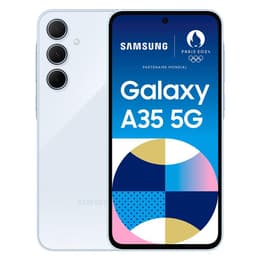
The Samsung Galaxy A35, released in March 2024, and the Google Pixel 7A, launched in May 2023, are both Android smartphones designed to offer a balanced experience for everyday users. While both devices operate on the Android platform, they present distinct approaches to hardware and software integration. The Galaxy A35 emphasizes a larger, smoother display and extended battery capacity, whereas the Pixel 7A focuses on advanced computational photography and a highly optimized software experience.
Colour
Storage
When considering the long-term usability of these devices, their release timelines and software support policies are key factors. The Galaxy A35, being the newer device, benefits from a more recent starting point for its update cycle, while the Pixel 7A, though slightly older, still offers a robust support period.
Year of Release
Compatible with latest Update
OS
Foldable
The performance of a smartphone significantly impacts daily interactions, from launching applications to managing multiple tasks. Both the Galaxy A35 and Pixel 7A are equipped to handle common usage scenarios, but they achieve this through different hardware philosophies.
The display is a primary interface for smartphone users, and both the Galaxy A35 and Pixel 7A offer vibrant viewing experiences, albeit with differences in size and refresh rate capabilities.
Resolution
Screen type
Camera performance is a significant consideration for many smartphone users, and both devices offer capable systems, though they excel in different aspects of photography and videography.
Main camera
Front camera
Beyond the core features, several practical elements contribute to the overall user experience and can influence a purchasing decision.
Weight
Screen size (in)
Network
SIM card
Carrier compatibility
User feedback for the Samsung Galaxy A35 often highlights its impressive battery life, vibrant display, and the inclusion of expandable storage as significant advantages. Some users appreciate its modern design and the promise of extended software support. Criticisms occasionally point to its processor performance not always matching higher-tier devices, with some reports of occasional slowdowns, and the camera, while good, not always competing with the best in its class, particularly in challenging lighting.
The Google Pixel 7A is frequently praised for its exceptional camera system, which leverages Google's computational photography to deliver high-quality photos in various conditions. Its optimized software experience and the inclusion of the powerful Tensor G2 chip are also commonly cited positives, providing smooth performance and access to exclusive Pixel features. Some common concerns include its slightly smaller battery capacity compared to some rivals, the absence of expandable storage, and a display refresh rate that, while good, is not the highest available.
For users prioritizing a larger, smoother display and multi-day battery life, along with the flexibility of expandable storage, the Samsung Galaxy A35 may be a more suitable choice. Its newer release also offers a longer runway for future software updates. Conversely, individuals who place a premium on photographic excellence, a highly refined software experience with advanced AI capabilities, and a more compact form factor might find the Google Pixel 7A to be a better fit. Both devices represent solid options in their category, and considering a quality-assured refurbished option for either model can be an eco-friendly alternative to purchasing new, allowing consumers to make informed and sustainable choices.