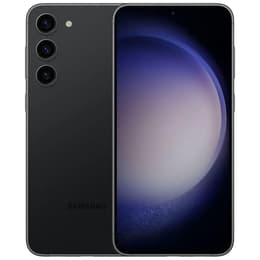
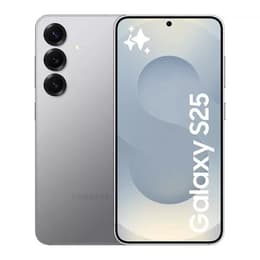


Galaxy S23+ Vs Galaxy S25

Galaxy S23+
Galaxy S23+
Starting at

Refurbished price:293.00

Versus €1,019.00 new

See options
Galaxy S25
Galaxy S25
Starting at

Refurbished price:489.00

Versus €799.00 new

See options

Ratings

The Samsung Galaxy S23 Plus, released in early 2023, and the Samsung Galaxy S25, launched in early 2025, represent two generations of Samsung's premium smartphone line. Both devices operate on the Android platform, offering a familiar user experience with Samsung's One UI. While the S23 Plus established a strong foundation with its robust performance and display, the S25 introduces advancements in software longevity, processing power, and connectivity features, reflecting the rapid evolution in mobile technology over two years.

Scores

Durability

When considering the long-term usability of a smartphone, factors like software support and physical resilience are key. The Galaxy S23 Plus and Galaxy S25 offer different timelines for software updates and incorporate durable designs.

  • Software Longevity: The Galaxy S23 Plus, launched with Android 13, is expected to receive four major OS updates and five years of security updates, with Android 16 already in beta for the device. The newer Galaxy S25, released with Android 15 and One UI 7, benefits from Samsung's extended support policy, promising seven years of OS and security updates. This means the S25 will receive software support for a significantly longer period, extending its practical lifespan.
  • Physical Durability: Both devices feature an IP68 rating for dust and water resistance, capable of submersion in up to 1.5 meters of fresh water for 30 minutes. The S23 Plus utilizes Gorilla Glass Victus 2 for its front and back panels, paired with an aluminum frame. The S25 is expected to continue with similar high-grade glass protection and a robust frame, maintaining a high standard for everyday resilience.
  • Repairability: While specific repairability scores can vary by region and independent assessments, both models are designed with modern smartphone construction, meaning professional servicing is typically recommended for repairs. The availability of parts and service for the S23 Plus is well-established, and the S25, as a newer model, will have readily available support for its extended lifecycle.

Year of Release

2023

2025

Compatible with latest Update

Yes

Yes

OS

Android

Android

Foldable

No

No

Performance

The performance of a smartphone is largely determined by its internal components, impacting everything from app responsiveness to multitasking capabilities and battery efficiency.

  • Processing Power: The Galaxy S23 Plus is equipped with a processor designed for its generation, providing smooth operation for demanding applications and efficient multitasking. The Galaxy S25 features a newer, custom-tuned processor, which offers enhanced capabilities for handling intensive tasks, advanced AI features, and potentially more efficient power management. This translates to quicker app loading times and a more fluid experience, especially with newer software and AI-driven functions.
  • Memory and Storage: The S23 Plus typically comes with 8GB of RAM and storage options of 256GB or 512GB. The Galaxy S25 elevates this, with the standard model offering 12GB of RAM and storage starting from 128GB, with options up to 512GB for the Plus variant. The increased RAM in the S25 allows for more applications to run simultaneously without slowdowns, benefiting users who frequently switch between apps or engage in heavy multitasking.
  • Battery Performance: The Galaxy S23 Plus houses a 4700 mAh battery, providing ample power for a full day of typical use. The Galaxy S25 Plus is expected to feature a 4900 mAh battery, offering a slight increase in capacity, while the standard S25 has a 4000 mAh battery. Both devices support fast wired and wireless charging, allowing for quick power top-ups. User experience with the S23 Plus indicates reliable battery life, and the S25 aims to maintain or improve upon this with its newer, more efficient processor.

Memory (GB)

8 GB

12 GB

Screen quality

The display is a primary interface for any smartphone, and both the Galaxy S23 Plus and Galaxy S25 offer high-quality viewing experiences with subtle differences.

  • Display Technology and Resolution: Both models feature Dynamic AMOLED 2X displays, known for their vibrant colors, deep blacks, and excellent contrast. The Galaxy S23 Plus has a 6.6-inch display with a resolution of 1080 x 2340 pixels. The Galaxy S25, in its standard model, features a 6.2-inch display, while the S25 Plus is expected to maintain a similar size to the S23 Plus, likely around 6.7 inches, with comparable resolution.
  • Brightness and Refresh Rate: Both devices offer a 120Hz adaptive refresh rate, ensuring smooth scrolling and fluid animations. The S23 Plus achieves a peak brightness of 1750 nits, making it highly visible even in bright outdoor conditions. The Galaxy S25 is expected to match or slightly exceed this brightness, further enhancing outdoor visibility and HDR content viewing.
  • Viewing Experience: The larger screen size of the S23 Plus and S25 Plus models provides an expansive canvas for media consumption and productivity. The high refresh rate on both devices contributes to a more responsive and enjoyable user interaction, whether browsing content or playing games.

Resolution

1080 x 2340

1080x2340

Audiovisual

Camera capabilities are a significant consideration for many users, and both the Galaxy S23 Plus and Galaxy S25 offer versatile camera systems designed for various photographic scenarios.

  • Rear Camera System: The Galaxy S23 Plus features a triple-camera setup on the rear, including a 50MP main sensor, a 12MP ultra-wide lens, and a 10MP telephoto lens with 3x optical zoom. This configuration allows for detailed wide-angle shots, expansive landscapes, and clear zoomed-in images. The Galaxy S25 and S25 Plus maintain a similar triple-camera hardware configuration, with a 50MP primary sensor, a 12MP ultrawide, and a 10MP telephoto lens with 3x optical zoom.
  • Photography Performance: The S23 Plus delivers strong performance in various lighting conditions, with its main sensor capturing detailed and vibrant images. User feedback often highlights its reliability for everyday photography. The Galaxy S25, while retaining similar hardware, benefits from two years of software advancements and AI processing, which can lead to improved image optimization, better low-light performance, and more accurate color reproduction.
  • Video Recording and Front Camera: Both devices are capable of recording video at up to 8K resolution at 30 frames per second. For selfies and video calls, both the S23 Plus and S25 feature a 12MP front-facing camera, designed to capture clear and detailed self-portraits.

Miscellaneous

Beyond the core specifications, several other features contribute to the overall user experience and practical utility of these smartphones.

  • Connectivity and Ports: The Galaxy S23 Plus supports 5G, Wi-Fi 6E, and Bluetooth 5.3, providing fast and reliable wireless connections. The newer Galaxy S25 steps up to Wi-Fi 7 and Bluetooth 5.4, offering even faster speeds and improved efficiency for wireless peripherals. A notable addition to the S25 series is satellite connectivity, enabling emergency messaging in areas without cellular service. Both devices utilize a USB-C port for charging and data transfer, and neither includes a 3.5mm headphone jack.
  • Biometrics and AI Features: Both smartphones incorporate under-display fingerprint sensors for secure and convenient unlocking. The Galaxy S25 introduces an expanded suite of Galaxy AI features, leveraging artificial intelligence for enhanced productivity, communication, and creative tasks. These AI capabilities offer a more intuitive and personalized user experience.
  • Design and Ergonomics: The S23 Plus measures 157.8 x 76.2 x 7.6 mm and weighs 196g, offering a balanced feel in hand. The Galaxy S25, particularly the standard model, is slightly more compact with a 6.2-inch display, while the S25 Plus maintains a similar form factor to its predecessor. Both devices feature premium build materials, contributing to a solid and refined feel.

Weight

168 g

162 g

Screen size (in)

6.6

6.2

Network

5G

5G

SIM card

Dual Physical SIM + eSIM

Physical SIM + eSIM

Carrier compatibility

Unlocked

Unlocked

Connector

USB-C

USB-C

Choosing between the Samsung Galaxy S23 Plus and the Galaxy S25 involves weighing immediate availability against the advantages of newer technology and extended support. User feedback for the Galaxy S23 Plus often praises its consistent performance, reliable camera system, and solid battery life, making it a dependable choice for everyday use. Common criticisms are few, generally focusing on incremental updates over its direct predecessor rather than significant drawbacks.

The Galaxy S25, being the newer model, has garnered attention for its enhanced software longevity, with a commitment to seven years of updates, and its next-generation processing capabilities that power advanced AI features. Users appreciate the forward-looking aspects of the S25, including its faster wireless connectivity standards and the introduction of satellite communication for emergencies. While specific user criticisms are still emerging for the recently released S25, the focus is typically on the value proposition of these new features.

Users prioritizing long-term software support and the latest advancements in processing power and AI capabilities will find the Galaxy S25 well-suited to their needs. Its extended update cycle ensures the device remains current and secure for a longer period. Conversely, users seeking a proven, high-performing device that still offers excellent camera quality and a robust user experience may find the Galaxy S23 Plus to be a compelling option. Both devices offer a premium Android experience, and considering a quality-assured refurbished option for either model can be an eco-friendly alternative for making an informed purchasing decision.


See all articles

Our recent comparisons