

Compare models
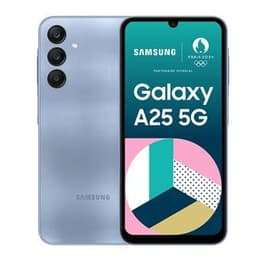
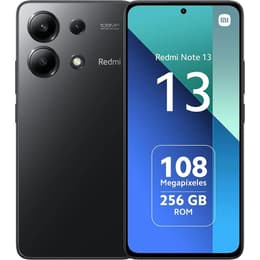
Galaxy A25 Vs Xiaomi Redmi Note 13 4G
- 1-year minimum warranty
- Free delivery on all orders
- Free 30-day returns
Differences at a glance
The Samsung Galaxy A25, released in 2023, and the Xiaomi Redmi Note 13 4G, introduced in 2024, represent accessible smartphone options designed for everyday digital needs. While both devices operate on the Android platform with custom software interfaces, they differ notably in their core network connectivity and internal hardware configurations. These distinctions shape how each device handles modern application demands, media consumption, and daily mobile communication.
Available Models
Colour
Storage (GB)
Scores
Durability
When examining longevity and software support, both devices offer structured update timelines, though their hardware lifespans depend on software maintenance and physical build durability.
- Software updates and support: The Samsung Galaxy A25 benefits from an extended multi-year update policy covering several major system upgrades, whereas the Xiaomi Redmi Note 13 4G provides a more standard security patch and software update schedule suited for its release year.
- Repairability and build maintenance: Both models utilize plastic frames and backs that withstand daily wear reasonably well, while components like screens and batteries remain serviceable through professional repair channels to extend operational use.
- Expected practical lifespan: Users can expect stable daily performance across several years of ownership, with the Samsung model offering an advantage for software longevity due to its longer commitment to system updates.
Year of Release
2023
2024
Compatible with latest Update
Yes
Yes
OS
Android
Android
Foldable
No
No
Performance
Daily operation relies on different processing architectures and memory configurations that influence how smoothly applications load, switch, and execute.
- Multitasking and daily app responsiveness: Both devices handle standard web browsing, messaging, and social media applications smoothly, though memory configurations vary across storage tiers to manage multiple open background tasks.
- Battery behavior and charging: Each smartphone includes a robust battery capacity capable of lasting through a full day of standard mixed usage, supported by different charging speeds to replenish power when necessary.
- Gaming and heavy task execution: Demanding applications run with adequate speed for casual play, though sustained high-performance sessions may show thermal adjustments on both devices given their hardware class.
Screen quality
Visual output is a primary focal point for both smartphones, utilizing advanced display panels to ensure sharp text and vivid imagery during media playback.
- Display technology and clarity: Both models feature vibrant organic light-emitting diode screens that deliver deep contrast levels and sharp resolutions suitable for reading and video streaming.
- Outdoor visibility and brightness: Peak brightness capabilities allow content to remain legible under direct sunlight, though automatic adjustments react swiftly to changing ambient lighting conditions.
- Refresh rate and scrolling smoothness: Higher refresh rate support ensures that navigating through user interfaces and web pages appears fluid, reducing motion blur during fast vertical scrolling.
Resolution
1080 x 2340
1080 x 2400
Screen type
Super AMOLED
AMOLED
Audiovisual
Capturing daily moments involves multi-lens rear setups that handle varying lighting environments with distinct processing styles.
- Main and supporting camera performance: Primary high-resolution sensors capture clear daytime photographs with natural detail, supported by ultra-wide lenses for landscape shots and dedicated macro elements for close-up framing.
- Low-light and video capabilities: Night modes assist in brightening dark scenes by balancing exposure, while video recording features stabilization options to reduce shake during handheld capture.
- Audio and media consumption: Built-in speaker arrangements provide adequate sound output for casual video viewing, while microphone systems isolate voice frequencies effectively during calls and video recordings.
Main camera
50 megapixels
108 megapixels
Front camera
13 megapixels
16 megapixels
Miscellaneous
Physical dimensions and connectivity standards define the ergonomic feel and networking flexibility of each device in daily scenarios.
- Connectivity and network bands: The Samsung Galaxy A25 features fifth-generation cellular capability for faster mobile data speeds where available, whereas the Xiaomi Redmi Note 13 4G focuses strictly on fourth-generation network standards.
- Physical design and handling: Both devices offer comfortable ergonomics with flat edges or subtle curves that fit securely in hand, accompanied by responsive biometric security sensors for quick unlocking.
- Ports and physical interfaces: Traditional wired connectivity relies on standard universal serial bus ports, and a quality-assured refurbished option from Back Market provides a sustainable choice for consumers seeking these features with minimized environmental impact.
Weight
197 g
175 g
Screen size (in)
6.5
6.67
Network
5G
4G
SIM card
Dual Physical SIM
Dual Physical SIM
Carrier compatibility
Unlocked
Unlocked
Connector
USB-C
USB-C
What the community thinks
Choosing between the Samsung Galaxy A25 and the Xiaomi Redmi Note 13 4G depends primarily on network preferences and software longevity priorities. Users who require faster cellular data speeds and a longer commitment to system software updates often lean toward the Samsung model. Conversely, individuals who prioritize specific display characteristics and standard mobile connectivity find the Xiaomi device well-suited to their daily routines. Both smartphones offer reliable daily functionality without excessive complexity, making them practical tools for messaging, media consumption, and casual photography.
Reviewing these models side by side highlights that small hardware variations dictate the overall user experience. Those who value eco-friendly purchasing habits can explore quality-assured refurbished options on Back Market to find either device inspected and verified for daily use. Ultimately, matching personal usage habits with the appropriate device ensures a satisfying long-term ownership experience regardless of the chosen model.