

Compare models

Galaxy A25 Vs Galaxy S25 FE

  • 1-year minimum warranty
  • Free delivery on all orders
  • Free 30-day returns
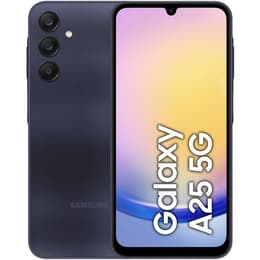
Galaxy A25
Starting at

Refurbished price:193.00

Versus €319.11 new

See options
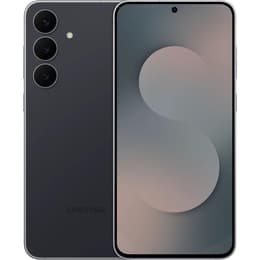
Galaxy S25 FE
Starting at

Refurbished price:409.00

Versus €750.00 new

See options

Differences at a glance

The Samsung Galaxy A25 (2023) and the Samsung Galaxy S25 FE (2025) represent two different tiers within Samsung's smartphone lineup, balancing daily usability with varying levels of advanced processing and design refinements. While both models run on the Android operating system with Samsung's interface, they cater to distinct device preferences through differing hardware capabilities and release generations.

Available Models

Colour

Storage (GB)

Scores

Durability

When examining structural longevity and software support, both devices provide extended manufacturer updates though their timelines reflect their respective launch years.

    Release timeline and support: The Galaxy S25 FE benefits from a later release date in 2025, extending its software support window further into the future compared to the late 2023 Galaxy A25. Both models receive multi-year operating system upgrades to maintain security and software compatibility.
    Durability build: The Galaxy S25 FE features advanced dust and water resistance with a certified IP68 rating alongside reinforced glass panels, whereas the Galaxy A25 relies on an unrated plastic construction suited for standard everyday handling.
    Expected lifespan: Both devices offer dependable long-term utility, though the higher-tier hardware specifications of the newer model allow it to maintain smooth operation under heavier future software demands.

Year of Release

2023

2025

Compatible with latest Update

Yes

Yes

OS

Android

Android

Foldable

No

No

Performance

System performance and responsiveness differ noticeably, shaped by the hardware architecture and multitasking capacities built into each device.

    Everyday responsiveness: Both smartphones handle routine tasks like web browsing, messaging, and social media fluidly, but the Galaxy S25 FE delivers faster app loading times and smoother transitions during demanding multitasking due to its higher-tier processor architecture.
    Memory and storage: The Galaxy A25 offers expandable storage via a microSD card slot alongside standard configurations, while the Galaxy S25 FE provides faster internal storage variants without expandable memory support.
    Battery behavior: Both models include large batteries capable of lasting through a full day of typical use, though the Galaxy S25 FE supports faster wired and wireless replenishment options to minimize downtime.

Screen quality

Display characteristics on both phones deliver vibrant visuals, though differences in panel technology and physical dimensions shape the viewing experience.

    Display technology: Both models utilize AMOLED panels that provide deep black levels, high contrast, and vivid color reproduction suitable for viewing media and reading text outdoors.
    Refresh rate and smoothness: Each device supports a 120Hz refresh rate, ensuring that scrolling through web pages and navigating menus appears fluid and responsive.
    Dimensions and brightness: The Galaxy S25 FE offers a slightly larger screen real estate paired with higher peak outdoor brightness levels, while the Galaxy A25 features a compact form factor that remains comfortable for one-handed operation.

Audiovisual

Camera hardware capabilities and media consumption features reflect the distinct market segments occupied by these two smartphones.

    Photography performance: Both devices feature 50-megapixel main sensors equipped with optical image stabilization for clear daylight shots, but the Galaxy S25 FE includes more advanced secondary ultra-wide and telephoto capabilities for sharper detail in challenging lighting conditions.
    Video and audio: Video recording runs smoothly on both models with stabilization support, while stereo speakers on the Galaxy S25 FE deliver a richer audio output for media playback compared to the single or hybrid speaker setup on the Galaxy A25.
    Call quality: Integrated microphones on both handsets isolate voice audio effectively during phone calls and video chats in noisy environments.

Miscellaneous

Practical physical and connectivity features influence how each device integrates into daily routines and travel environments.

    Connectivity standards: Both smartphones support modern 5G networks, fast Wi-Fi standards, and Bluetooth for pairing with wireless accessories and headphones.
    Physical ports and audio: The Galaxy A25 retains a traditional 3.5mm headphone jack for wired audio connections, whereas the Galaxy S25 FE relies exclusively on its USB-C port for charging and audio output.
    Security and handling: Both devices incorporate secure biometric authentication via side-mounted or in-display fingerprint sensors, with the Galaxy S25 FE utilizing an aluminum frame and glass back for a solid hand-feel.

Weight

197 g

190 g

Screen size (in)

6.5

6.7

Network

5G

5G

SIM card

Dual Physical SIM

Physical SIM + eSIM

Carrier compatibility

Unlocked

Unlocked

Connector

USB-C

USB-C

What the community thinks

User feedback from online communities highlights distinct advantages for each smartphone based on individual preferences. Owners of the Galaxy A25 frequently praise its reliable battery longevity, expandable storage flexibility, and the inclusion of a headphone jack for wired accessories. Conversely, users favor the Galaxy S25 FE for its robust processing speed, superior build materials, advanced camera versatility, and higher overall water resistance rating.

Users prioritizing expandability, essential daily functionality, and budget-conscious hardware choices may prefer the Galaxy A25, while users prioritizing heavy multitasking performance, advanced photography, and long-term hardware readiness often lean toward the Galaxy S25 FE. For those seeking a quality-assured refurbished option, exploring available models on Back Market provides a sustainable choice that aligns with both environmental consciousness and device performance needs.